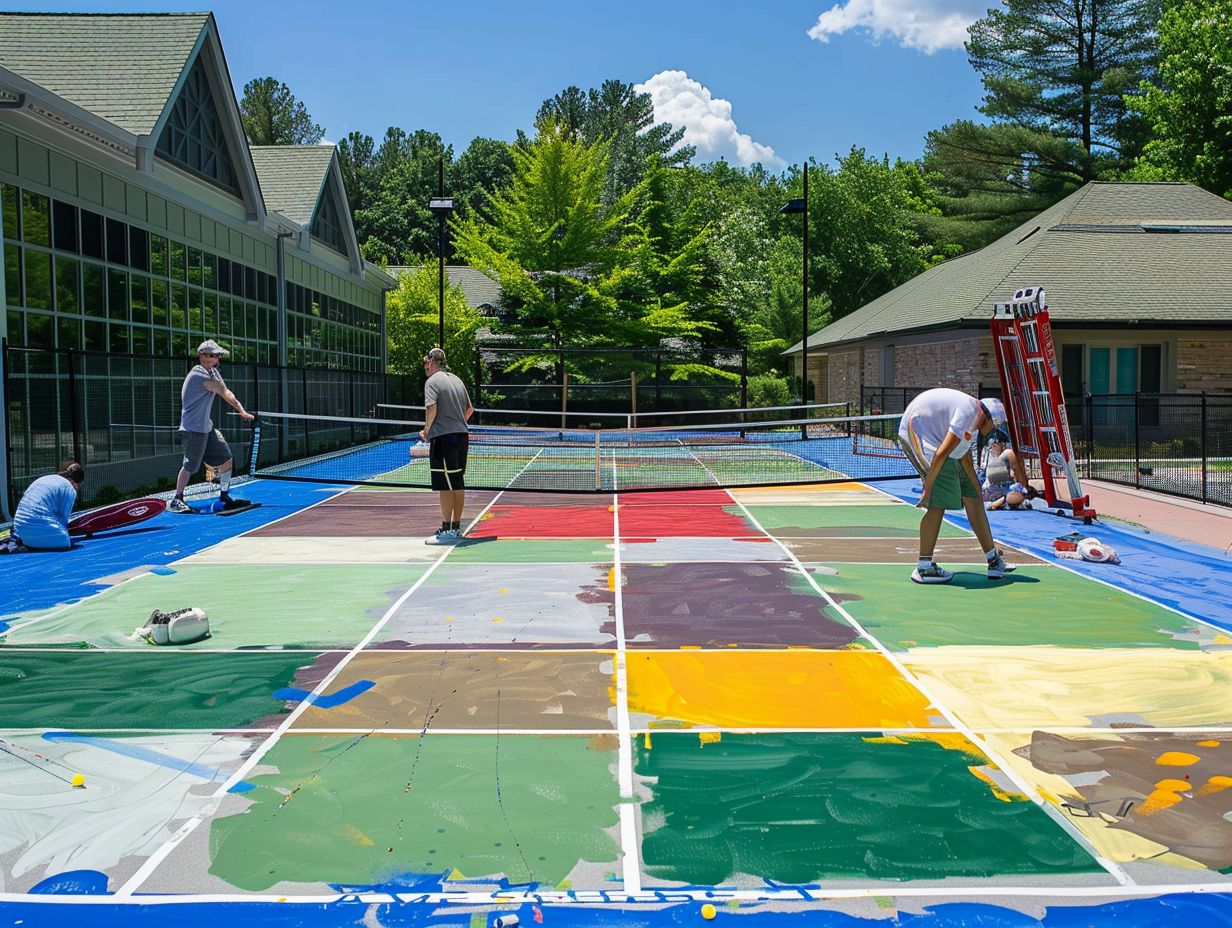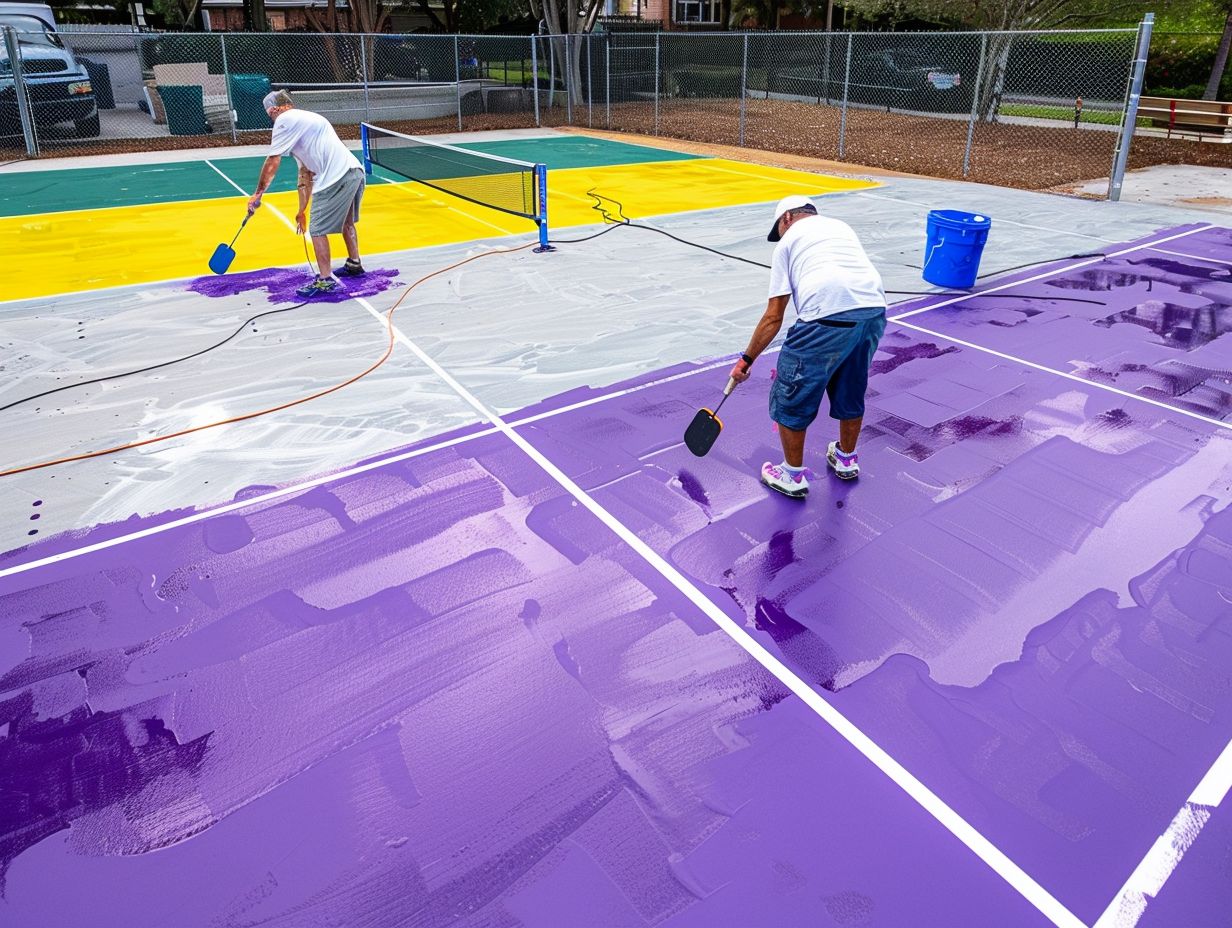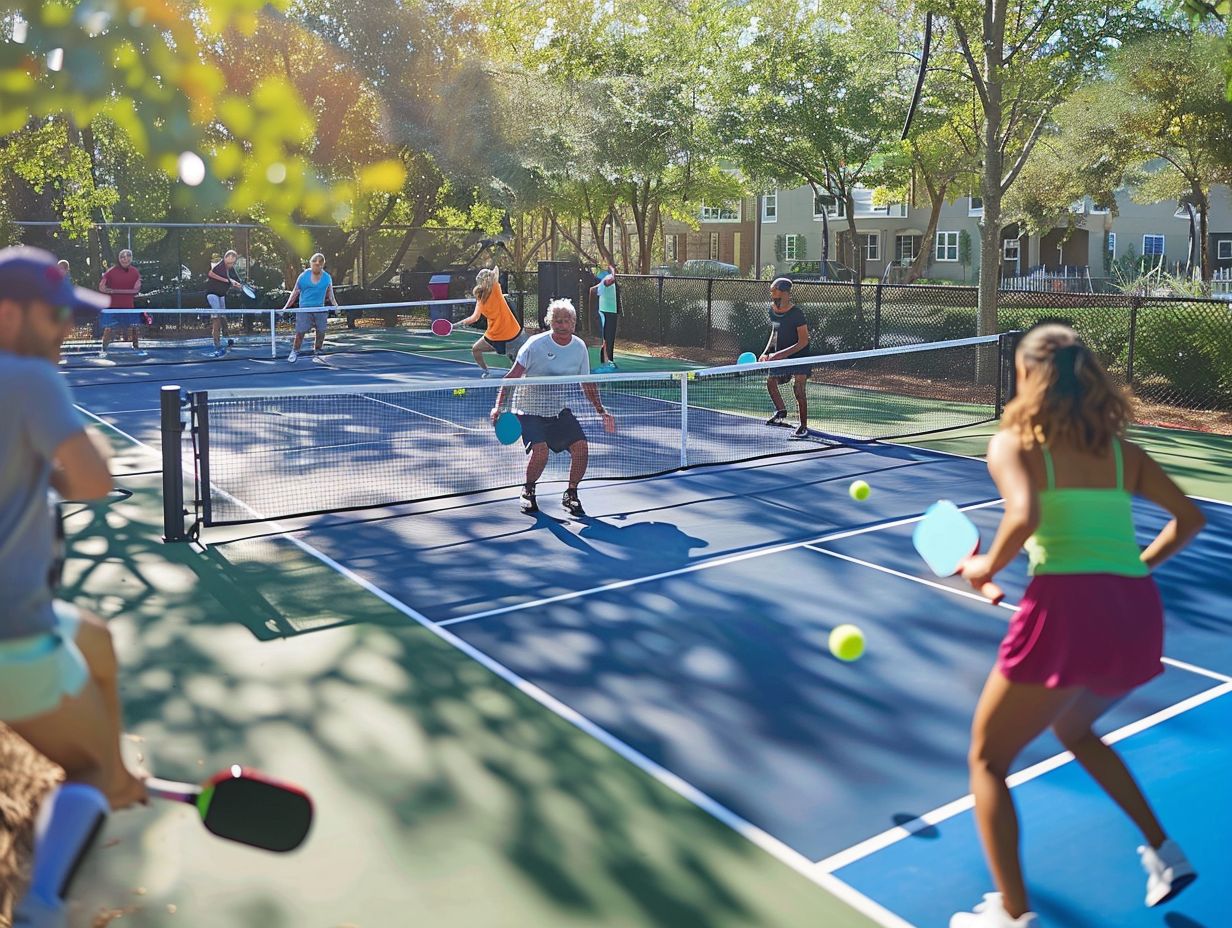
Best Pickleball Court Colors

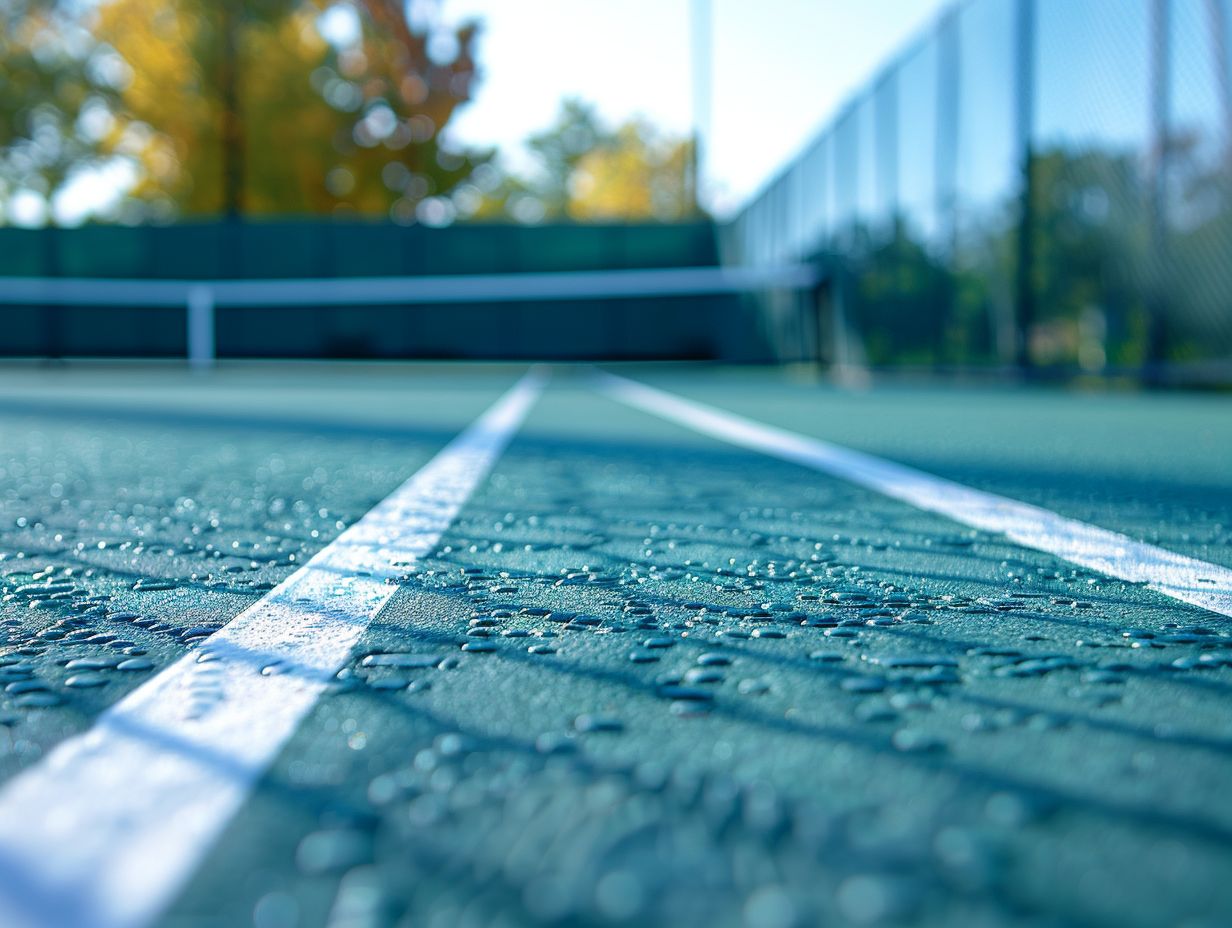
Looking to spruce up your pickleball court with a fresh new color? In terms of choosing the right color, it’s not just about looks – it can also impact your gameplay.

Let’s dive into the most popular pickleball court colors like blue, green, and red, and check out some other options too. Remember to think about factors like location, climate, cost, and maintenance when picking a color. And don’t forget to keep that color looking fresh with cleaning and protection tips.

Whether you’re a pro or just starting out, learn how to make your pickleball court stand out and own the court!

What are Pickleball Court Colors?
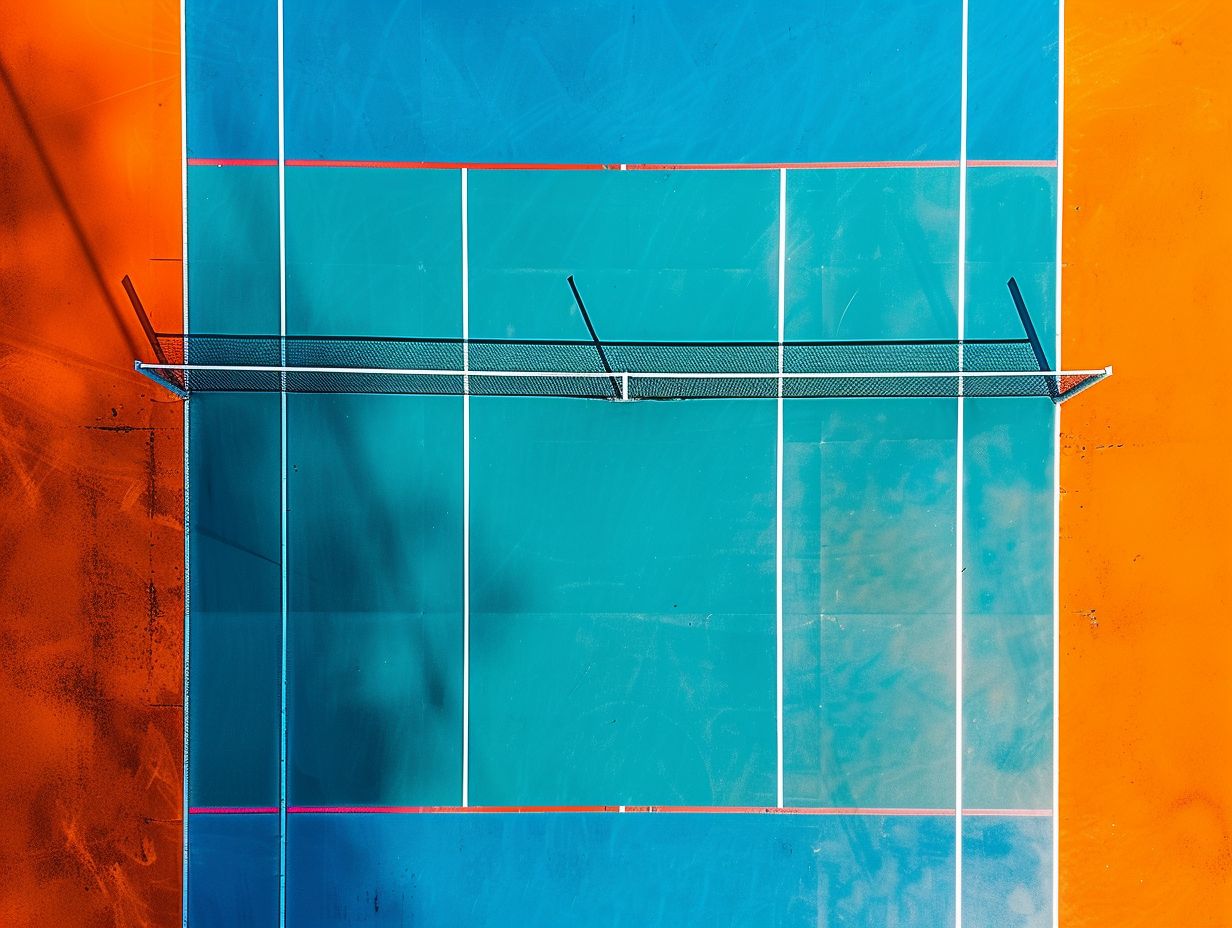
What are Pickleball Court Colors?

In terms of pickleball courts, the colors are more than just a pretty sight – they’re essential for both style and function. Choosing the right hues can make a big difference in how the court looks and performs.

Pickleball court colors aren’t just for show; they’re practical too. Bright, contrasting colors make it easy for players to see the court boundaries, especially during intense games, which can help prevent arguments over line calls. The right colors can also affect how well players can see the ball, making it easier to track its movements. Paying attention to these color details ensures that the court doesn’t just look good but also improves the gameplay experience for everyone involved.

Importance of Choosing the Right Color

In terms of picking the right color for your pickleball court, you’ve got a lot to think about. It’s not just about looks – the color can affect how well you can see, how you play, and how easy it is to maintain the court.

The color you choose can really make a difference in how you play. A color scheme with high contrast can help you see the ball better, making it easier to keep up with the game. Plus, picking practical colors that don’t show dirt or need constant cleaning can save you a lot of maintenance hassle. And don’t forget about durability – certain colors might fade or wear out faster with all that action on the court and exposure to the elements.

Impact on Gameplay and Aesthetics

When you’re choosing pickleball court colors, remember it’s not just about looks – it can also affect how you play the game. The colors you pick can influence player appeal, visual contrast, performance, and practicality, shaping your whole gameplay experience.

Imagine stepping onto a court with vibrant, contrasting colors – it can amp up your focus and agility, making you ready to take on the game. The color combos on the court can even mess with your depth perception, either making it easier to track the ball or adding an extra challenge to your game.

And let’s not forget the practical side of things. Court colors can affect visibility under different lighting conditions and play a role in how easy it is to maintain the court surface. So, when you’re choosing those colors, think about how they’ll impact your game and overall playing experience.

Popular Pickleball Court Colors

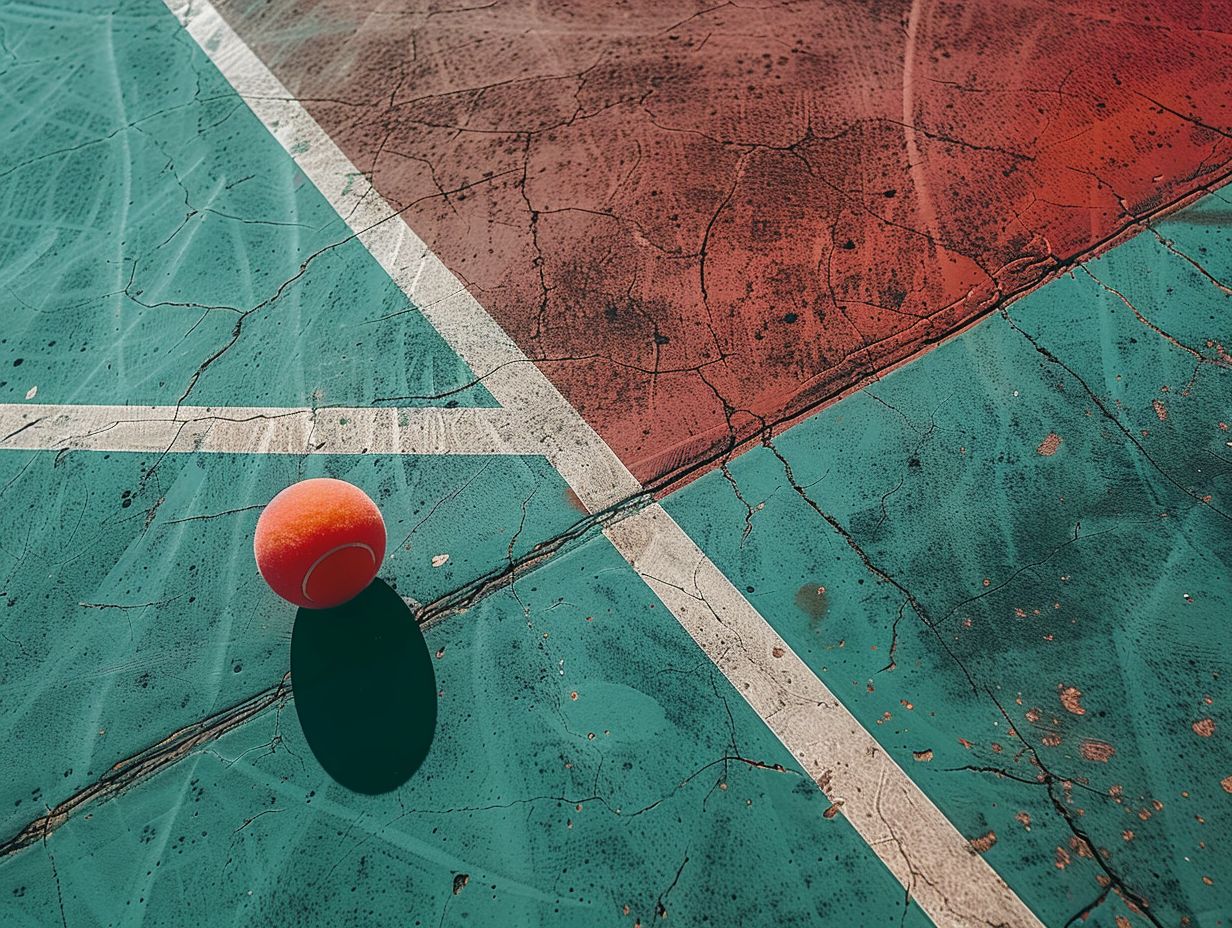
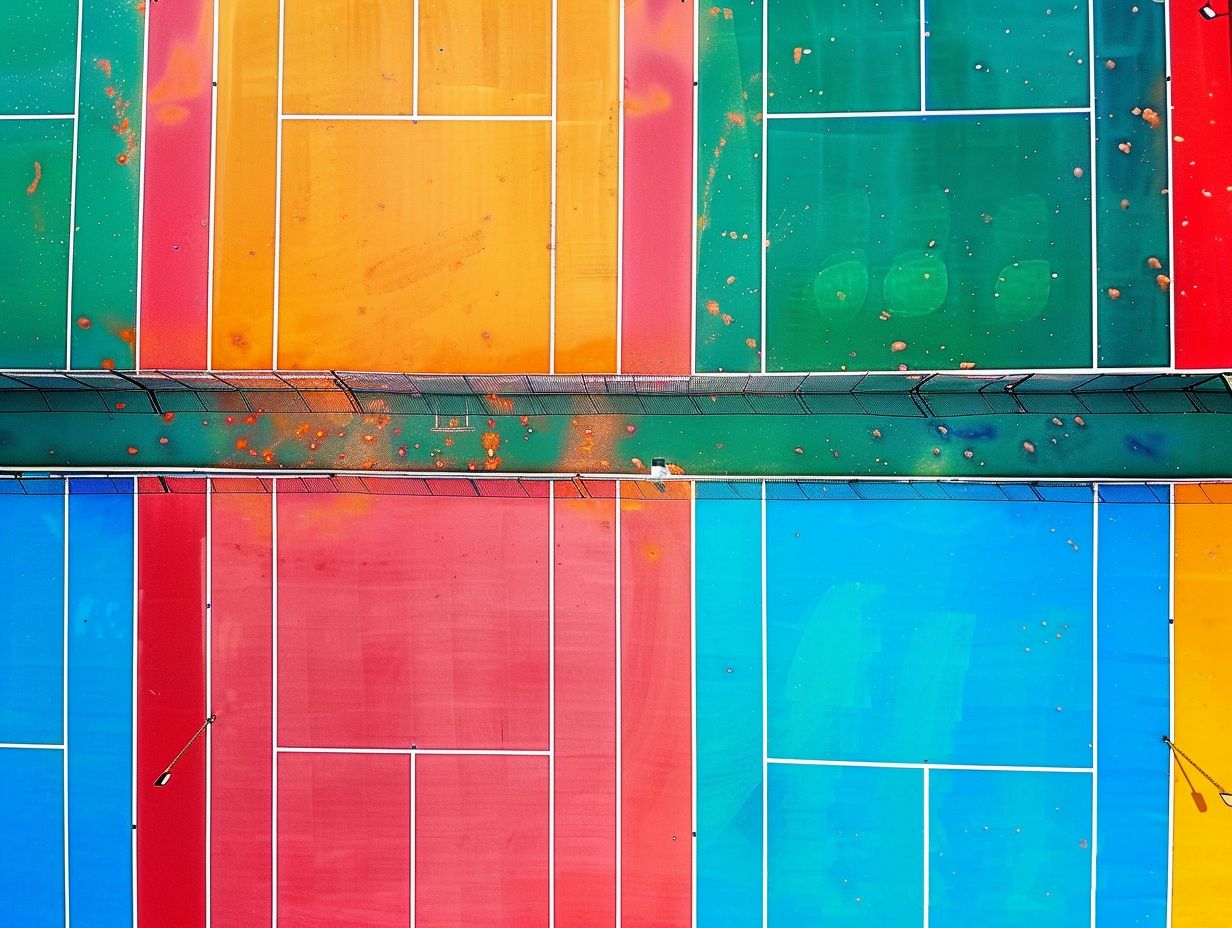
In terms of pickleball court colors, you have a variety to choose from, like shades of blue, green, red, white, and yellow. Each color brings its own style and visibility to the court.

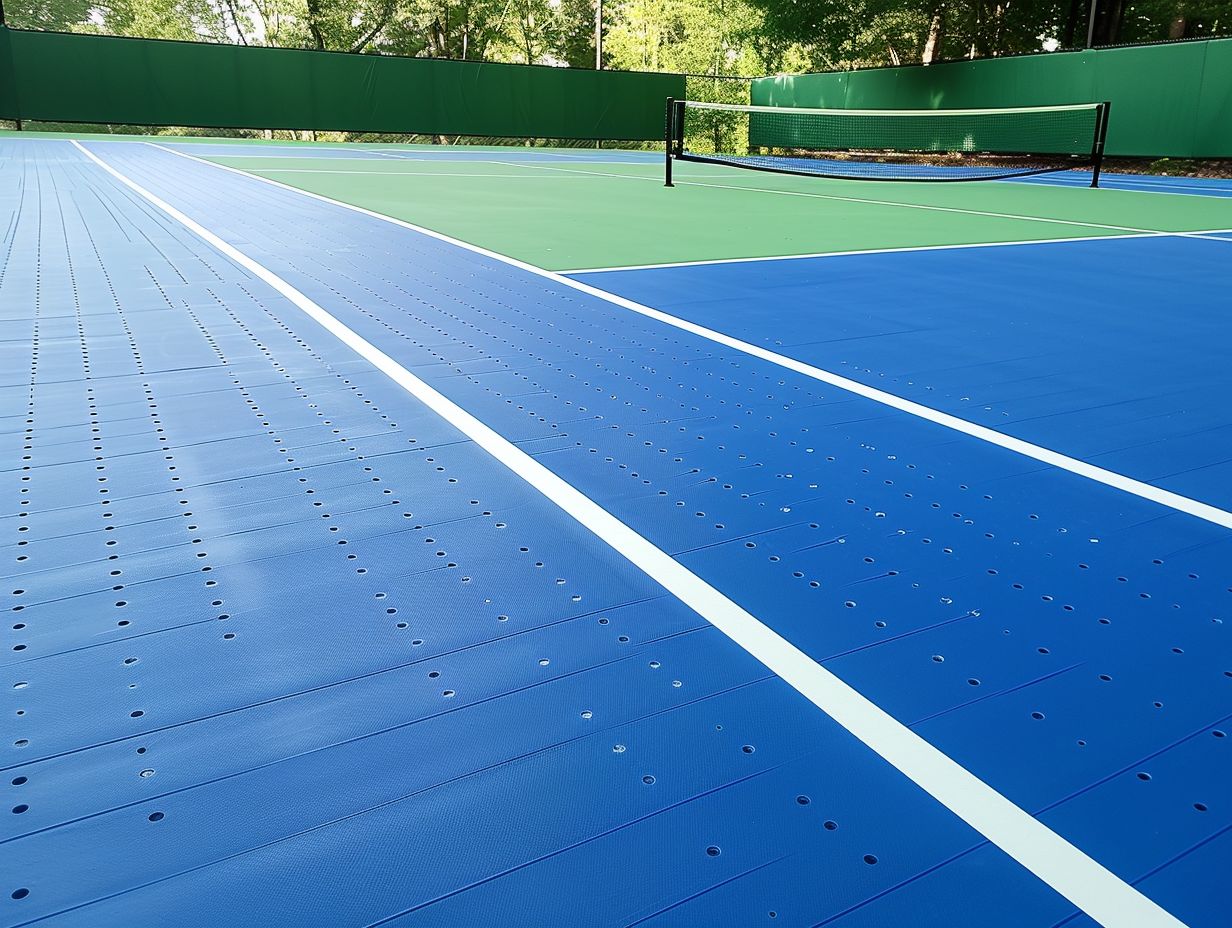
You might opt for a blue pickleball court if you’re looking for a calming vibe and better contrast with the bright yellow pickleball. It can help you keep track of the ball, especially during those intense, fast-paced games.

Alternatively, green pickleball courts give off a natural look that blends in nicely with outdoor settings and helps reduce glare from the sun. And if you’re into adding a pop of color, red pickleball courts bring a vibrant energy to the court that can amp up both players and spectators with their bold hue.

Blue

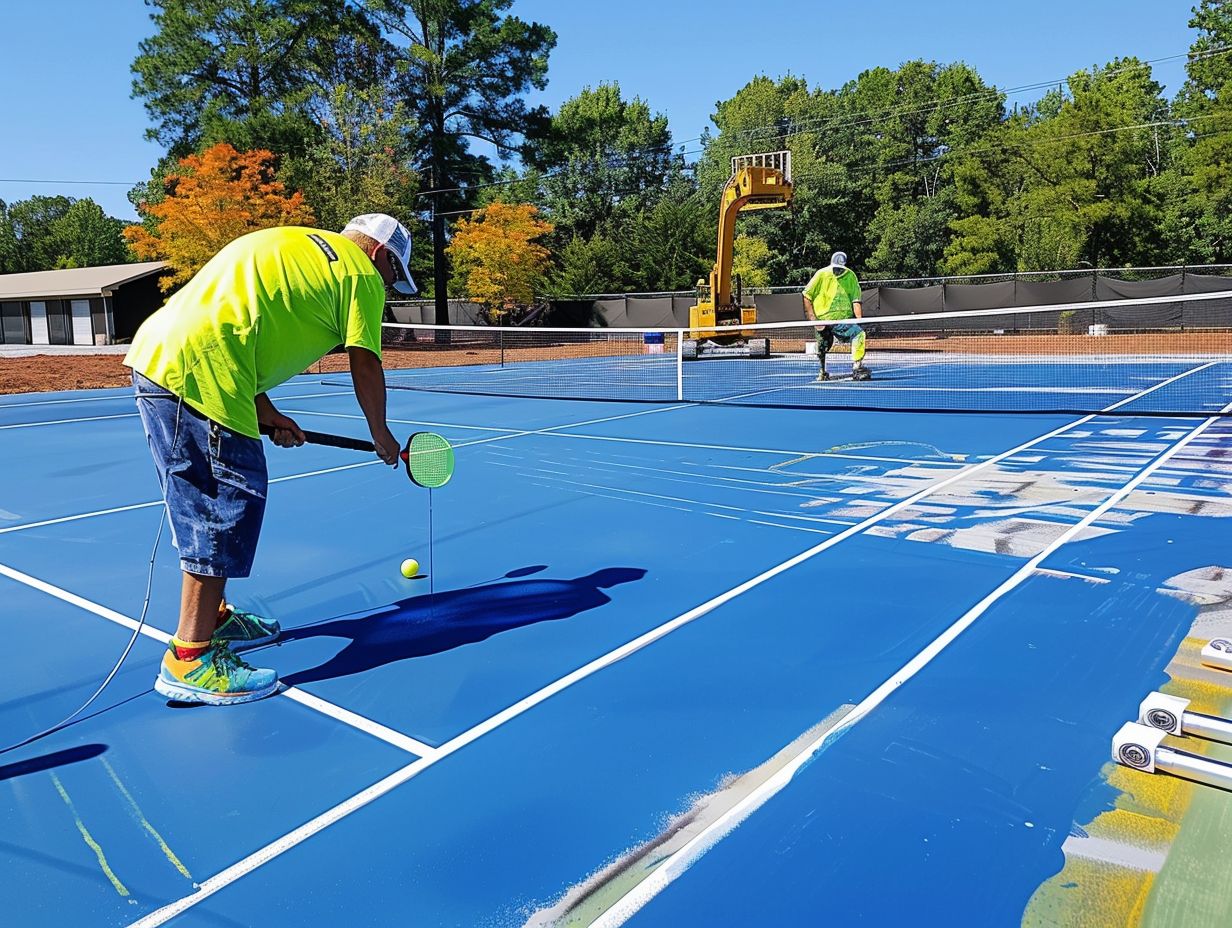
Opting for blue as the color for your pickleball courts is a smart move. It’s not just visually appealing, but it also helps players see the ball better, especially during tournaments.

The bright blue shade doesn’t just look cool on the court; it also makes it easier to spot the vibrant yellow pickleball. This contrast is a game-changer during intense matches, keeping players on top of their game. Plus, the calming vibe of blue sets the perfect tone for competitive play. It strikes a balance between focus and fun, creating an ideal setting for tournaments where precision and skill are everything.

Green
Green

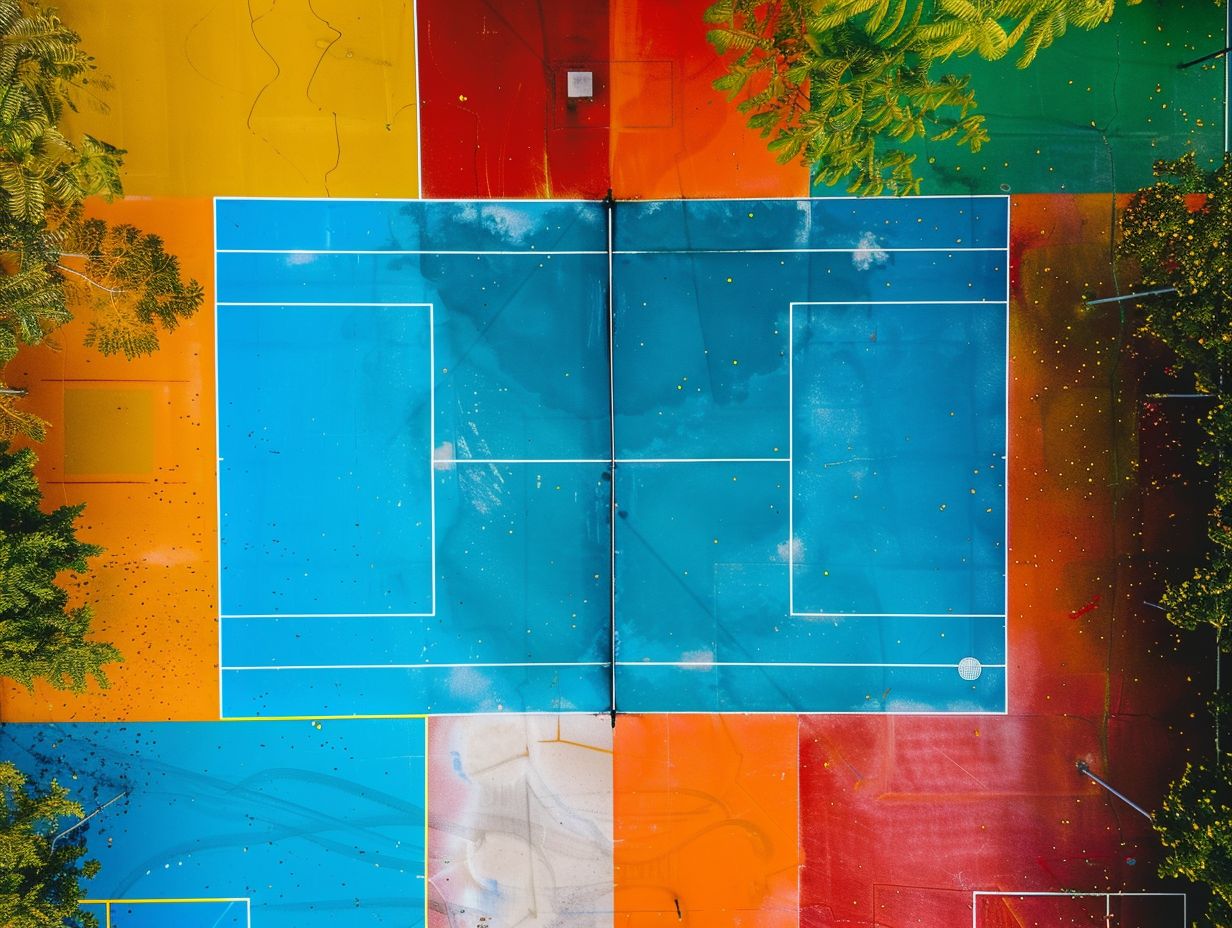
When you’re choosing colors for your pickleball court, green is a solid option that hits all the right notes. It’s got that perfect mix of visual appeal, contrast, player-friendly features, and practicality that players and organizers love.

Plus, that vibrant green really kicks up the look of the court and makes that bright yellow ball pop. It’s all about keeping your eye on the ball during those intense games, and the green court helps you do just that. And let’s not forget about how green can actually boost your game by helping you track that ball like a pro.

And hey, green courts are tough cookies too. They can handle the wear and tear of some serious play and are a breeze to maintain. So, when you’re thinking pickleball court colors, green is where it’s at – stylish, practical, and all-around player-approved.

Red

You should consider red pickleball court colors for a few key reasons. The striking aesthetics not only look cool but also make it easier to see the court and improve your game.

The vibrant red stands out against the lines and boundaries, helping you keep track of the ball during intense rallies. This visibility leads to smoother gameplay and fewer missed shots.

Plus, the color red can actually amp you up mentally, boosting your energy and focus to enhance your performance on the court. So, why not give red a shot next time you hit the court?

Other Color Options

When you’re on the pickleball court, you’ve got more color choices than just the usual blue, green, and red. Pickleball courts offer a whole rainbow of options for you to pick from, letting you jazz up your game and court style.

Whether you’re feeling the bright vibes of yellows and oranges or going for a more sophisticated look with greys and purples, the range of colors for pickleball courts is pretty diverse. When you’re deciding on the perfect colors for your court, you’ve got to think about things like how visible they’ll be in different lighting, how well they stand out against the ball, and the overall vibe you want for the court. Picking the right colors can help you track the ball better and make sure you see those court boundaries clearly. By adding some color customization, you can create a totally unique atmosphere that not only amps up your gameplay but also boosts the court’s overall appeal.

Factors to Consider When Choosing a Color

When you’re choosing a color for your pickleball court, you’ve got to think about a few key things like where the court is, what the weather’s like there, how much it’ll cost, and what kind of upkeep it’ll need.

The location of your court is a big deal when it comes to picking a color. If it’s an outdoor court in a sunny area, darker colors might soak up more heat, making the court scorching on hot days. On the flip side, in colder places, lighter colors could bounce back light and heat, helping with visibility and keeping players comfy.

Money matters too. Some color choices might need more touch-ups to keep looking fresh, which can drive up maintenance costs. It’s all about finding that sweet spot between looks, practicality, and making sure your court stays in top shape for the long haul.

Location and Climate

When choosing colors for your pickleball court, take into account the location and climate of the site. These factors are key in selecting colors that can withstand the weather, handle temperature changes, reflect light, and ensure the safety of players.

In areas with hot weather, you’ll want to go for lighter colors that don’t absorb as much heat, keeping the court surface cool for a more comfortable game. On the flip side, if you’re in a colder region, darker colors might be better to soak up warmth. And don’t forget about reflectivity – choosing colors that minimize glare can improve visibility and reduce the risk of accidents.

Safety is also a big consideration, so think about using contrasting colors to clearly mark the court boundaries and help players stay oriented during matches.

Cost and Maintenance
Cost and Maintenance

When you’re thinking about the cost and maintenance of a pickleball court, you’ve gotta find that sweet spot between looks, practicality, durability, and budget-friendly upkeep. The color you pick for your court can really set the vibe, affecting how players feel and even showing off your facility’s style.

As you decide on a color, think about the practical stuff too. You want to make sure players can see the lines clearly and that the color doesn’t blend into the background. It’s all about safety and making sure everyone has a good time. Plus, you need a color that can handle all the action, weather, and upkeep without fading or wearing out too quickly.

So, aim for a color that not only looks good but also won’t break the bank when it comes to maintenance. Finding that balance between aesthetics and cost-effective care is key when choosing the color for your pickleball court.

Tips for Maintaining the Color of Your Pickleball Court

To keep your pickleball court looking sharp and colorful, it’s important to use effective cleaning and protection methods to maintain the vibrancy and durability of the court surface.

You should make it a habit to clean the court regularly with a gentle detergent and water mix to prevent dirt buildup and keep those colors popping. Adding a UV-protective sealant will help shield the court from sun damage and preserve its original hues. Don’t forget to set up a maintenance routine to check for cracks or damages and fix them right away to keep the color quality intact. By following these cleaning, protection, and maintenance tips, you’ll be able to prolong the life and brightness of your pickleball court.

Cleaning and Protection Techniques

You need to make sure you’re taking care of your pickleball courts properly to keep them in top shape for the long haul. Stay in the loop about what’s trending in court maintenance, from lighting options to ideal dimensions and cleaning routines.

Don’t overlook how important lighting is for the overall pickleball experience. LED lights are getting all the hype for being energy-efficient and giving off a nice, bright glow.

And don’t forget about those court dimensions – sticking to the standard sizes is key for fair play and everyone’s safety.

In terms of cleaning, using the right methods isn’t just about appearances. It also helps prevent damage and makes sure your courts last longer.

Keep yourself informed about the latest court maintenance trends so you can keep your pickleball courts looking sharp for years down the line.

Frequently Asked Questions

What are the best pickleball court colors to use?

The most commonly used and recommended colors for pickleball courts are green and blue. These colors provide good visibility for players and are easy on the eyes.

Are there any other recommended colors for pickleball courts?
Are there any other recommended colors for pickleball courts?

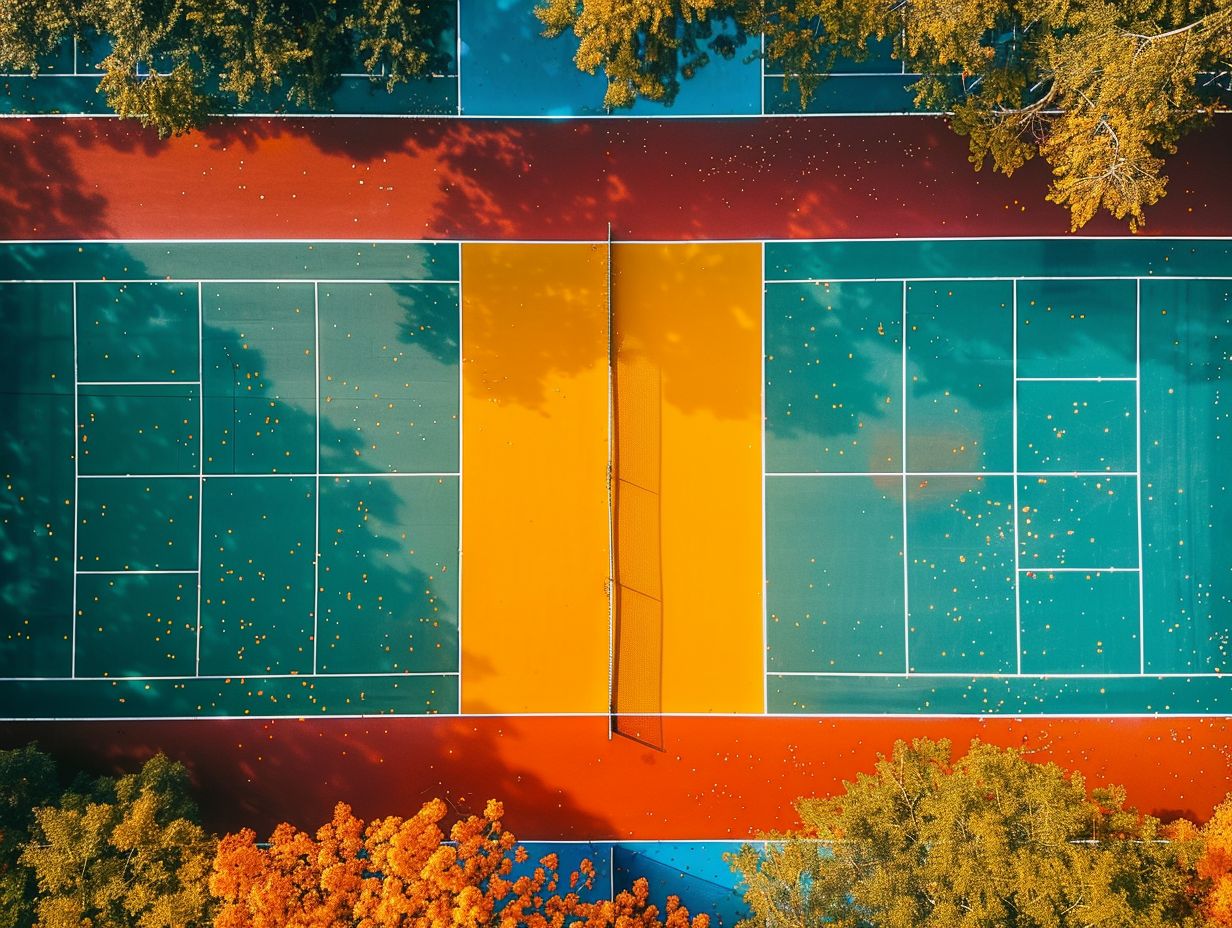
Some other popular colors used for pickleball courts include red, black, and even purple. However, it is important to consider the contrast with the surrounding environments and lighting conditions when choosing these colors.

Why are green and blue considered the best colors for pickleball courts?

Green and blue are the best pickleball court colors because they provide good contrast with the yellow pickleball and make it easier for players to track the ball during gameplay. These colors also tend to blend well with the natural surroundings of outdoor courts.

Do different court surfaces affect the choice of pickleball court colors?

Yes, the color of the court surface can also play a role in determining the best pickleball court colors. For example, if the court surface is already a bright color, a darker court color may be more suitable for contrast and visibility purposes.

Can I choose any color for my pickleball court?

While there are recommended colors for pickleball courts, you are free to choose any color you prefer for your personal court. Just keep in mind the importance of contrast and visibility for gameplay purposes.

Are there any colors that should be avoided for pickleball courts?

Yes, colors that blend in too much with the surroundings or are too bright and distracting should be avoided for pickleball courts. Examples include white, yellow, and orange, which can make it difficult for players to track the ball.

How To Become A Professional Pickleball Player

Curious about the world of professional pickleball? Let’s take you on a journey from being a beginner to becoming a successful pickleball player.

We’ll explore the steps you need to take in developing your skills, entering tournaments, and building a reputation in the pickleball community.

We’ll dive into the importance of training, physical conditioning, mental preparation, and strategy to help you excel in the sport.

Stay tuned for some valuable tips on maintaining a balanced lifestyle and continuing your growth as a professional player.

What is Pickleball?

What is Pickleball?

Pickleball is a paddle sport that’s all the rage these days, mixing up elements from tennis, badminton, and table tennis. You play it on a court with a net, smacking around a plastic ball with little holes in it. And hey, you can play it solo or partner up, so it’s super flexible and keeps things interesting.

What makes pickleball stand out is its smaller court size compared to traditional tennis. That means it’s open to players of all ages and skill levels, no sweat. Plus, the game is all about strategy and finesse, blending power and precision to outsmart your opponents. It’s that perfect combo that hooks both newbies and seasoned players alike.

The best part? Pickleball’s rules are simple and it’s super easy to get into. So, you can dive right in and start having a blast with the game from the get-go.

The Path to Becoming a Professional Pickleball Player

Embarking on the journey to becoming a professional pickleball player requires dedication, hard work, and a strategic approach to skills development and tournament participation. It’s a path that demands commitment and a passion for the sport, along with a focus on continuous improvement.

As you transition from a casual player to a professional athlete, it is vital to dedicate time to training sessions, refining techniques, and enhancing physical conditioning. Engaging in regular practice matches and seeking coaching feedback are instrumental in identifying areas for growth and fine-tuning gameplay strategies. Actively participating in local and regional tournaments provides invaluable experience, exposing you to different playing styles and fostering a competitive mindset. Developing a deep understanding of the game’s nuances and mastering advanced techniques are crucial steps towards achieving success in the professional pickleball circuit.

Starting as a Beginner

As a beginner in the world of pickleball, you need to focus on developing foundational skills like proper grip techniques, paddle control, and basic shot selection. Make sure you dedicate yourself to regular practice sessions to master these fundamental aspects of the game.

Consistent practice routines will not only improve your technical abilities but also help you develop strategic thinking and court awareness. Remember to stay patient with yourself as you progress because mastering pickleball is a journey that takes time and effort. Treat every mistake as an opportunity to learn and grow.

Surround yourself with experienced players who can provide guidance and support along the way. Embrace challenges and setbacks as part of the learning process, and maintain a positive attitude towards continuous improvement.

Developing Skills and Techniques

Building expertise in pickleball involves embarking on a journey of experience where you measure success by hitting your personal goals and milestones. It’s all about continuous learning, fine-tuning your techniques, and keeping a growth mindset to tackle those challenges.

As you navigate your pickleball journey, setting specific goals can be a game-changer in boosting your skills. Breaking down those big objectives into smaller, achievable targets lets you monitor your progress and keep that fire burning.

Every game and practice session is a goldmine of insights that can help you tweak your strategy and technique. Being able to adapt on the fly during a match lets you try out new tactics, sharpen your skills, and stay sharp when facing different opponents and game situations.

Entering Tournaments and Competitions

When you participate in pickleball tournaments, you open yourself up to valuable opportunities for player development. Teamwork and sportsmanship are key players in shaping your competitive spirit and ethical conduct on the court.

Being part of tournaments isn’t just about showcasing your skills; it’s also about learning from others, building camaraderie, and fostering mutual respect.

By going up against different opponents and facing challenging situations, you have the chance to develop resilience and adaptability – qualities that are not only essential in sports but in life, too.

Tournaments emphasize fair play and uphold the principles of sportsmanship, creating a positive environment where you can shine while maintaining integrity and showing respect for your fellow competitors.

Networking and Building a Reputation

Networking and Building a Reputation

Networking within the pickleball community can really help you show off your talent, love for the sport, and dedication to being the best you can be. When you build a positive reputation among your peers and other pros, you’re opening up all kinds of new doors for yourself.

By getting involved with the community, whether that’s through tournaments, hanging out at social events, or chatting online, you’re setting yourself up to make some valuable connections. These connections could lead to sponsorships, coaching gigs, or even cool partnerships for new projects.

Keep up the great work on the court and stick to your strong work ethic. Not only will you improve your skills, but you’ll also show everyone how committed you are to pickleball. That kind of dedication doesn’t go unnoticed – you’ll earn respect and recognition from your fellow players and influencers in the industry.

Building up a solid reputation is the key to long-term success and growth in the ever-evolving world of pickleball.

Training and Practice for Pickleball

In your pickleball journey, effective training and practice routines are your best buddies. They cover all bases, from boosting your fitness levels, agility, and speed to honing specific skills that’ll take your game to the next level. A well-rounded training plan is your ticket to reaching peak performance on the court.

In terms of physical fitness in pickleball, the name of the game is enhancing your overall health and maximizing your on-court potential. It’s all about incorporating exercises that amp up your agility, speed, and strength, giving you the edge in endurance and mobility during those intense matches.

For players like you, drills that focus on footwork, reaction time, and swift movements are golden. These drills help you position yourself like a pro for killer shots and returns. By sticking to consistent practice sessions that target these crucial elements, you’re building up that muscle memory and reflexes. This translates to sharper decision-making and laser precision in your gameplay. Trust me, it’s game-changing stuff.

Physical Conditioning and Endurance

When you’re gearing up for pickleball, don’t forget about the importance of physical conditioning and endurance training. You need those speed drills, agility exercises, and cross-training routines to make sure you’ve got the stamina and resilience to rock the court. It’s all about keeping your peak performance up when you’re in it for the long haul.

By adding speed drills into your routine, you’ll level up your footwork and reaction time, which are key for zipping around the court like a pro. Agility exercises? They’ll boost your coordination, balance, and overall agility, making those quick moves and tough shots a piece of cake.

And don’t sleep on cross-training! Whether you’re hitting the pool, hopping on a bike, or flowing through some yoga poses, mixing up your workouts will target different muscle groups and amp up your fitness game. Diversifying your routine with these activities will enhance your athletic skills and endurance, setting you up for a killer performance on the pickleball court. Time to get that all-around edge!

Improving Technique and Strategy

In terms of enhancing your technique and strategic gameplay in pickleball, it’s all about mastering shot selection, keeping your performance consistent, refining your footwork, and developing tactical strategies that can adapt to different opponents and game situations.

You’ve got to put in the practice and focus on mixing up your shots to not only challenge your opponents but also throw them off their game. Consistency is key when it comes to executing your strokes and movements – it’s like building a rock-solid foundation for your overall performance. And don’t forget about nailing your footwork to efficiently reach the ball and maintain proper court positioning.

Strategic planning is where you anticipate your opponent’s next move and adjust your game plan to stay one step ahead and gain that competitive edge.

Mental Preparation and Focus

In terms of elite pickleball performance, you need to be mentally prepared and focused. It’s all about having a strong mindset, staying resilient under pressure, understanding sports psychology principles, making quick decisions, and reacting fast to seize opportunities during those intense matches.

To keep your mental game strong on the court, having a positive mindset is key. Try using visualization techniques to picture yourself succeeding and boost your confidence. Deep-breathing exercises can also help you manage those nerves and stay cool in high-pressure situations. Don’t forget to stay in the moment and trust all that training you’ve put in during your matches.

Make sure to do regular mental exercises and practice mindfulness to take your mental preparation and overall performance in pickleball to the next level. It’s all about getting your head in the game!

Tips for Success as a Professional Pickleball Player

Tips for Success as a Professional Pickleball Player

To achieve success as a professional pickleball player, you need to find the right balance between your on-court performance, working on self-improvement, and leading a well-rounded lifestyle that takes care of your physical, mental, and emotional well-being.

It’s all about growing continuously and evaluating yourself to make sure you can keep succeeding in this competitive world.

Don’t be scared to reach out to experienced players and coaches for advice and mentorship as you go down this path. Embrace challenges as chances to learn and grow, no matter if you win or lose.

And always remember to take care of your body and mind, making sure to include rest and recovery in your training routine.

Keep yourself on track by setting realistic short-term and long-term goals to stay motivated. Keep a positive attitude and surround yourself with a network of supportive players and mentors to help you grow and excel.

Maintaining a Balanced Lifestyle

To maintain a balanced lifestyle as a pickleball athlete, you need to make mindful choices when it comes to nutrition, hydration, and recovery strategies. Fueling up right, staying hydrated, and practicing effective recovery techniques are key to keeping your performance at its peak and feeling your best both on and off the court.

In terms of nutrition, make sure you’re getting a well-rounded diet packed with lean proteins, complex carbs, healthy fats, and a mix of vitamins and minerals. Including colorful fruits and veggies, whole grains, and lean protein sources can give your body the nutrients it needs for energy and muscle repair.

Don’t forget about hydration! It’s crucial for athletes to keep that fluid balance in check by sipping on water regularly throughout the day and during training sessions.

After a tough match, focus on recovery by doing things like stretching, foam rolling, and getting plenty of rest. These activities help your body repair and adapt, setting you up for even better performance in the long run.

Continuing Education and Growth

In terms of your pickleball journey, it’s all about embracing growth and learning. Start by focusing on injury prevention strategies to keep yourself in top shape. By putting in the effort to understand how to prevent injuries, you’re not just taking care of yourself but also ensuring you can keep enjoying the game for years to come.

Consider getting coaching certifications to up your game. It’s a great way to deepen your knowledge, sharpen your teaching skills, and help out fellow players looking to improve.

And don’t forget about professional leagues! They’re not just about competition – they can also be a fantastic way to connect with other players, industry pros, sponsors, and maybe even discover new career opportunities outside the court. So, get out there, keep growing, and see where pickleball can take you!

Final Thoughts and Recommendations

In the grand scheme of things, you need to nurture both an athlete mindset and a competition mindset to thrive in the cutthroat world of pickleball. Embrace a mentality of always striving to get better, bouncing back from setbacks, and pushing yourself to be the best player you can be.

Keep a positive outlook on growth, and be ready to learn from both your wins and losses. Set goals that are challenging but doable, and make sure you stick to your training and practice routines. Getting advice from seasoned coaches, analyzing your opponents’ strategies, and getting out there in tournaments will give you the experience you need.

Having a strong work ethic, being able to adapt to different game conditions, and having a supportive group of fellow players by your side will give you that competitive edge you need in the thrilling world of pickleball.

Frequently Asked Questions

What skills do I need to become a professional pickleball player?

What skills do I need to become a professional pickleball player?

To become a professional pickleball player, you will need to have exceptional hand-eye coordination, speed, agility, and strategic thinking abilities. You should also have a strong serve, accurate shots, and the ability to anticipate your opponent’s moves.

Do I need to have prior experience in other sports to become a professional pickleball player?

While prior experience in sports such as tennis, badminton, or ping pong can be beneficial, it is not necessary to become a professional pickleball player. Pickleball is a unique sport and many professional players come from diverse sporting backgrounds.

What kind of training should I do to become a professional pickleball player?

To become a professional pickleball player, it is important to focus on developing your overall fitness, including strength, endurance, and flexibility. You should also dedicate time to practicing specific pickleball skills, such as footwork and shot accuracy, and play against opponents of varying skill levels.

Can I make a living as a professional pickleball player?

Yes, it is possible to make a living as a professional pickleball player. The sport is gaining popularity and there are opportunities for prize money, sponsorships, and endorsements. However, it is important to have a backup plan and be financially stable, as professional pickleball is still a relatively new and growing sport.

Do I need to compete in tournaments to become a professional pickleball player?

While competing in tournaments can be a great way to gain experience and exposure, it is not the only path to becoming a professional pickleball player. You can also focus on improving your skills and networking with other players and coaches to get noticed.

What mindset do I need to have to become a professional pickleball player?

To become a professional pickleball player, you need to have a competitive mindset and be willing to put in the hard work and dedication required. You should also be open to learning and continuously striving to improve your skills. Mental toughness and the ability to handle pressure and setbacks is also important in this sport.

How To Choose Pickleball Paddles

Are you new to the world of Pickleball and feeling overwhelmed by the variety of paddle options available? Don’t worry, we’ve got you covered.

In this article, we’ll break down the different types of Pickleball paddles, discuss key factors you should consider when choosing the right one for you, and share some helpful tips to make the selection process a breeze.

Plus, we’ll also throw in some expert advice on how to take care of your paddle so it lasts for many games to come. So, grab your paddle and let’s dive in!

What is Pickleball?

Types of Pickleball Paddles

Regarding pickleball paddles, you have the freedom to choose from different types, each with its own set of cool features and benefits. The main types you’ll come across are wooden paddles, composite paddles, and polymer core paddles.

If you go for wooden paddles, get ready for that classic vibe and sturdy build that’ll give you killer control over your shots. But if you’re eyeing those composite paddles, you’re looking at a sweet combo of materials like fiberglass and graphite, offering up a nice mix of power and control. And don’t forget about the polymer core paddles, loved for their lightweight feel and wicked spin capabilities.

When you’re in the market for a new paddle, think about stuff like weight, grip size, and material to match your playing style and what you like. Just remember, the paddle you choose can totally amp up your game on the pickleball court!

Wooden Paddles

If you’re new to pickleball, wooden paddles could be right up your alley. They’re affordable and tough, making them a top choice for beginners. Sure, they might not have all the fancy features of composite or polymer paddles, but they’re a solid way to dip your toes into the sport.

With their lighter weight and bigger sweet spot, wooden paddles are a breeze to handle, especially for newcomers like you. They’re forgiving, helping you nail down your technique and get that form just right. Plus, they’re perfect for practicing all sorts of shots and honing your skills without breaking the bank. When you’re just starting out in pickleball, picking the perfect paddle is key, and wooden paddles give you a wallet-friendly option to kick off your pickleball journey.

Composite Paddles

If you’re an intermediate player looking for that perfect blend of power and control on the pickleball court, composite paddles might be just what you need. These paddles are all the rage thanks to their cutting-edge materials and innovative designs that take your game to the next level.

The best part about composite paddles? They’re super responsive, allowing you to react swiftly to the ball and tweak your shots with ease. Perfect for those intermediate players looking to up their game and fine-tune their skills. These paddles are all about maneuverability, helping you nail those precise shots and take control of the game like a pro.

Plus, the advanced tech packed into composite paddles has totally transformed the sport. Not only do they boost your performance, but they also offer up durability and consistency on the court. It’s a game-changer for players looking to dominate the pickleball scene.

Polymer Core Paddles

If you’re an advanced pickleball player looking to up your game, polymer core paddles are your best bet. These paddles are all about delivering top-notch performance and precision on the court. With a unique mix of stiffness, accuracy, and versatility, these paddles have got you covered.

The solid feel and excellent control of polymer core construction will have you nailing those powerful shots with pinpoint accuracy. Not to mention, the sweet spot on these paddles is perfectly positioned for effortless hits that always land where you want them to.

Regarding spin and control, the surface texture of polymer core paddles strikes a perfect balance. You’ll feel unstoppable on the court, confidently dominating every game. Plus, with customization options for grip size, weight, and shape, you can fine-tune your paddle to match your playing style and preferences perfectly.

Factors to Consider When Choosing a Pickleball Paddle

Factors to Consider When Choosing a Pickleball Paddle

When selecting your pickleball paddle, you need to take into account various factors like weight, balance, materials, durability, grip size, and comfort. Each of these factors will have a significant impact on your playing style and performance when you’re out on the court.

Weight and balance are crucial considerations when picking out a pickleball paddle. They directly affect your swing speed, power, and how easily you can move around during the game. The weight of the paddle can impact your control – heavier paddles pack more punch but might slow down your reaction time. On the flip side, lighter paddles allow for quicker responses but might sacrifice power. Finding the right balance between these factors is key to customizing your gear to match your playing style and technique.

Weight and Balance

Regarding pickleball paddles, the weight and balance play a crucial role in your gameplay. Opting for a lighter paddle gives you better maneuverability, while a well-balanced weight distribution means you’ll have more control and power when taking your shots.

Consider how the weight of the paddle affects your swing speed and the power you generate with each shot. The balance in your paddle can also make a difference in how much strain your arm muscles feel, leading to smoother and more controlled movements on the court. It’s all about finding that sweet spot to boost your performance and make your pickleball experience even better.

Materials and Durability

When you’re picking out a pickleball paddle, the materials you choose play a big role in how long it lasts and how well it performs. If you’re in it for the long haul, you’ll want to go for composite or graphite paddles – they’re like the workhorses of the pickleball world.

These materials give you the best of both worlds: strength and lightness. That means you can move around the court with ease and pack a punch in your shots. Composite paddles usually mix materials like fiberglass and polymer to create a tough yet flexible surface that gives you better control over your shots. On the flip side, graphite paddles are all about that killer strength-to-weight ratio. With these bad boys, you can nail those precise shots without breaking a sweat. Plus, thanks to their durability, these paddles can take a beating and still perform like champs, so you’ll get more bang for your buck in the long run.

Grip Size and Comfort

When you’re out on the pickleball court, making sure you’ve got the right grip size and comfortable gear is key to a top-notch playing experience. Look for a paddle that’s got a cushy grip and built-in vibration dampening to keep strain at bay and boost your control.

The size of your paddle’s grip can totally change up your game and how you perform on the court. A padded grip not only keeps you cozy during those marathon matches but also helps fight off hand fatigue. Plus, vibration dampening tech in your paddle works to soak up shock and vibrations from ball hits, giving you a smoother, more responsive feel. By focusing on grip size and comfort, you can cut down on the chances of wrist or elbow injuries and make your pickleball playtime way more fun and effective.

Tips for Choosing the Right Pickleball Paddle

When you’re on the hunt for the perfect pickleball paddle, it’s all about trial and error to find the one that really clicks with your playing style. Don’t be afraid to ask the pros for some tips and dive into reviews for some solid recommendations.

Give different paddles a go to really understand how each one’s design impacts your game. Chatting with seasoned players or coaches can give you that personalized advice tailored to your strengths and weaknesses, helping you make a smart choice.

And don’t forget about those expert reviews! They’ll break down all the paddle details – from features to materials to performance – so you can match it up perfectly with your preferences and playing needs.

Trial and Error

Trial and Error

When you’re diving into the world of pickleball, it’s all about finding that perfect paddle that vibes with your game. By experimenting with different paddles, you can dial in the one that feels just right for your playing style. Customization options are your best friend here, letting you tweak your gear to match your preferences.

Whether you’re all about control or you’re chasing that powerful shot, testing out various paddles is the way to go. Some players swear by a lighter paddle for zipping around the court, while others prefer the solid feel of a heavier one. Knowing your own moves and what you like is key to snagging the ideal paddle that plays to your strengths and amps up your game.

Seeking Expert Advice

When selecting a paddle, you want to gather insights from experts in the pickleball community and read reviews to make an informed decision. By comparing different paddle models and seeking advice from experienced players, you can gain valuable perspectives.

The experts in the pickleball community have a wealth of knowledge and experience that can guide you in understanding the key features to consider in a paddle. Their expertise can help you grasp the nuances that make a paddle suitable for your playing style.

Reading reviews offers real-life feedback from users who have tested the paddles in various settings. This feedback provides insights on performance, durability, and overall satisfaction. By conducting thorough comparisons of different paddles, you can weigh the pros and cons and make a well-informed choice that aligns with your preferences and playing needs.

Caring for Your Pickleball Paddle

Proper maintenance and storage are crucial for extending the lifespan of your pickleball paddle. Knowing when it’s time to swap out your paddle because of wear and tear can really make a difference in how you perform on the court.

You’ve got to keep up with regular maintenance tasks, like giving your paddle a good clean after every game to get rid of all the dirt and grime. This not only keeps your paddle looking fresh but also prevents damage and ensures you’re playing at your best. When you’re not using it, make sure to store your paddle in a protective case or cover. This shields it from accidental knocks and exposure to extreme temperatures that could weaken the materials over time. By keeping an eye on your paddle for any signs of wear, like cracks, chips, or a drop in performance, you can spot issues early and decide if it’s time to replace it.

Proper Maintenance and Storage

To keep your pickleball paddle in top shape, you’ll want to make sure you’re giving it some regular TLC. Start by cleaning the surface and giving it a once-over for any damage. Storing it in a protective case can also help shield it from any bumps or weather-related wear and tear.

Make a habit of cleaning your pickleball paddle with a damp cloth and gentle soap to get rid of any dirt, sweat, or grime that builds up after playing. Stay away from harsh chemicals or rough materials that could scratch or harm the paddle’s surface.

When it’s time to put your paddle away, find a cool, dry spot that’s out of direct sunlight and humidity. This will help prevent any warping or damage to the paddle caused by extreme temperatures or moisture. Taking these simple steps will help keep your pickleball paddle in top condition for the long haul.

Replacing Your Paddle

When your pickleball paddle starts looking worse for wear or has some damage messing with your game, it might be time to think about getting a new one. Getting a new paddle that’s durable and meets your performance needs can really level up your playing experience.

If your paddle is on its last legs, it can mess with your shots and control on the court, making it harder to pull off plays like a pro. Catching these signs early and picking a replacement that suits your style can help you avoid game-time hiccups and boost your performance overall. Switching to a new paddle that matches your skills and preferences can also make your time on the court more fun and satisfying, letting you bring out your A-game in pickleball.

Frequently Asked Questions

Frequently Asked Questions

What factors should I consider when choosing pickleball paddles?

When choosing pickleball paddles, you should consider the weight, grip size, material, shape, and price.

How do I determine the right weight for my pickleball paddles?

The weight of a pickleball paddle typically ranges from 6 to 14 ounces. The ideal weight for you will depend on your level of strength and skill. It is recommended to try different weight options to find the one that feels most comfortable and allows you to maintain control and power during gameplay.

What is the right grip size for pickleball paddles?

The grip size of a pickleball paddle refers to the circumference of the handle. It is important to choose a grip size that feels comfortable and allows you to maintain a secure hold on the paddle. A general rule is to measure the distance from the middle crease of your palm to the tip of your ring finger. This measurement can help determine the appropriate grip size for you.

What are the common materials used for pickleball paddles?

The most common materials used for pickleball paddles are wood, composite, and graphite. Wood paddles are typically the most affordable and durable, while composite and graphite paddles offer more power, control, and spin. Consider your playing style and budget when deciding on the material for your pickleball paddle.

What is the difference between a paddle with a wide body and a narrow body?

Pickleball paddles come in a variety of shapes, including wide body and narrow body. A wide body paddle has a larger surface area, providing more power and surface area for hitting the ball. A narrow body paddle, on the other hand, offers more control and maneuverability. Consider your playing style when choosing between a wide body and narrow body paddle.
How much should I spend on a pickleball paddle?

The price of pickleball paddles can range from $20 to over $200. It is important to consider your budget and your level of play when deciding how much to spend on a paddle. If you are a beginner, it may be best to start with a more affordable option and upgrade as you improve your skills.

How Much Does It Cost To Paint A Pickleball Court

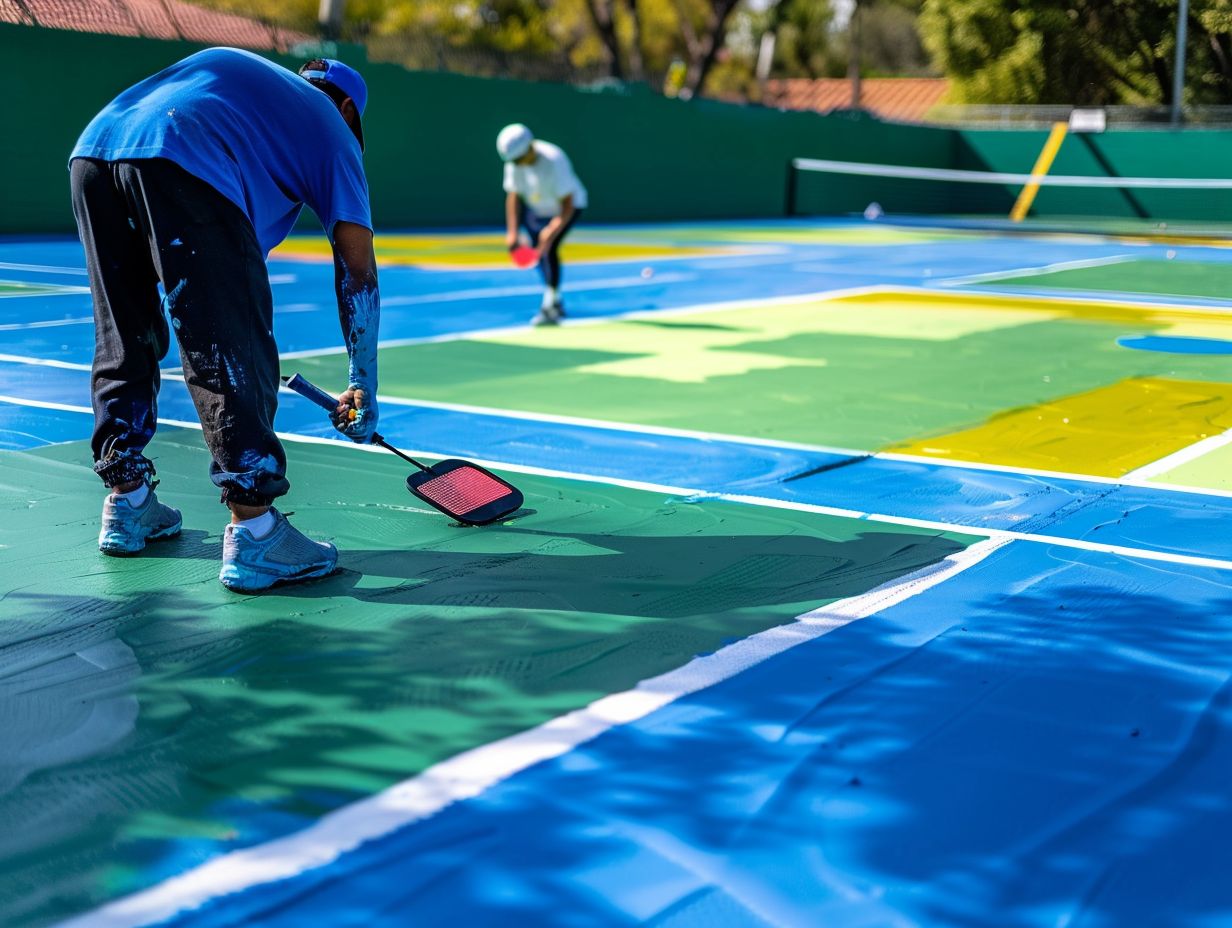
Looking to spruce up your pickleball court with a fresh coat of paint? Let’s dive into the factors that can sway the cost of painting your pickleball court, what materials you’ll need, and how to gauge the cost of those materials.

We’ll also chat about the upsides and downsides of hiring a pro versus rolling up your sleeves and tackling the project solo. Plus, we’ll share some money-saving tips to keep things budget-friendly along the way.

Whether you’re a seasoned DIYer or leaning towards bringing in a pro, we’ve got you covered on all things pickleball court painting.

The Cost of Painting a Pickleball Court

The Cost of Painting a Pickleball Court

When you’re thinking about how much it’ll cost to paint a pickleball court, there are a bunch of things that can sway the final price and estimate for the job.

Materials are a big deal when it comes to painting a pickleball court. The paint made specifically for sports surfaces can be on the pricier side. You’ve also got to factor in the labor costs. Professional painters might charge you by the hour or give you a set rate for the whole shebang. Don’t forget about the prep work, like cleaning and fixing up any damages – that can also change the final cost.

The size of the court is a key player here. Bigger courts mean more paint and more hours of labor, which can bump up the total cost. So, if you’re looking to keep things wallet-friendly, it’s important to get a grip on these cost elements before diving into your pickleball court painting project.

Factors that Affect the Cost

When you’re looking to paint a pickleball court, the cost can vary based on a few important factors that affect pricing. Things like the size and dimensions of the court and the type of surface preparation needed for resurfacing all come into play.

To estimate how much painting a pickleball court will set you back, you’ve got to think about factors like the quality of materials you’ll need, labor costs, and whether you’ll bring in the pros to do the job. Hiring professional painters can make a big difference in getting the job done right and fast, which can impact the final price tag. The size and dimensions of the court also matter a lot because they determine how much paint and materials you’ll need, ultimately affecting the total cost. By understanding these factors, you can get accurate estimates and make smart choices when planning out your pickleball court painting project.

Materials Needed for Painting a Pickleball Court

When painting a pickleball court, you want to make sure you pick the right materials to create a surface that’s both tough and easy on the eyes. Think about using acrylic paints with their durability and range of vibrant colors. And speaking of colors, choose ones that not only look good but also offer good visibility for players and blend in nicely with the surroundings.

Don’t forget about the line painting tools like stencils and tapes – they’re key for making sure your court markings are spot-on, setting clear boundaries and sections. Using seal coating products can help shield your court from the elements and keep it in top shape for longer.

And hey, regular maintenance is a must! Keep your court clean and do touch-ups as needed to maintain its appearance and functionality. It’s all about keeping that pickleball court looking sharp and ready for action.

Types of Paint and Other Supplies

When you’re tackling the task of painting a pickleball court, picking the right paint and supplies is key to nailing that pro look and making sure the surface can stand the test of time.

You’ve got a variety of paint options to choose from for your pickleball court project, each with its own perks. Acrylic paint is a go-to for its durability and fast drying, while latex paint offers great coverage and color retention. If you’re looking for something super tough, epoxy paint is the way to go. It can handle some serious action on the court.

And let’s talk colors! From classic green to bold blues, reds, and even custom designs, the options are endless. Don’t forget your line painting tools like court striping tapes and stencils to get those boundary lines looking sharp. And to keep your court looking fresh, seal coating supplies will protect it from UV damage and wear. You’ll also want to have some court cleaners and repair kits on hand for maintenance to keep your court in top shape for years to come.

Estimating the Cost of Materials

Estimating the Cost of Materials

When estimating the cost of materials for painting your pickleball court, you need to crunch some numbers. Calculate the quantities needed based on the court’s square footage, pay attention to the measurements for a precise job, and don’t forget about the cleanup supplies for that final touch.

To kick things off with the cost estimation, figure out the total square footage of the pickleball court that requires painting. Measure the length and width of the court to get the area just right.

Next up, chat with your go-to paint supplier or hardware store to get the scoop on the pricing for the specific paint recommended for outdoor courts. Think about the number of coats you’ll need for good coverage and durability.

Oh, and don’t overlook the costs of brushes, rollers, painter’s tape, and any other tools you’ll need for the painting job.

Oh, and one last thing – make sure to budget for those cleanup supplies like paint thinner, drop cloths, and brush cleaner. You want that final finish to be squeaky clean and totally pro.

Calculating the Amount of Paint Needed

When determining the exact amount of paint needed for your pickleball court, you’ll need to get down to some precise calculations. Start by measuring the length and width of the playing area in feet to figure out the square footage. Typically, a gallon of paint can cover about 250-300 square feet, but keep in mind this can vary depending on the type of paint and the surface texture.

You might also want to factor in things like applying multiple coats for extra durability and marking lines for the court boundaries. And don’t forget about the cost breakdowns – consider paint prices, any additional supplies you might need, and labor costs if you’re thinking about hiring pros.

Oh, and when it comes to cleanup, make sure you’re storing your paint materials properly, disposing of used supplies correctly, and keeping your work area clean and safe.

Hiring a Professional vs. DIY

When deciding whether to hire a professional or tackle painting a pickleball court yourself, you need to consider a few things. Think about the costs involved, whether you have the right tools, and weigh the benefits of professional know-how versus your own elbow grease.

If you decide to bring in a pro for the pickleball court painting job, you can expect a top-notch finish without breaking a sweat. But be prepared to pay a bit more for that expert touch compared to doing it yourself. Professionals come equipped with skills, experience, and all the right tools for the job, leaving you with a court that looks like it’s straight out of a magazine. On the flip side, going the DIY route can be budget-friendly, letting you add your personal flair to the project and work at your own pace.

If you do choose the DIY path, remember that attention to detail, proper prep work, and a good chunk of your time are essential for getting those satisfying results.

Pros and Cons of Each Option

When you’re deciding whether to hire a professional or tackle painting a pickleball court yourself, it’s all about weighing the pros and cons. DIY might save you some cash, especially if you’ve got the tools already. But, pros bring expertise and convenience, plus they can get the job done faster and give you accurate quotes.

The cost is a big deal when you’re making this choice. DIY can be easier on the wallet, but pros have the skills and tools to make sure the job looks top-notch. And let’s not forget reliability – pros work on contracts and timelines, so you know the project will get done on time. DIY projects, on the other hand, might hit some roadblocks if you’re not experienced or if unexpected issues pop up.

Cost of Hiring a Professional

Cost of Hiring a Professional

When you’re looking into hiring a pro to paint your pickleball court, there are a bunch of things to think about. First off, you’ve got the pricing to consider, along with how experienced the contractor is, what kind of warranty they offer, the different acrylic surfacing options, and the range of colors you can choose from to jazz up your court.

Now, when it comes to figuring out the cost of hiring a professional for painting your pickleball court, one big factor is the size of the court. The bigger the court, the more materials and labor it’s gonna need, which can really affect the overall price tag. And don’t forget about the prep work – like getting the surface all cleaned up and fixed before painting – that can definitely play a part in the cost.

Sure, you might have to shell out more for an experienced contractor, but their know-how can mean a top-notch job. And check out those warranty policies – they can vary, so make sure you know what’s covered. Plus, the different acrylic surfacing options aren’t just about looks – they can also affect how long your court lasts and how well it performs, which can impact the cost in the long run.

And hey, picking out the colors isn’t just about making your court look cool. It can also affect how much upkeep your court needs and how visible it is, so it’s a pretty important thing to think about as you plan out your project.

Factors that Affect the Cost

When you’re looking to hire a professional to paint a pickleball court, there are a few key factors that can sway the cost. Things like pricing considerations, the experience level of the contractor, warranty options, your preference for acrylic surfacing, and the range of colors available for customization all come into play.

The price you’ll pay depends on factors like the court’s size, how intricate the design is, and the quality of materials being used. The contractor’s experience isn’t just about the cost but also about ensuring you get a top-notch finish.

Warranty details are super important because they give you peace of mind and protect your investment. Your choice of acrylic surfacing can impact both how the court looks and how long it lasts.

And don’t forget about the color options! Picking the right colors can really spruce up the court and make it feel like your own.

Tips for Saving Money on Painting a Pickleball Court

If you’re looking to cut costs on painting a pickleball court, there are a few tricks you can try out. First off, check out affordable options, take advantage of seasonal discounts from contractors, and ask for recommendations on cost-effective solutions that still meet quality standards.

One smart move is to go for non-brand name paint and supplies – they can work just as well as the pricier stuff. You can also save some cash by buying materials in bulk or shopping during off-peak seasons when prices tend to be lower. Thinking about doing some of the prep work yourself before painting? That’s a good way to keep labor costs down. By combining these strategies, you’ll be able to get a slick-looking pickleball court without going broke.

DIY Tips and Tricks

If you’re thinking about tackling a DIY project to paint your pickleball court, make sure you have all the tools you need. You’ll want quality paint brushes, masking tape, a pressure washer for prepping the surface, and markers for outlining the court lines.

Start off by creating a realistic project timeline. Set clear milestones to help you stay on course from the beginning to the end. Having specific start and completion dates will keep you motivated and accountable throughout the project.

And hey, don’t forget that it’s totally okay to ask for professional advice if you hit any roadblocks. Whether you’re dealing with tricky surface imperfections or complex line markings, getting some expert help can ensure that your pickleball court ends up looking polished and professional.

Frequently Asked Questions

Frequently Asked Questions

How much does it cost to paint a pickleball court?

The cost of painting a pickleball court can vary depending on several factors, such as the size of the court, the materials used, and the location. On average, it can cost anywhere from $500 to $2000.

What factors can affect the cost of painting a pickleball court?

The main factors that can affect the cost of painting a pickleball court include the size of the court, the materials used, and the location. Other factors such as labor costs and additional services may also impact the overall cost.

How does the size of the court affect the cost of painting?

Generally, the larger the court, the higher the cost of painting will be. This is because more materials and labor are required to cover a larger surface area. However, some painting companies may offer discounts for larger courts.

What materials are typically used to paint a pickleball court?

The most common materials used to paint a pickleball court include acrylic paint, sealant, and primer. These materials are durable and designed to withstand the wear and tear of pickleball gameplay.

Are there any additional costs associated with painting a pickleball court?

Depending on the condition of the court, there may be additional costs for repairs or cleaning before the painting process can begin. Some painting companies may also offer optional services such as line striping and surface repairs for an additional cost.

Can I save money by painting the pickleball court myself?

While it may seem like a cost-effective option, it is not recommended to paint a pickleball court yourself unless you have experience and proper equipment. Improper painting techniques can result in a poor-quality finish and potentially costly repairs in the future.

How To Avoid Cauliflower Ear Bjj

Cauliflower ear is a common condition among Brazilian Jiu-Jitsu practitioners like yourself, and it can leave your ears looking disfigured and swollen.

Let’s dive into what cauliflower ear is, what causes it, and how you can prevent it in BJJ by using protective gear and specific techniques. We’ll also look at different treatment options for healing this condition.

You’ll learn about the potential long-term effects of cauliflower ear and get some tips and strategies for avoiding it completely in the world of BJJ.

What is Cauliflower Ear?

What is Cauliflower Ear?

If you’re into BJJ or other grappling martial arts, you’ve probably heard of cauliflower ear. It’s when your outer ear gets banged up so much that it swells and changes shape, looking like a little cauliflower. This happens when your ear takes repeated hits or gets rubbed a lot during intense activities like wrestling, jiu-jitsu, or ground fighting.

That lumpy, bumpy cauliflower ear look? It’s all thanks to a build-up of blood and other fluids in your ear’s cartilage, making it stiff and misshapen. Besides the not-so-pretty appearance, cauliflower ear can mess with your ear’s function, possibly causing hearing problems or discomfort.

Seeing a lot of cauliflower ear in BJJ and other grappling sports shows just how rough and tumble these activities can be. To steer clear of this, it’s crucial to take the right precautions and get prompt treatment to keep cauliflower ear from causing long-term havoc.

Explanation and Causes

If you’re into BJJ, you know that cauliflower ear is no joke. It happens when your ear takes a beating, and the blood and fluids start building up due to trauma, causing the cartilage tissue to die off. The constant rubbing and pressure on your ear during grappling can even lead to skin abrasions, also known as mat burn, which only makes things worse.

All that damage to the cartilage messes with the natural shape of your ear, making it puff up and look all wonky, like a piece of cauliflower. The repeated trauma from all that wrestling and Jiu-Jitsu action can also cause fluid to accumulate, making your ear swell up even more. The pressure during those intense grappling sessions just adds to the problem, gradually changing the structure of your ear and making you more prone to developing that classic cauliflower ear look.

Preventing Cauliflower Ear in BJJ

To prevent cauliflower ear in BJJ, you need to make sure you’re using the right protective gear and techniques to lower the risk of ear trauma. Being proactive about this will help keep your ears safe during those intense grappling sessions.

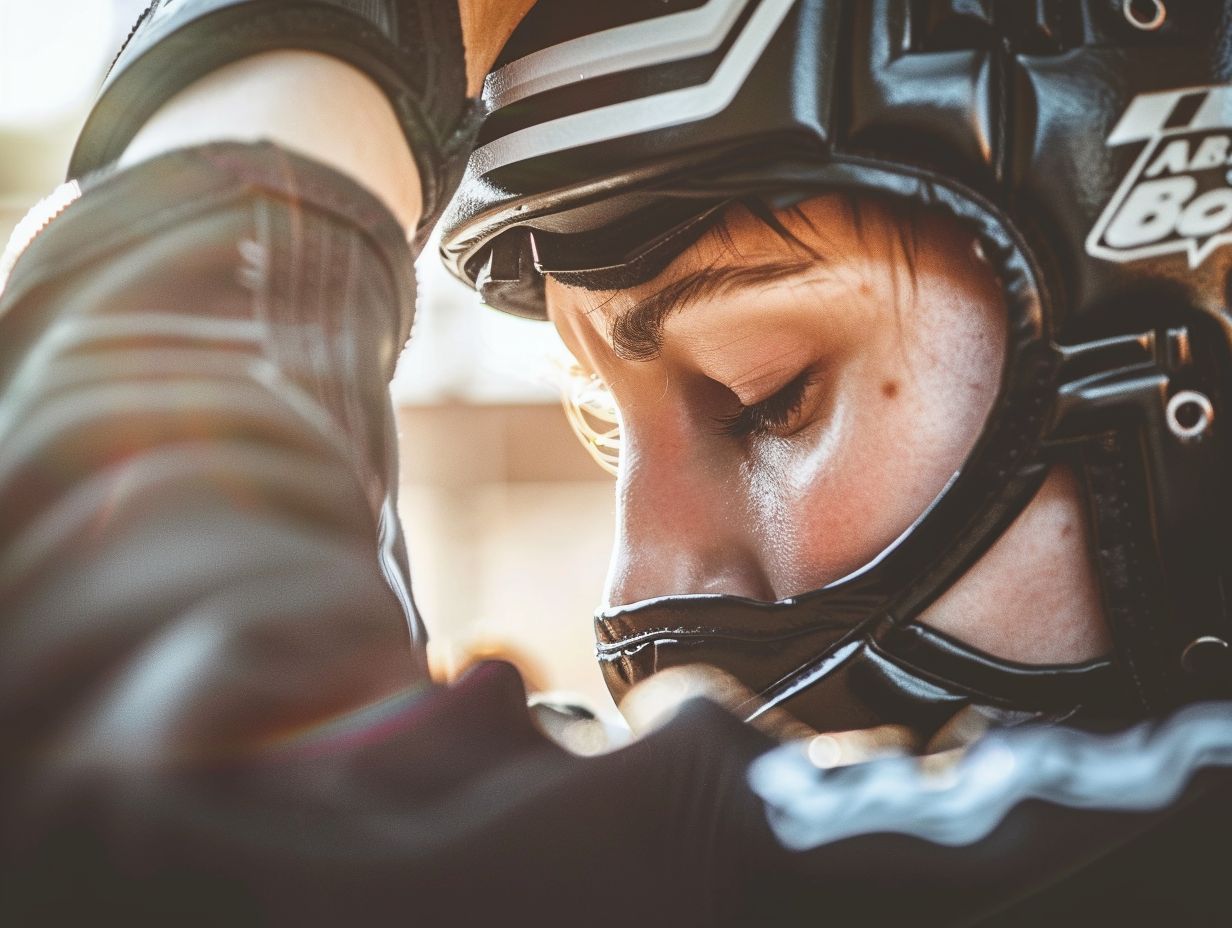
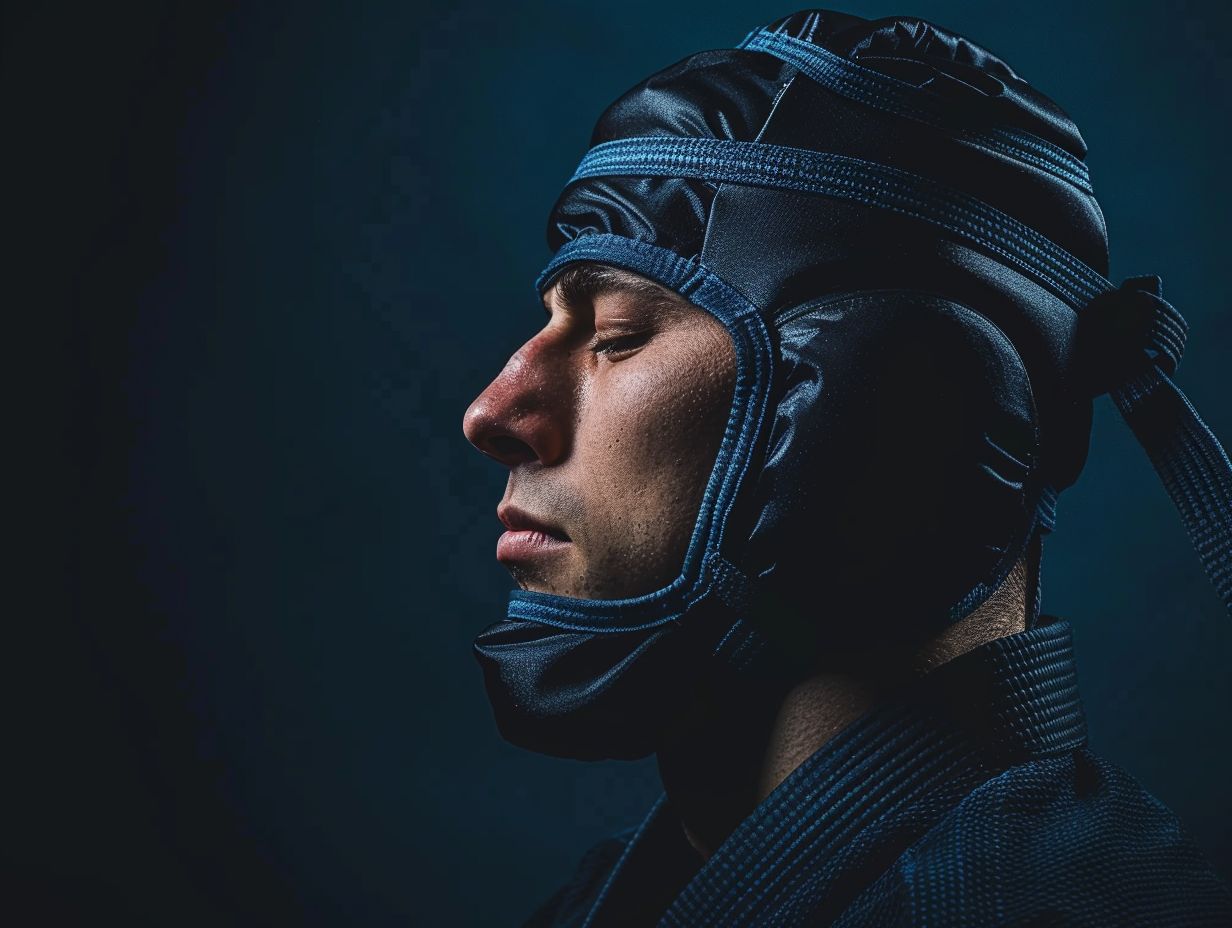
In Brazilian Jiu-Jitsu, consider wearing ear guards, also called ‘cauliflower ear protectors,’ to give your ears an extra layer of defense against injuries. These guards are designed specifically to protect your ears during sparring and ground fighting, reducing the likelihood of developing cauliflower ear.

When training or competing, focus on using proper positioning techniques that don’t strain your ears unnecessarily. It’s important to combine the use of protective gear with the right grappling techniques to maintain good ear health in the long run.

Protective Gear and Techniques

To reduce the risk of ear injuries during grappling activities like BJJ, you should consider using proper ear protection, such as ear guards. Keep your ears safe by following prevention tips like maintaining good hygiene, wearing ear muffs, and taking care of your ear health.

Make sure to keep your equipment clean by sanitizing your headgear and ear guards regularly. This helps prevent the buildup of bacteria and fungi that could cause infections. Don’t forget to check your gear for any signs of wear and tear and ensure a snug fit to avoid unnecessary shifting during training. Following these practices will not only protect your ears but also maintain overall hygiene in the sport, lowering the chances of developing painful cauliflower ear deformities.

Treating Cauliflower Ear

Treating Cauliflower Ear

When dealing with cauliflower ear, it’s important to tackle the swelling and hematoma by opting for drainage procedures to ease the pressure and aid in recovery. Make sure you seek medical attention promptly to avoid complications and ensure your ear heals properly.

Managing this condition relies heavily on drainage techniques to carefully remove the built-up blood or fluid from the affected area. Following the drainage, recovery steps like compressing the ear with a bandage and allowing for adequate rest are usually recommended to support the healing process.

Remember to keep in touch with healthcare providers after the drainage to track progress and address any issues that may crop up. Acting in a timely manner is crucial for controlling the swelling and preventing the ear from developing a more serious deformity.

Getting professional advice early on can have a significant impact on the long-term outcome of the condition.

Options for Healing and Recovery

When dealing with cauliflower ear, your healing and recovery depend on effective drainage to reduce swelling and hematoma, as well as minimizing the risk of infection to ensure proper tissue repair. Don’t hesitate to seek medical advice for treatment to prevent any complications.

You have several options to tackle cauliflower ear, including drainage procedures to remove excess fluids and prevent permanent deformity. To manage swelling, try using cold compresses and elevating the affected ear to ease discomfort and improve circulation. Monitor the ear for any signs of infection like redness, warmth, or pus. If you notice any of these symptoms, make sure to seek medical help promptly. Taking proactive measures to prevent infections, like maintaining cleanliness and following antibiotic prescriptions, is crucial for a successful recovery.

Long-Term Effects of Cauliflower Ear

You need to be aware of the potential long-term effects of cauliflower ear. If left untreated, it can result in complications such as permanent ear deformity, chronic swelling, and an increased risk of infections. Understanding these risks is crucial, especially if you are involved in combat sports like BJJ, so that you can prioritize the health of your ears.

Cauliflower ear, also known as auricular hematoma in medical terms, happens when your outer ear experiences trauma that causes blood to accumulate between the cartilage and skin. If you don’t address it, this can lead to a hardened, distorted appearance.

This deformity isn’t just about looks; it can also affect how your ear functions. It may make wearing protective headgear uncomfortable, and chronic swelling can make things worse by causing discomfort and altering the natural shape and function of your ear. If you leave cauliflower ear untreated, you’re also at a higher risk of infections due to compromised blood flow and tissue integrity.

Potential Complications and Risks

Regarding cauliflower ear, you’ve got to watch out for infections like otitis externa caused by ear trauma. To keep your ears in top shape in combat sports, make sure you’re using proper protective gear and keeping your ears clean.

On top of the infection risk, cauliflower ear can mess with your ear’s structure permanently if you don’t act fast. Ignoring ear trauma can lead to cartilage breakdown and fibrosis, making things worse. If left untreated, cauliflower ear can bring on pain, discomfort, and even hearing issues down the line. If you’re into contact sports, it’s key to focus on prevention. Wear headgear during training and matches to lower your chances of ear injuries and steer clear of cauliflower ear.

How to Avoid Cauliflower Ear in BJJ

How to Avoid Cauliflower Ear in BJJ

If you want to steer clear of cauliflower ear in BJJ, you’ve got to be proactive about protecting your ears and following some smart strategies to prevent those pesky injuries. It’s all about prioritizing ear protection and good hygiene habits to keep your ears safe during those intense combat sports sessions.

One of the best moves you can make is to get yourself some top-notch ear guards made specifically for BJJ. These bad boys are crucial for absorbing impact and lowering the risk of developing cauliflower ear.

Don’t forget to take care of those ears post-training too. Make sure to clean and dry them thoroughly to avoid any infections that could make any ear trauma worse.

During those sparring sessions, watch out for rough contact directly on your ears. Keep a solid defensive posture and be mindful of where your opponent’s strikes are landing to avoid any unnecessary ear trauma.

And hey, don’t underestimate the power of head movement techniques. Using those can help you dodge those direct impacts on your ears and keep them in tip-top shape.

Tips and Strategies for Prevention

If you want to steer clear of cauliflower ear in BJJ, you need to take some proactive steps. Start by incorporating self-defense techniques that protect your ears and maintaining good ear hygiene practices. When training, adjust your routines to minimize the risk of ear injuries.

To prevent cauliflower ear, it’s crucial to always be alert during fights to avoid strikes or takedowns that could harm your ears. Keeping your head in the right position when sparring can really help lower the chances of ear trauma. Consider investing in quality ear protection gear like wrestling headgear or ear guards for that extra layer of defense during training. And don’t forget to clean and dry your ears regularly after training to prevent infections and keep your ears healthy, reducing the likelihood of developing cauliflower ear.

Frequently Asked Questions

How can I prevent cauliflower ear when training in BJJ?

There are a few ways to avoid cauliflower ear when practicing BJJ. First, make sure to wear properly fitted ear guards while training. Additionally, regularly draining any fluid buildup in the ears can help prevent cauliflower ear from forming.

What kind of ear guards should I use to protect against cauliflower ear in BJJ?

What kind of ear guards should I use to protect against cauliflower ear in BJJ?

There are several types of ear guards available for BJJ practitioners to use. Some popular choices include soft foam ear guards, neoprene ear guards, and custom-fit plastic ear guards. It’s important to find the type that works best for you and to make sure they fit properly.

Is it necessary to wear ear guards every time I train in BJJ?

If you want to prevent cauliflower ear, then it is recommended to wear ear guards every time you train in BJJ. Even if your training partner is not intentionally trying to cause ear damage, accidental collisions can still occur and result in cauliflower ear.

What are the risks of not wearing ear guards in BJJ?

Not wearing ear guards while training in BJJ can increase the likelihood of developing cauliflower ear. This can result in permanent deformation of the ears, which can cause discomfort and hinder your performance in future training sessions.

Are there any techniques or positions in BJJ that can increase the risk of cauliflower ear?

Yes, there are certain techniques and positions in BJJ that may put you at a higher risk of developing cauliflower ear. These include frequent use of headlocks, arm bars, and stacking positions. It’s important to be aware of these risks and take preventative measures.

What should I do if I start to experience symptoms of cauliflower ear after training in BJJ?

If you start to notice swelling, pain, or fluid buildup in your ears after training in BJJ, it’s important to seek medical attention as soon as possible. This can help prevent the development of cauliflower ear and ensure proper treatment if it has already formed.

What Happens If You Taser Someone While Touching Them

Have you ever wondered about the effects of a Taser and what happens when it is used on someone who is being touched?

In this article, we will explore the ins and outs of Tasers, including how they work, the immediate physical reactions and potential injuries they can cause, as well as the long-term psychological impacts.

We will also touch on the legal and ethical considerations surrounding Taser use, and discuss alternative non-lethal self-defense options.

Ready to dive in and uncover the truth about Tasers and their effects?

Understanding Tasers and Their Effects

Understanding Tasers and Their Effects

When you’re trying to wrap your head around Tasers and what they do, it’s important to understand how these gadgets work and the effect they can have on people. Tasers are often seen in law enforcement and self-defense situations, giving off an electric shock that can temporarily disable someone.

What is a Taser?

If you ever find yourself in a situation where you need to defend yourself, a Taser could be the non-lethal weapon you turn to. These devices work by giving the target a jolt of electricity, either through probes or direct contact. They’re all about safety, providing an alternative to using lethal force when the situation calls for it.

When a Taser is fired, it sends a strong electrical current into the body, causing temporary paralysis by messing with the normal muscle and nerve functions. These gadgets can pack a punch with voltages ranging from 50,000 to 120,000 volts, but they keep the amperage low to reduce the risk of serious harm. Safety rules say to aim a Taser away from sensitive areas like the head, throat, or groin to avoid causing major injuries. And the electrical charge works best when it hits conductive materials like skin, clothing, or metal surfaces, making them effective tools for self-defense or law enforcement.

How Does a Taser Work?

When you’re hit with a Taser, it zaps you with an electric current that focuses on your muscles and nervous system, leaving you temporarily paralyzed and unable to move. The whole point is to get you to cooperate and decrease any chances of harm in situations like law enforcement or self-defense scenarios.

As soon as that Taser is fired, it sends out electric pulses that mess with your muscles, making them contract like crazy. This disruption in muscle function, combined with the interference in your nervous system, basically shuts down your body’s ability to function properly, resulting in a temporary loss of control and movement. This temporary paralysis helps law enforcement officers take charge of the situation quickly and safely.

For the Taser to work effectively, the person getting zapped needs to comply. This reduces the need for using more force. Making sure to assess the risks before using a Taser is crucial. Factors like the person’s health and any other potential dangers must be thought about to ensure the responsible and efficient use of the device.

Immediate Effects of Taser Use

You need to grasp the immediate effects of Taser use to really understand how it affects people. Once that Taser is fired, get ready for some intense stuff like excruciating pain, muscle spasms, and a temporary loss of movement.

Physical Reactions and Pain

When you get zapped with a Taser, you’ll feel some serious pain from that high-voltage jolt, and your muscles might start doing the electric slide without your permission. Those muscle spasms and the shock are all part of the Taser’s game plan to temporarily put you out of commission.

Potential Injuries

Potential Injuries

When using Tasers, it’s important to keep in mind that while they’re meant to be non-lethal, there’s always a risk of injuries occurring. The device is designed to incapacitate individuals, which can up the chances of physical harm.

You might end up with some common injuries from a Taser zap, like skin burns, muscle strains, and even potential cardiac disturbances, especially if you have underlying health issues. The electrical shock from a Taser can mess with the body’s usual electrical pathways, causing muscle contractions that could lead to strains or even fractures. And let’s not forget about the psychological impact – that sudden and intense shock can leave some folks with lasting trauma, underscoring the fine line between temporary immobilization and potential harm.

Long-Term Effects of Taser Use

When you look into the long-term effects of Taser use, you’re not just thinking about the physical consequences right now. You’re diving into the psychological effects, as well as the legal and ethical aspects of using them. It’s important to grasp how stun guns can affect people over a period of time for a thorough risk evaluation and to plan interventions effectively.

Psychological Impact

Experiencing a Taser can really mess with your head, causing a surge of adrenaline and emotional distress, especially in violent situations. It’s crucial to understand how people deal with this kind of experience to grasp the bigger picture of Taser use.

When you’re faced with a Taser during a violent encounter, that sudden jolt of adrenaline from the electric shock can have a serious impact on your mental health. Your senses go into overdrive and you might start feeling scared, anxious, and totally helpless. The intense mix of physical sensations and emotional chaos can leave a lasting mark on your psyche, possibly leading to symptoms of post-traumatic stress and heightened vigilance.

These experiences show how intertwined our physical and psychological responses are in violent situations, emphasizing the importance of offering comprehensive support and empathy to those going through it.

Legal and Ethical Considerations

Regarding Taser use, you need to be on top of the legal and ethical considerations. Deploying these devices can have serious implications for criminal charges and law enforcement procedures. It’s crucial that you understand the legal boundaries and ethical standards to make sure you’re using Tasers responsibly.

As a law enforcement personnel, you have to make sure that your use of Tasers follows all the statutes and regulations that govern their deployment. If you don’t stick to these legal standards, you could end up facing civil liability and criminal charges. Regarding the ethical side of Taser use, you have to think about proportionality and necessity in relation to the threat level. That means your policies on Taser deployment need to be carefully thought out to meet both legal requirements and ethical principles. You have to find that balance between using effective force and respecting individual rights and safety.

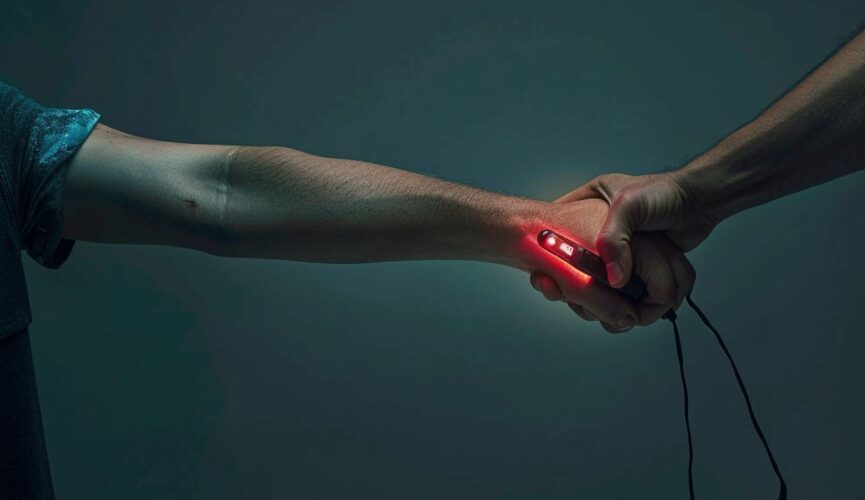
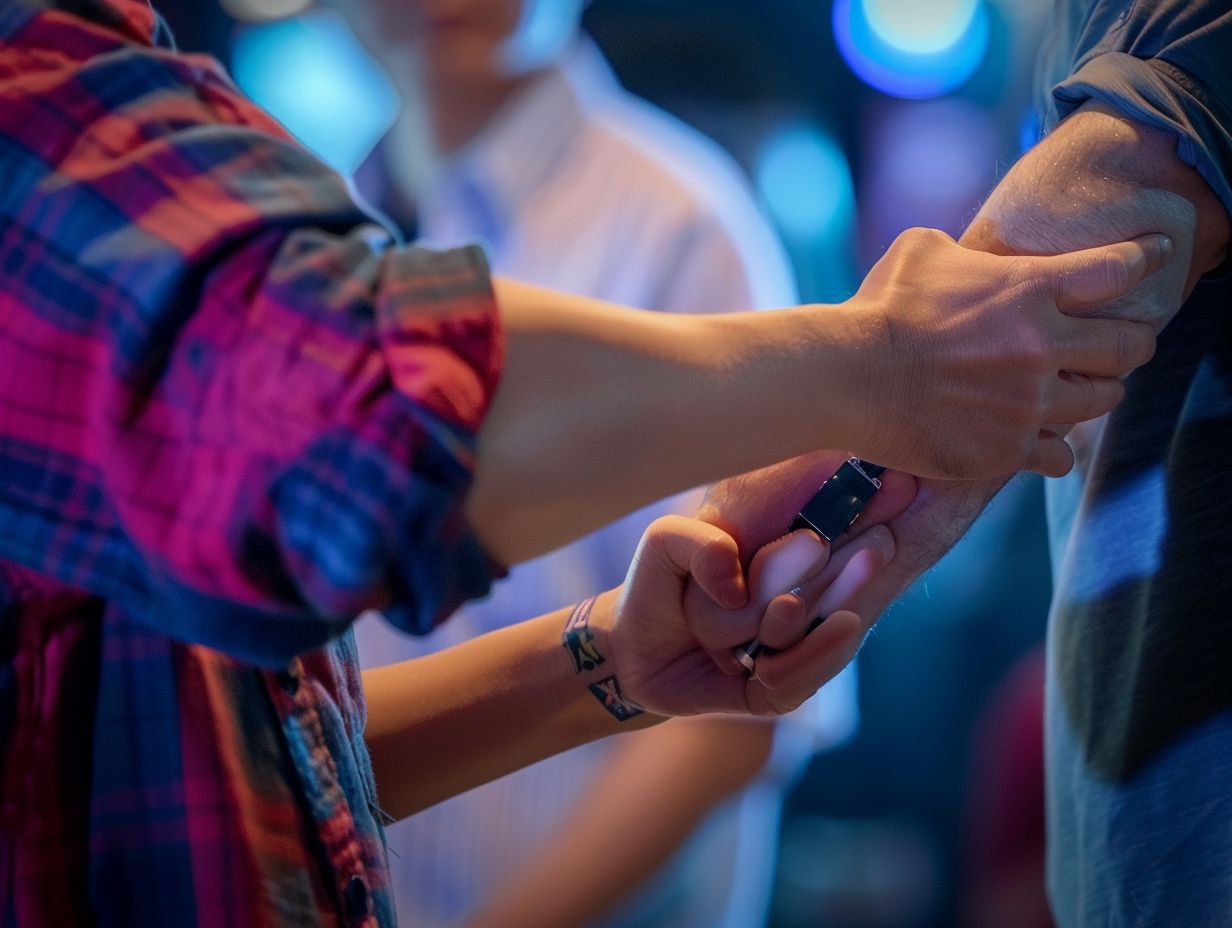
Taser Use and Touching the Person

Regarding Taser use and making physical contact with the person you’re targeting, it’s important for you to grasp the dynamics at play. Understanding these factors is key to evaluating the risks and possible harm that can come from these interactions. Things like how materials conduct electricity and the body’s involuntary muscle reactions are major players in determining the outcomes of these situations.

How Touching Affects Taser Effects

How Touching Affects Taser Effects

When the Taser touches someone, its effects can be influenced by how conductive the materials are, making the electrical discharge more effective. It’s super important to take safety precautions when using the weapon to lower the risks of direct contact.

You need to understand how different materials conduct electricity to see how they can impact the Taser’s shock when it comes into contact with a person. Some materials conduct electricity better than others, which affects how the shock spreads and how intense it is. To keep both yourself and the person you’re targeting safe, it’s crucial for law enforcement to follow strict safety rules when using a Taser. This means trying to avoid direct physical contact whenever you can.

Potential Risks and Dangers

Regarding assessing the potential risks and dangers of Taser use, you need to think about things like weapon misuse, legal requirements, and how you plan to use it for self-defense. It’s important to grasp how these devices can be misused or have unintended negative outcomes if you want to use them responsibly.

A big risk with Tasers is that they can be overused or misused, especially by people in authority like law enforcement officers. If Tasers are used improperly or too much, they can cause serious harm or even fatalities. Following the legal guidelines on how to properly use Tasers is crucial to keep everyone safe. Tasers have this tricky balance between being tools for self-defense and potential weapons, which makes their deployment more complex. You have to find that sweet spot between protection and minimizing risk.

Alternatives to Taser Use

When you’re looking for alternatives to using a Taser, think about non-lethal force options, self-defense tools, emergency response protocols, and the legal rights and tactics that law enforcement use. It’s important to understand all these alternatives to help you manage risks effectively and come up with the right intervention strategies.

Non-Lethal Self-Defense Options

Regarding protecting yourself, there are alternatives to using a Taser that can keep you safe and out of legal trouble. Pepper spray, personal alarms, and self-defense keychains are just a few options that can help you defend yourself without going to extremes.

These non-lethal self-defense tools give you a variety of ways to stay safe without resorting to lethal force. If you ever find yourself in a sticky situation, having these tools on hand can help you defuse things without breaking any laws. By making these tools a part of your safety plan, you’ll be ready to handle any threats that come your way without worrying about the legal fallout of using more aggressive methods.

Frequently Asked Questions

What happens if you taser someone while touching them?

What happens if you taser someone while touching them?

If you taser someone while touching them, the electrical shock from the taser will pass through your body to the person you are touching. This can potentially cause the person to experience a stronger and more prolonged shock.

Can tasers cause serious injury when used while touching someone?

Yes, tasers can cause serious injury when used while touching someone. This is because the electrical shock can affect the nervous system and potentially cause cardiac arrest or other serious complications.

Are there any legal consequences for using a taser on someone while touching them?

Yes, there can be legal consequences for using a taser on someone while touching them. Depending on the circumstances, it could be considered assault or even battery, and you could face criminal charges.

Is it safe to touch someone who has been tasered?

No, it is not safe to touch someone who has been tasered. The electrical shock from the taser can still be present in their body and could potentially harm you if you touch them.

What should I do if I accidentally taser someone while touching them?

If you accidentally taser someone while touching them, you should seek medical attention for both yourself and the person who was tasered. You should also explain the situation to the authorities and cooperate with any investigations or legal proceedings.

Can tasers be used for self-defense while touching an attacker?

Tasers can be used for self-defense while touching an attacker, but it is important to use caution and understand the potential consequences. It is best to avoid physical contact and use the taser at a safe distance if possible.

What Martial Arts Do Navy Seals Use

You might have heard about Navy SEALs and their top-notch combat skills and physical strength, but have you ever wondered about the role martial arts play in their training?

Let’s dive into the significance of martial arts for Navy SEALs and take a closer look at the combat systems they use, such as Krav Maga, Jiu-Jitsu, Muay Thai, Boxing, and other techniques.

Find out why incorporating martial arts into Navy SEAL training is crucial, not just for boosting physical and mental strength but also for enhancing combat readiness and adaptability.

Discover how Navy SEALs incorporate specific techniques, drills, and real-life scenarios into their training to shape themselves into the ultimate warriors.

The Role of Martial Arts in Navy SEAL Training

The Role of Martial Arts in Navy SEAL Training

In your Navy SEAL training, martial arts play a vital role. These elite military units depend on combat skills, physical fitness, and tactical training to succeed in their missions.

Why Martial Arts are Important for Navy SEALs

In Navy SEAL training, martial arts play a crucial role because they focus on combat effectiveness, self-defense, physical conditioning, and mental toughness needed in military operations.

When you practice martial arts, you develop heightened situational awareness, quick reflexes, and improved agility, which are crucial for maneuvering through complex and unpredictable combat environments.

By mastering techniques like grappling, striking, and close-quarter combat, you enhance your ability to neutralize threats efficiently and effectively.

The discipline you gain through martial arts not only sharpens your physical combat skills but also builds mental resilience, helping you stay focused and composed during high-pressure missions.

This comprehensive training approach equips you with the necessary tools to confidently and adaptably face diverse and challenging situations as a Navy SEAL.

Types of Martial Arts Used by Navy SEALs

You should know that Navy SEALs train in a range of martial arts styles to hone their combat skills. They dive into Krav Maga, Brazilian Jiu-Jitsu, Muay Thai, Boxing, and other combat systems to become the ultimate fighting machines.

Krav Maga

In Navy SEAL training, you rely on Krav Maga, a practical and effective martial art known for its focus on self-defense, close combat fighting, and combat readiness. This Israeli combat system gives you the skills needed to quickly neutralize threats, whether armed or unarmed, in high-stress situations.

Krav Maga teaches you efficient strikes, blocks, and defensive tactics so that you can handle unexpected confrontations with precision and confidence. Its emphasis on real-world scenarios and practical application ensures that you are well-prepared to navigate the complex and dynamic nature of modern combat environments.

Jiu-Jitsu

Incorporating Brazilian Jiu-Jitsu into your Navy SEAL training is a game-changer. This martial art focuses on ground fighting and grappling, equipping you with essential combat skills.

Not only does Brazilian Jiu-Jitsu boost your physical strength, but it also hones your mental sharpness, a vital asset in high-stakes situations. Mastering submission techniques gives you diverse tools to control opponents in close combat scenarios. The strategic mindset of Brazilian Jiu-Jitsu seamlessly integrates with the tactical approach of SEALs, enabling you to adapt techniques for mission success. Its emphasis on technique rather than sheer strength makes it a perfect match for Navy SEALs, emphasizing precision and timing to execute moves effectively on the ground.

Muay Thai

Muay Thai

Incorporate Muay Thai into your training regimen to elevate your offensive tactics and combat skills. This versatile martial art is renowned for its striking techniques and clinching moves, making it a valuable tool for enhancing your combat effectiveness.

By practicing Muay Thai, you’ll master powerful strikes using your fists, elbows, knees, and legs. This proficiency in striking enables you to effectively subdue adversaries and maintain control in close combat situations. Furthermore, Muay Thai’s focus on weapon training with swords and spears equips you with a diverse skill set to combat various threats in the field.

Integrating Muay Thai into your training routine transforms you into a well-rounded warrior, capable of executing precise and lethal offensive maneuvers. Enhance your combat prowess by embracing the ancient art of Muay Thai and unleash your full potential as a fighter.

Boxing

You need to understand that Boxing isn’t just about throwing punches; it’s a key part of Navy SEAL training for boosting your defensive moves and physical stamina.

When you get the hang of Boxing, you’re not just honing your fighting skills. It’s all about building discipline and mental grit for you aspiring Navy SEALs out there. By adding Boxing drills to your training routine, you’ll learn to move with speed, predict your opponent’s moves, and sharpen those lightning-fast reflexes that are a must in critical missions.

The tough training in Boxing will push you to your limits, getting you ready for the physical challenges you might face in real-life missions. The mental strength you’ll gain from Boxing will help you keep your cool and stay focused when things get intense on the battlefield.

Other Combat Systems

Plus mastering specific martial arts styles, you are trained in various combat systems and tactics as a Navy SEAL. This training is crucial for developing your tactical skills, combat readiness, and specialization as a combat specialist.

These combat systems cover a wide range of techniques and strategies that are all about close-quarters combat, urban warfare, marksmanship, and unconventional warfare. During intense training exercises, you get to sharpen your skills using high-tech combat gear like night vision goggles, tactical vests, and top-notch weaponry.

Through immersing yourself in simulated combat scenarios and live-fire drills, you get to practice reacting quickly and decisively in high-pressure situations. This kind of training isn’t just about physical toughness but also about mental resilience and discipline, making sure you are ready for any challenge that comes your way. The whole process also fosters a strong sense of teamwork among you and your fellow elite combat specialists.

Benefits of Martial Arts for Navy SEALs

When you’re a Navy SEAL, martial arts offer more than just physical training. They help you build mental toughness, prepare for combat situations, stay adaptable, and refine crucial skills needed for your missions.

Physical and Mental Training

As a Navy SEAL, you know that martial arts training is key to boosting your combat skills, endurance, mental toughness, and discipline for those tough missions.

When you dive into intense martial arts training, you’re not just building up your physical strength, agility, and flexibility. You’re also sharpening your mental resilience for those high-pressure combat situations. By mastering different combat techniques and strategies, you’re gearing up to nail those precise strikes and tackle tricky battle scenarios confidently.

The structured discipline ingrained in martial arts practices also helps foster accountability and focus within your SEAL team. This ensures you all work together smoothly and effectively to crush those mission objectives.

Combat Readiness and Adaptability

Combat Readiness and Adaptability

When you’re a Navy SEAL, martial arts training is your secret weapon. It gives you the skills, combat experience, and expertise you need to be ready for anything out there in the field. Mastering different martial arts disciplines hones your situational awareness and sharpens your quick thinking in those high-stress moments.

It’s not just about becoming a physical powerhouse; it also boosts your mental toughness and decision-making abilities.

The intense training routine teaches you discipline and patience – two qualities that are vital for pulling off those tricky military missions with precision and speed. By sticking to your training day in and day out, you develop a deep understanding of combat tactics and strategies. This means you can handle whatever curveballs get thrown your way and adapt like a pro when things get unpredictable.

How Navy SEALs Incorporate Martial Arts into Training

When you integrate martial arts into your Navy SEAL training, it’s all about mixing in those specific techniques, getting down and dirty with realistic drills, and diving into scenario-based simulations. This combo helps to level up your combat skills, boost your physical fitness, and amp up your overall combat game.

Specific Techniques and Drills

You engage in specific martial arts techniques and drills as part of your structured combat training program to develop your hand-to-hand combat skills, instill combat training principles, and follow a rigorous martial arts training program.

This includes a variety of combat techniques such as striking, grappling, and ground fighting, through which you learn to defend yourself and neutralize threats effectively. The focus on combat principles like discipline, adaptability, and mental fortitude ensures that you are well-equipped to handle high-pressure combat situations.

The structured martial arts program integrates different styles like Brazilian Jiu-Jitsu, Krav Maga, and Muay Thai to provide you with a diverse skill set for versatile combat scenarios.

Real-Life Scenarios and Simulations

In your training, you immerse yourself in tactical combat operations, just like Navy SEALs do. You engage in combat training exercises that focus on hand-to-hand combat and specialized combat tactics.

These scenarios and simulations are key parts of your intense training routine. They give you the practical experience necessary to navigate tricky combat environments with precision and efficiency. With cutting-edge technology and strategic planning, you can sharpen your skills in all kinds of combat situations, getting you ready for any mission that comes your way.

By constantly putting yourself to the test in realistic scenarios, you build up the resilience and adaptability needed for high-stakes operations, making you part of one of the most elite forces in the world.

Frequently Asked Questions

What martial arts do Navy SEALs use?

What martial arts do Navy SEALs use?

Navy SEALs primarily use a blend of martial arts techniques known as the SEAL Martial Arts Program (SEALMAP). This includes elements of Brazilian Jiu-Jitsu, Boxing, Muay Thai, and Krav Maga.

What is SEALMAP?

SEALMAP is a comprehensive martial arts program developed specifically for Navy SEALs. It combines various techniques and principles from different martial arts disciplines to create a well-rounded combat system.

Why do Navy SEALs use a blend of different martial arts?

Navy SEALs are trained to adapt to any situation and operate in various environments. Therefore, they require a versatile and dynamic martial arts system that can be applied in a variety of scenarios.

Are there any other martial arts that Navy SEALs use?

Plus SEALMAP, Navy SEALs may also incorporate elements of Krav Maga, Judo, Taekwondo, and Karate into their training. However, SEALMAP remains the core martial arts program used by SEALs.

Do Navy SEALs receive hand-to-hand combat training?

Yes, hand-to-hand combat training is an integral part of the Navy SEAL training program. SEALs are trained in various martial arts techniques to defend themselves in close-quarters combat situations.

Can anyone learn the martial arts used by Navy SEALs?

While the techniques and principles used by Navy SEALs may be taught in some martial arts schools, SEALMAP is specifically designed for the unique needs and missions of Navy SEALs. It is not available for public instruction.

What Is A Pickleball Court Made Of

Interested in learning about what goes into making a pickleball court?

In this article, you’ll delve into the materials used for pickleball courts.

  • We’ll cover the common court materials, weigh the pros and cons of different options, explore factors to keep in mind when selecting a court material, and share tips for maintenance.
  • We’ll also chat about the upkeep and longevity of pickleball courts, along with cost comparisons of various court materials.
  • Keep reading to uncover more about the intriguing world of pickleball court construction!

What is Pickleball?

What is Pickleball?

When you step onto the pickleball court, you’re diving into a paddle sport mashup of tennis, badminton, and table tennis. The game unfolds on a rectangular court with a net slicing it in half, and your goal is to volley a plastic ball with holes over the net using your paddle.

Back in 1965, Joel Pritchard, Bill Bell, and Barney McCallum cooked up Pickleball on Bainbridge Island, Washington. Thanks to its simple rules and social vibe, Pickleball quickly became a hit for players of all ages. The USA Pickleball Association (USAPA) takes the lead in the sport, setting the official rules and overseeing the game in the US.

Your Pickleball gear typically includes paddles crafted from composite materials or wood, and a plastic ball with precisely drilled holes to slice through the wind. The International Tennis Federation (ITF) has also hopped on the Pickleball bandwagon, recognizing it as a sport on the rise globally, complete with tournaments and leagues popping up all over the world.

Materials Used for Pickleball Courts

When you’re building a pickleball court, it’s important to pick the right materials that will give you durability and top-notch performance. The materials for your pickleball court can depend on things like where you’re putting it (inside or outside), your budget, and the kind of playing experience you want.

Overview of Common Court Materials

Regarding pickleball courts, you’ve got options like acrylic, asphalt, and concrete to choose from. Each material brings its own flair to the game, affecting things like bounce, texture, speed, and grip.

Acrylic courts are all about that consistent bounce, giving you a reliable playing surface to work with. The smooth texture of acrylic also amps up the ball speed, perfect for those who like a fast-paced game. Just watch out for the grip – it can be a bit tricky during those quick side-to-side moves.

On the flip side, asphalt courts give you killer grip thanks to their slightly rough texture, letting you really dial in your shots. But keep in mind, the bounce on asphalt can be a bit unpredictable, adding an element of surprise to your play.

Then there’s concrete – tough, affordable, but maybe not the kindest to your joints. The hard surface texture might not be as forgiving, so you might feel it in those knees after a long match.

Pros and Cons of Different Court Materials

You need to understand the pros and cons of different pickleball court materials to make a smart choice. Sure, materials like fiberglass are tough and easy to take care of, but remember to think about things like how often they might need resurfacing.

Factors to Consider for Choosing Court Material

Factors to Consider for Choosing Court Material

When you’re picking out a material for your pickleball court, there are a few things you need to think about. Consider factors like dimensions, specifications, and where you’ll be playing. Each material choice can really make a difference in how your court plays and how long it lasts.

Make sure the court dimensions match up with official standards so you can have a fair game every time. The material specifications, like surface texture and resilience, are super important for player safety and performance. Think about where you’ll be playing – indoors or outdoors – to figure out the best material for your court. By looking into all these factors, you’ll be able to create a killer pickleball court that not only follows the rules but also improves your playing experience.

Maintenance and Durability of Pickleball Courts

You know that taking care of pickleball courts is crucial to keeping them in top shape. Regular maintenance, like resurfacing and repainting, is key to making sure the court lasts a long time and offers the best playing experience.

Tips for Maintaining Different Court Materials

Regarding maintaining different court materials, you need to follow specific care routines to keep them in top shape for the long haul. Things like regular striping and surface treatments can go a long way in preserving the quality of your court over time.

For asphalt courts, make sure to fill any cracks pronto to stop water from seeping in and causing damage. Keeping a close eye on the surface for signs of wear and tear is crucial to maintaining its smoothness and integrity.

If you have concrete courts, giving them a fresh coat of acrylic paint not only boosts their looks but also adds a protective layer for added durability.

And for clay courts, nailing the watering and grooming techniques is key to keeping dust at bay and ensuring a consistent playing surface.

Cost Comparison of Different Court Materials

When you’re planning and budgeting for a pickleball court, you need to compare the costs of different materials. Think about things like how much it’ll cost to install each option and whether you can do it yourself. These factors will play a big role in determining the overall cost of building your pickleball court.

Factors Affecting Cost and Potential Savings

Factors Affecting Cost and Potential Savings

When building your pickleball court, there are a few things that can sway the overall cost, like labor expenses, professional contractor fees, and material costs. Take a closer look at these factors to sniff out some potential savings.

Professional contractor fees are a big part of the cost puzzle. Sure, hiring pros might mean shelling out more upfront, but their skills can lead to a smoother, top-notch build that saves you money on maintenance in the long run.

Choosing the right materials at the planning stage is key to balancing quality and affordability. Opt for cost-effective options that don’t skimp on durability. By exploring different materials and teaming up with contractors to make the most of resources, you can cut costs without sacrificing the look and function of your pickleball court.

Frequently Asked Questions

What is a pickleball court made of?

A pickleball court is typically made of a hard, smooth surface such as concrete, asphalt, or wood. These materials provide a sturdy and consistent playing surface for the game.

What is the most common material used for pickleball courts?

Concrete is the most common material used for pickleball courts, as it is durable and easily accessible. Many public parks and recreational centers have concrete courts available for use.

Can a pickleball court be made of other materials?

Can a pickleball court be made of other materials?

Yes, in addition to concrete, pickleball courts can also be made of asphalt, which is a more affordable option, or wood, which is popular for indoor courts. Some courts may also use synthetic materials or turf.

What is the ideal size for a pickleball court?

A standard pickleball court is 20 feet wide and 44 feet long, with a 36-inch-high net in the center. However, court sizes may vary depending on the available space and court regulations in different locations.

Are there any specific requirements for the playing surface of a pickleball court?

Yes, the surface of a pickleball court must be smooth and free of any cracks or irregularities. It should also have minimal bounce and be able to provide traction for players to make quick movements on the court.

Can a pickleball court be used for other sports?

Yes, a pickleball court can also be used for other sports such as tennis or badminton. The court dimensions and net height may need to be adjusted accordingly, but the surface material can still be the same.

How Did Pickleball Get Its Name

You might be interested to know that pickleball, a paddle sport that mixes tennis, badminton, and ping-pong, has quite the origin tale dating back to the mid-1960s.

Let’s dig into how this quirky game was created and how it’s changed over time. We’ll also uncover the cool story behind why it’s called “pickleball” and how it’s become more and more popular since it first started.

Come along with us as we explore the history, current status, and future of pickleball.

The Origins of Pickleball

The Origins of Pickleball

The Origins of Pickleball can be traced back to the mid-1960s when Joel Pritchard, Bill Bell, and Barney McCallum, three fathers on Bainbridge Island, Washington, invented the game as a combination of badminton, tennis, and table tennis.

You might find it interesting that this unique mix of sports elements led to the creation of a new, exciting game that quickly gained popularity among their friends and families. With a lowered badminton net, modified paddles, and a plastic ball, the trio developed the game to be accessible and enjoyable for players of all ages and skill levels. The simplicity of the rules and the fast-paced, energetic nature of pickleball made it a hit, eventually spreading beyond the boundaries of Bainbridge Island to become a well-loved sport worldwide.

How the Game was Invented

When you think about it, Pickleball has a pretty quirky origin story. It all started when some parents got tired of their kids moping around on a boring summer day. They decided to mix things up by creating a new game using bits and bobs from badminton, tennis, and table tennis.

Picture this: Joel Pritchard, Barney McCallum, and Bill Bell are hanging out in their backyard in Bainbridge Island, Washington back in 1965. They grabbed a badminton net, ping pong paddles, and a plastic ball with holes in it, and boom – a mini tennis court was born. This mishmash of sports gear gave birth to a game that’s part tennis strategy, part badminton finesse, and part table tennis reflexes. At first, they called it ‘Paddle Rackets,’ but then they switched it up to ‘Pickleball’ as a nod to their dog, Pickles, who had a thing for chasing stray balls.

Early Years of Pickleball

In the early years of Pickleball, you’d see the game going through some serious glow-ups. They were refining everything – rules, equipment like paddles and balls, court dimensions, and even gameplay techniques, all to make sure that playing was top-notch.

During that time, big changes were happening in the game. They were bringing in standardized court sizes and net heights to keep things consistent. And as more people got into Pickleball, players started tinkering with different paddle materials to get that sweet spot between power and control. Strategies were changing too, focusing on court positioning, nailing shot placement, and working together as a team. These shifts laid down the groundwork for a more structured and competitive side to Pickleball, paving the way for its big breakout and all the changes that were still to come.

Development and Evolution

In the Early Years of Pickleball, you saw the game transform from a backyard hobby to a proper sport with rules, court sizes, and specialized gear to keep all the players happy.

One big change at that time was setting standard court dimensions, making sure everyone played by the same rules. And let’s not forget about the non-volley zone, or the kitchen, which brought a whole new level of strategy to the game. Plus, with better paddles and special pickleball balls, the equipment got a big upgrade, making the sport even more popular with fans. These milestones from pickleball’s early days set the stage for its future success, turning it into a competitive and exciting sport loved by many.

The Naming of Pickleball

The Naming of Pickleball

In terms of the Naming of Pickleball, you’re in for a whimsical tale! Some folks say it all goes back to the Pritchard family dog, ‘Pickles,’ while others bet on the ‘pickle boat‘ term from crew racing.

Even though the name’s origins are a bit fuzzy, these two popular theories sure keep pickleball fans intrigued. The ‘Pickles’ theory is all about the Pritchard family pooch, supposedly a ball-chasing enthusiast that inspired the name ‘pickleball.’ On the flip side, the ‘pickle boat’ theory links the game’s makeshift gear to the art of ‘pickling,’ where you mix different wood pieces to craft a unique oar, kind of like the diverse elements that come together in pickleball equipment.

The Story Behind the Name

The fascinating tale of how Pickleball got its name revolves around multiple theories that have surfaced over the years, connecting it to the Pritchard family’s pet dog ‘Pickles’ and the term ‘pickle boat’ from rowing, giving the game a unique touch.

You might have heard enthusiasts claiming that the sport was named after the ‘pickle boat’ crew, representing a boat made up of leftover oarsmen. Others suggest that ‘pickle’ pays tribute to the blend of sports like tennis, badminton, and ping pong in the game, possibly inspiring the quirky name.

The mystery surrounding Pickleball’s name has turned it into a topic of curiosity and discussion among players and fans, adding to the game’s rich lore and history.

Spread of Pickleball

As you dive into the world of Pickleball, you’ll see how its popularity has exploded, bringing together a lively community of players, fans, and serious competitors who jump into local and national tournaments, even big ones like the USAPA Nationals.

This surge in interest is all thanks to how easy Pickleball is to pick up, making it a game for everyone, no matter their age or skill level. The camaraderie and fun competition among players have led to pickleball clubs and leagues popping up all over the country, strengthening the sport’s community spirit. Big tournaments like the US Open Pickleball Championships and the Tournament of Champions attract top-notch players from across the globe, showing off the serious skills and passion that drive the competitive side of pickleball.

Popularity and Growth of the Game

The phenomenal popularity and exponential growth of Pickleball have transformed the sport into a global sensation, attracting a diverse community of players and fostering a competitive environment marked by prestigious tournaments like the USAPA Nationals.

If you’ve noticed the surge in interest, it’s all because of pickleball’s inclusive nature. This sport draws players of all ages and skill levels to participate in engaging matches. The sense of camaraderie and friendly competition within the pickleball community has been a driving force behind its widespread appeal. Hosting major tournaments like the US Open Pickleball Championships has brought even more attention to the sport. These events showcase top-tier talent and fuel the competitive spirit among players globally.

Pickleball Today

Pickleball Today

At the intersection of skillful gameplay, strategic mastery, and sheer enjoyment stands Pickleball Today. Here, you and fellow players showcase your techniques, execute tactical strategies, and engage in spirited rallies to score points, embodying the fun and competitive spirit of the sport.

The contemporary pickleball scene gets an extra boost from organizations like the USAPA, which actively promote the game’s growth and development through tournaments, clinics, and community initiatives. On top of that, the esteemed Pickleball Hall of Fame recognizes outstanding players and contributors who’ve left a lasting mark on the sport. This acknowledgment acts as proof of the evolving skillsets and achievements within the pickleball community, motivating players of all levels to aim for greatness and revel in the camaraderie that defines this lively and rapidly expanding sport.

Current State and Future of the Sport

When you look at the Current State and Future Outlook of Pickleball, you see a community that’s all about growth and innovation. Players, coaches, and fans are coming together to refine strategies, improve techniques, and introduce exciting new elements to the game, making sure that pickleball stays dynamic and engaging for enthusiasts everywhere.

Embracing technology is key to the sport’s evolution. With innovations like vibration-dampening paddles and smart court sensors for instant performance feedback, pickleball is on the brink of a new era focused on precision and data-driven gameplay. Imagine integrating virtual reality training simulations and AI-powered coaching tools – these advancements could completely change how players develop their skills and plan their strategies, making pickleball more inclusive and competitive for everyone.

And let’s not forget about the sport’s growing popularity across different age groups and countries. With this kind of global reach, there’s even talk of pickleball becoming an Olympic sport, solidifying its reputation as a respected and celebrated athletic pursuit. This is just the beginning for pickleball.

Frequently Asked Questions

What is the history behind pickleball’s name?

Pickleball got its name from the family dog of its inventors, who was named Pickles. They would play the game in their backyard and Pickles would often chase after the stray balls, giving the game its unique name.

Was the game originally called pickleball?

Was the game originally called pickleball?

No, the game was initially named “Pickle’s Ball” after the dog who inspired its name. However, over time the name was shortened to pickleball.

Who invented pickleball?

Pickleball was invented in 1965 by Joel Pritchard, Bill Bell, and Barney McCallum in Washington state. They wanted to create a game that the whole family could play and that would be less strenuous than traditional sports.

Were other names considered for the game?

Yes, the game was almost named “Paddle Ball” or “The Pickleball Game” before it settled on its current name. The inventors also briefly considered naming it after a street in Bainbridge Island, where they first played the game.

Did the name “pickleball” have any specific meaning?

No, the name was simply chosen because the inventors thought it was catchy and unique. However, some people believe that the word “pickle” in the game’s name is a nod to the word’s meaning as a confusing or difficult situation, as pickleball is often described as a combination of different sports.

Is pickleball related to any other sport that has a similar name?

Yes, pickleball is often compared to the game of badminton, which is also played with paddles and a small plastic ball. However, pickleball has different rules and a different court size, making it a unique sport in its own right.
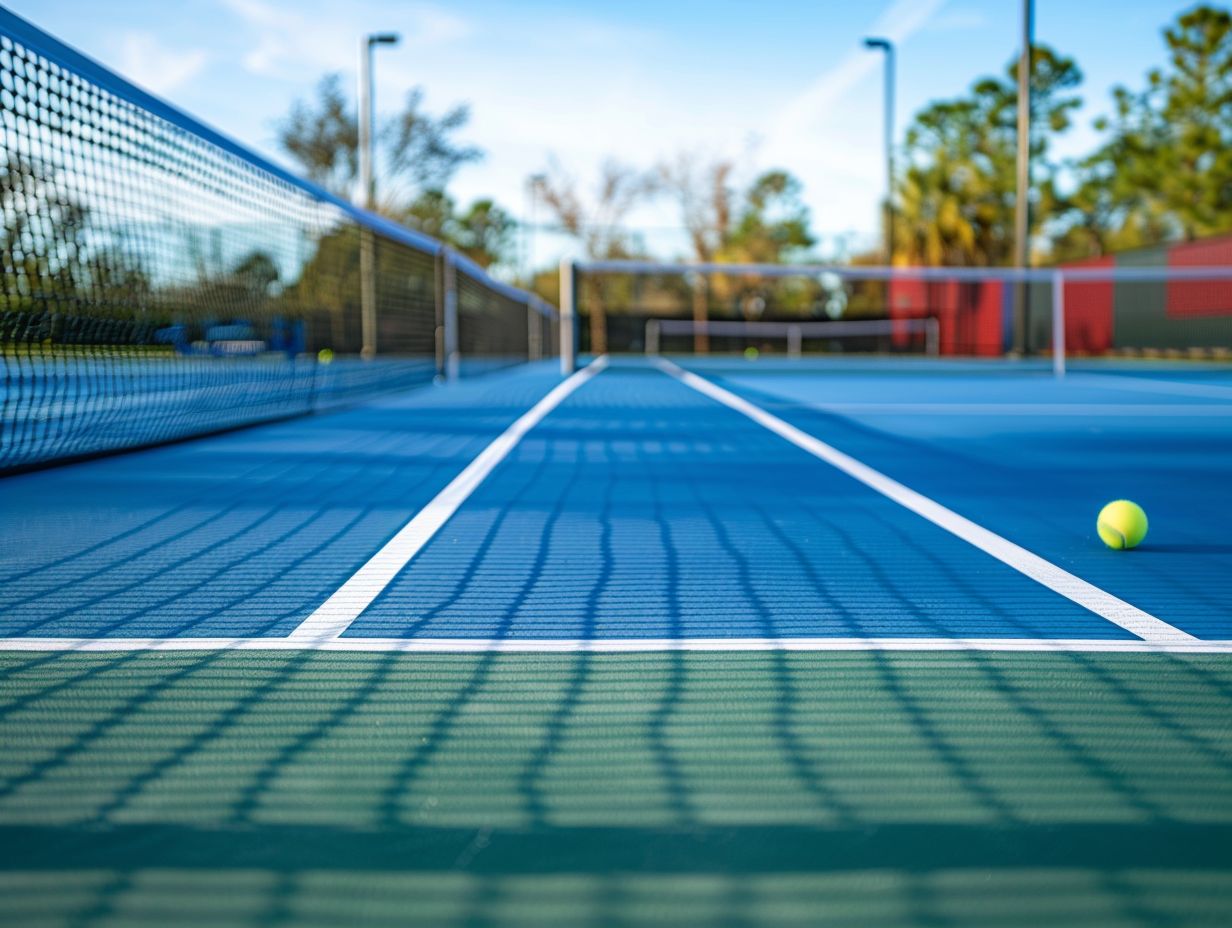
Tang Soo Do History

Explore the rich history and evolution of Korean martial arts through the origins of Tang Soo Do. From its development and influential figures to its core philosophy and principles, this article delves into the training techniques, basic forms, and weapons training associated with this traditional martial art. Discover how Tang Soo Do has spread and gained popularity in modern times, as well as its incorporation in other martial arts practices. Dive into the world of Tang Soo Do and uncover its enduring legacy.

The Origins of Tang Soo Do

The Origins of Tang Soo Do

When you delve into Tang Soo Do, you’re stepping into a world with a fascinating history that traces back to ancient Korea. This martial art is more than just punches and kicks—it’s a tapestry of combat techniques, philosophy, and cultural values that have been handed down through the ages.

You can thank Grandmaster Hwang Kee for the development of Tang Soo Do. His vision and unwavering dedication were instrumental in molding the art into what it is today. Back in 1945, Kee founded the Moo Duk Kwan, a martial arts school that played a huge role in spreading the practice of Tang Soo Do across the globe. Tang Soo Do isn’t just about the physical moves; it’s also about instilling values like honor, respect, and self-discipline. It’s a holistic art form that goes beyond just learning self-defense techniques.

History and Evolution of Korean Martial Arts

In terms of Korean martial arts, you can see a rich history and evolution that spans centuries in East Asia. These martial arts have been influenced by forward-thinking founders and philosophical beliefs that focus on discipline, respect, and personal growth.

If you delve into the roots of Korean martial arts, you’ll find yourself travelling back to the Three Kingdoms period in ancient Korea. It was a time when battlefield combat techniques were refined and eventually transformed into the diverse range of martial arts practices we know today. At the core of these arts lies a deep philosophy that stresses the harmonious balance of mind, body, and spirit.

This holistic approach is reflected in values like integrity, perseverance, and an unbeatable spirit, which have become synonymous with Korean martial arts. As these traditions spread across East Asia, they have not just thrived but also maintained their fundamental principles and cultural significance.

Development of Tang Soo Do

Your journey in Tang Soo Do has been shaped by influential figures and schools that have helped mold it into a respected martial art with a structured belt system. As you progress from a white belt to a black belt, you’re symbolizing your growth through mastering techniques and showing your dedication to the art.

This evolution can be seen by exploring the rich history of martial arts, where each technique carries the wisdom passed down by previous masters. The introduction of the belt system added a new layer of symbolism, with each belt denoting a stage of progress and accomplishment. The black belt, in particular, holds immense importance as it represents the achievement of a high level of skill and knowledge in Tang Soo Do.

Earning that black belt isn’t just about physical abilities; it’s also about embracing the values of discipline, respect, and perseverance that are deeply ingrained in martial arts traditions. It’s a true testament to your dedication and growth in Tang Soo Do.

Influential Figures and Schools

In the realm of Tang Soo Do, influential figures like Grandmaster Hwang Kee have shaped the art through their expertise in techniques, sparring methods, and mastery of kicks, punches, and blocks. Their contributions have left a lasting impact on the training and principles of Tang Soo Do.

These influential figures played a pivotal role in refining your technical proficiency as a Tang Soo Do practitioner. They introduced innovative sparring skills that revolutionized the way you approach combat in your training sessions. By focusing on perfecting essential elements like kicks, punches, and blocks, they raised the standards of excellence within the art. Through their dedication and passion, they instilled a sense of discipline and precision in you, ensuring that the tradition of Tang Soo Do continues to flourish and evolve.

Philosophy and Principles of Tang Soo Do

Philosophy and Principles of Tang Soo Do

At the heart of Tang Soo Do, you’ll find profound philosophical values that emphasize the importance of discipline, respect, and honor in your journey as a practitioner. These principles will be your compass, guiding you and shaping your character as you develop your physical skills.

These values aren’t just theories to memorize; they’re meant to be woven into your everyday life, influencing how you carry yourself in and out of the dojang. By honing your discipline, you’ll build mental strength to tackle any obstacles that come your way. Respect will be the cornerstone of your interactions, fostering positive relationships and understanding with your peers. And let’s not forget about honor – it’ll be your compass, guiding you to always choose integrity and kindness in your actions.

Core Tenets and Values

In Tang Soo Do, you’re all about that continuous self-improvement, mental sharpness, and mastering combat techniques like a boss. It’s not just about rocking the physical side of things, but also about building up that mental resilience and chasing after personal growth.

In terms of Tang Soo Do, mental toughness is where it’s at. They’re all about discipline and inner strength, alongside the physical grind. By diving into meditation, breathing exercises, and mindfulness techniques, you’re beefing up that mental clarity and learning to keep cool under pressure. Balancing mental and physical skills sets you up for a well-rounded martial arts game that goes way beyond just throwing punches and kicks.

Training and Techniques in Tang Soo Do

In Tang Soo Do training, you will experience a wide range of techniques that cover everything from graceful forms that blend power and elegance to intense sparring sessions that focus on perfecting your kicks and strikes. Each aspect of your training is all about sharpening your precision, agility, and combat skills.

When you practice forms in Tang Soo Do, you’re not just showing off the art’s beauty – you’re also building up muscle memory and honing your movements. These Hyungs (forms) challenge you to perform a series of specific movements with precision and control.
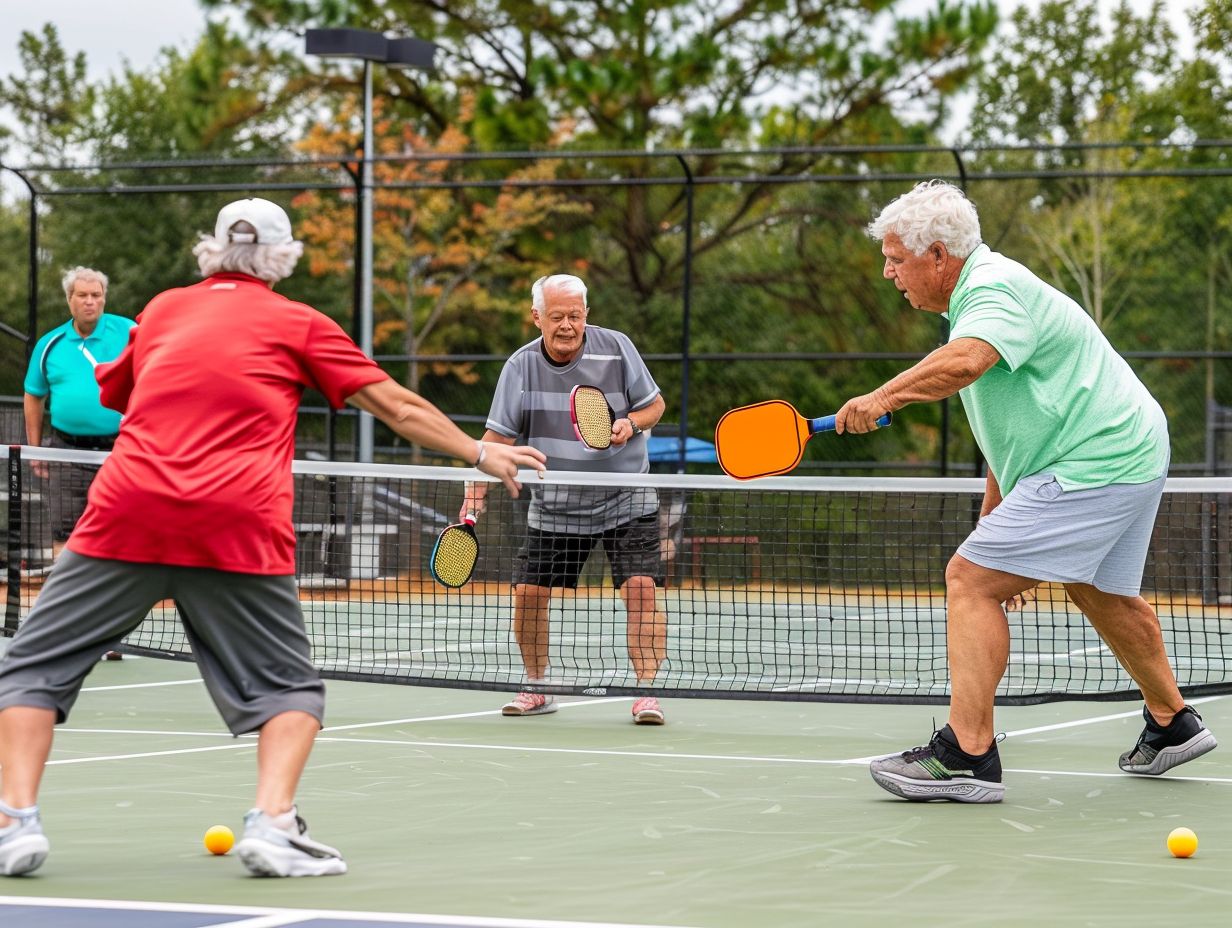
On the flip side, sparring sessions in Tang Soo Do give you the chance to put those technical skills into action in a dynamic and realistic environment. It’s all about speed, timing, and footwork to make sure you’re combat-ready and proficient.
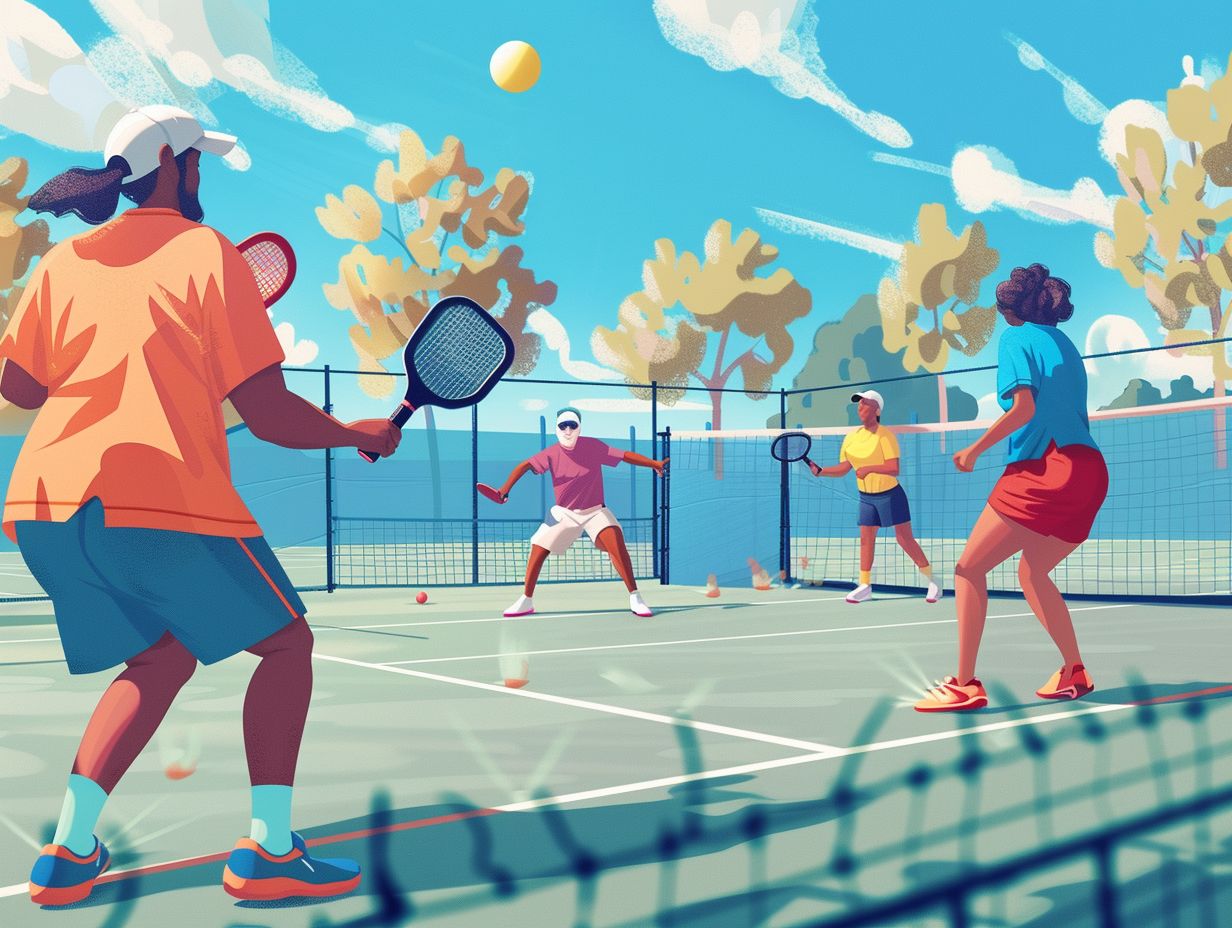
Basic Forms and Movements

In Tang Soo Do, the basic forms and movements lay the groundwork for your training, mixing traditional techniques with modern strategies to amp up your combat game. These foundational forms are all about discipline and precision, getting you ready to handle any combat scenario.

Think of these basic forms as your training wheels, helping you sharpen your skills and dial-in your focus for combat situations. By practicing these fundamental elements over and over, you’ll build muscle memory and boost your ability to whip out techniques with speed and accuracy. Tang Soo Do really hammers home the importance of these basic forms, teaching you to respect the tradition and lineage of the martial art and instilling a strong sense of discipline that goes way beyond the physical side of things.

Weapons Training

Weapons Training

In Tang Soo Do, you get to dive into the world of martial arts weaponry while also learning modern combat techniques. This combo gives you a solid grasp of both traditional and contemporary self-defense strategies. The focus during weapon training is all about discipline, control, and paying homage to the art’s historical background.

When you’re training with weapons, the key is to embody discipline and control. You’re always pushing yourself to perfect your moves with pinpoint accuracy. Mixing old-school weapons with modern combat styles doesn’t just level up your physical skills—it also sharpens your mind and strategic thinking. By exploring the ins and outs of weapon-based combat, you start to appreciate the deep history and cultural importance of martial arts weaponry. It creates a sense of respect and admiration for these ancient tools of self-defense.

Tang Soo Do in Modern Times

In modern times, Tang Soo Do has spread its influence globally, captivating martial arts enthusiasts like you with its dynamic techniques and rich heritage. Its integration into other martial arts disciplines like Soo Bahk Do has further enriched the martial arts landscape.

The adaptability of Tang Soo Do has been a key factor in its integration into diverse martial arts practices, contributing to the evolution of the overall martial arts community. By incorporating elements of Tang Soo Do into your own techniques, practitioners of Soo Bahk Do like you have embraced a new dimension of training and skill development. This cross-pollination of styles not only enhances your individual martial arts repertoire but also fosters a spirit of collaboration and mutual learning among different disciplines.

Spread and Popularity of the Art

Your journey into the world of Tang Soo Do goes beyond borders, immersing you in the richness of Korean culture and revealing the art’s technical brilliance and organized belt system. The reason this martial art form has captured hearts worldwide is its perfect mix of tradition, modernity, and a systematic approach to martial arts training.

Tang Soo Do, deeply rooted in ancient Korean customs, puts a strong emphasis on discipline, respect, and personal growth. As you practice Tang Soo Do, you’re not just mastering physical moves but also embracing values like persistence and modesty.

The belt system, starting from white and progressing to black, showcases your evolution through different learning stages. Each belt color signifies a step forward and reflects your commitment and expertise. This structured ranking system adds a sense of accomplishment and motivation, pushing you to constantly improve and excel in your training.

Incorporation in Other Martial Arts

When you incorporate Tang Soo Do principles into other martial arts like Taekwondo, you’re not just adding a new flavor – you’re strengthening the core of your self-defense skills and keeping the spirit of tradition alive in today’s combat techniques. This blend of styles really shows how Tang Soo Do’s philosophy can stand the test of time in modern martial arts.

By mixing Tang Soo Do principles into Taekwondo and other martial arts, you’re not just improving your physical combat abilities – you’re also developing a strong sense of respect for tradition and discipline. The focus on self-defense techniques in these combined practices ensures that you’re ready to defend yourself in any situation. This fusion honors the martial arts legacy while adapting to the demands of the present day, showcasing the lasting impact and flexibility of Tang Soo Do philosophy.

Frequently Asked Questions

Frequently Asked Questions

What is the history of Tang Soo Do?

Tang Soo Do is a Korean martial art that originated from the ancient martial arts of Koguryo, Silla, and Baekje dynasties. It was developed by Grandmaster Hwang Kee in the 1940s and is a combination of Chinese martial arts and traditional Korean martial arts.

Who is the founder of Tang Soo Do?

Grandmaster Hwang Kee is recognized as the founder of Tang Soo Do. He studied various martial arts styles and combined them to create Tang Soo Do in 1945.

What is the meaning of Tang Soo Do?

The term “Tang Soo Do” can be translated to mean “the way of the Chinese hand deriving from the Chinese martial arts that influenced its creation.

How did Tang Soo Do spread globally?

In 1968, Grandmaster Hwang Kee established the World Tang Soo Do Association (WTSDA) with the goal of spreading the art to the world. Today, there are over 600,000 members in over 60 countries practicing Tang Soo Do.

What are the principles of Tang Soo Do?

The five principles of Tang Soo Do are: integrity, concentration, perseverance, respect, and humility. These principles are meant to guide practitioners not only in their training but also in their daily lives.

What are the different forms in Tang Soo Do?

Tang Soo Do has various forms, including basic forms, advanced forms, weapon forms, and energy forms. The forms are a series of movements that simulate combat situations and allow practitioners to practice techniques and improve their skills.