Tag: training

How Do MMA Fighters Get Ready For a Fight

Training for an MMA fight is no walk in the park. You need to focus on physical conditioning, technical training, and mental preparation to come out on top. Your nutrition is crucial in giving you the energy and strength to perform at your peak.

Don’t forget about recovery and injury prevention – they’re vital in your training routine. From your intense training camp to the post-fight recovery period, every little detail matters for your success in the ring.

Come along with us as we dive into the realm of MMA training and discover what it really takes to get ready for a fight.

Training for an MMA Fight
Training for an MMA Fight

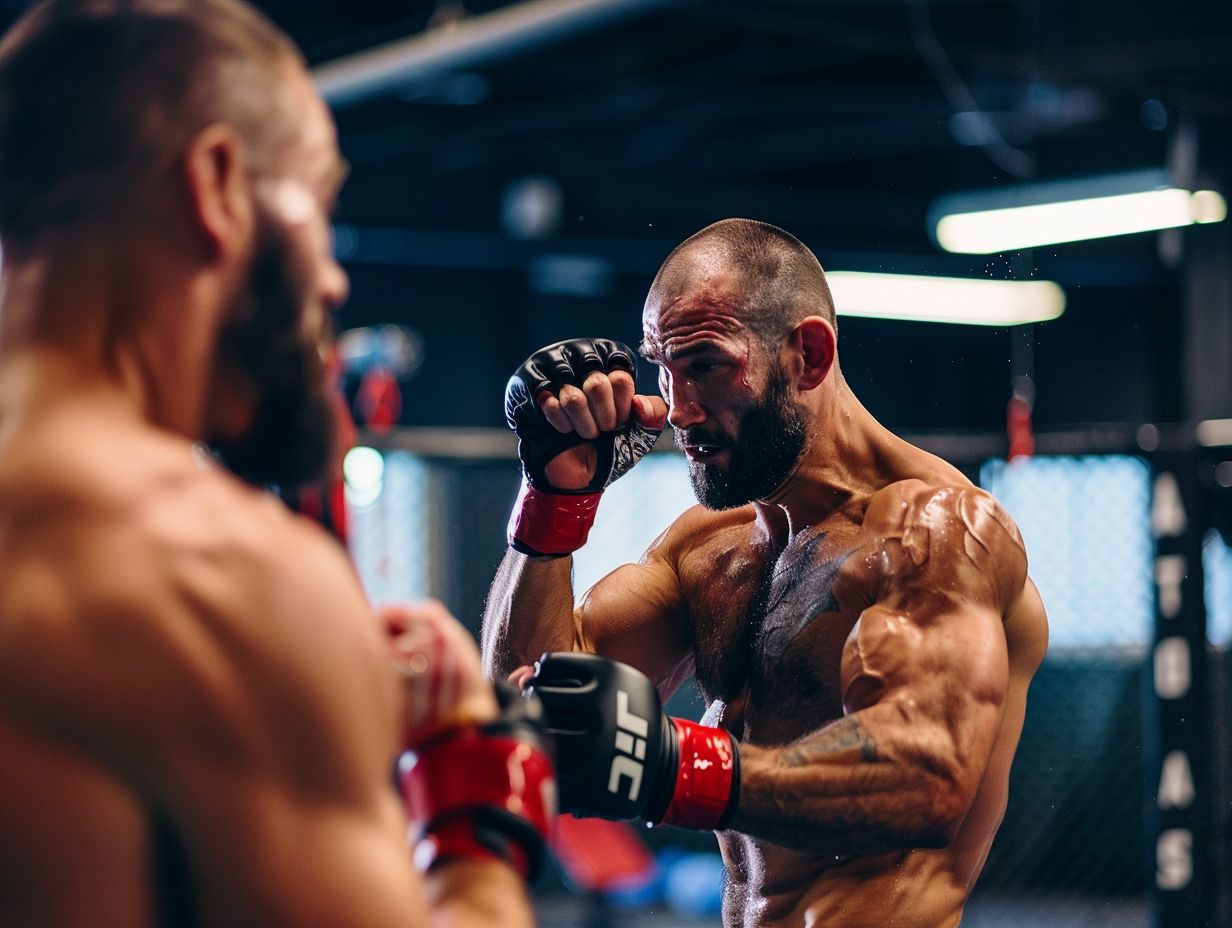
When preparing for an MMA fight, you need to focus on a mix of physical, technical, and mental prep to make sure you’re at your best when it’s time to step into the ring. This means sticking to tough training routines, mastering specific techniques, going all out in sparring sessions, and staying disciplined with your conditioning.

1. Physical Conditioning

When you’re training for MMA, don’t forget that physical conditioning is your best friend. It’s all about getting strong, building up your stamina, improving your agility, and boosting your speed – all to level up your overall fitness and performance when you step into that cage.

Cardio workouts are your secret weapon for increasing your endurance and keeping your heart healthy. They help you go the distance in those high-intensity fights without feeling like you’re running on empty.

You can’t skip out on strength training if you want to pack a punch in your strikes and dominate those grappling showdowns. Building up muscle mass and power is key to coming out on top.

Agility drills are your ticket to sharpening your reflexes and speed. Think of them as your ninja training – perfect for dodging your opponent’s moves and striking back lightning-fast.

Endurance exercises are a must for boosting your staying power in those long bouts and grueling training sessions. They’re what keep you going when the going gets tough.

And when it’s time to really kick things into gear, fight camps are where it’s at. They give you that structured space to dive deep into your training, tailored just for you. So when that big fight rolls around, you’ll be peaking at just the right moment.

2. Technical Training

When you’re diving into technical training in MMA, you’re all about sharpening those specific martial arts skills like grappling, striking, wrestling, jiu-jitsu, and kickboxing. It’s all about structured drills, sparring sessions, and getting ready to face different opponents.

As an MMA fighter, mastering these individual techniques is just the beginning. You’ve got to seamlessly blend them together when you’re in the heat of battle. Understanding each martial art inside out and being able to switch between them fluidly during a fight is key.

Your coaches are like your GPS, guiding you through this journey. They’re there to analyze your strengths and weaknesses, fine-tuning your skills to turn you into a well-rounded competitor. And don’t forget your training partners – they’re the ones challenging you, pushing you to get better, adapt, and keep evolving your game non-stop.

3. Mental Preparation

In the world of MMA, mental preparation is essential for you fighters to keep your focus, resilience, and strategic clarity intact through all the highs and lows of training, competition, and recovery.

They say in MMA, the battle isn’t just in the cage but also in your head. How you stay mentally sharp, cool under pressure, and tough as nails can be the deciding factor between winning and losing.

Your mindset as a fighter is all about being mentally prepared. That means knowing how to handle adrenaline, staying motivated, and turning setbacks into opportunities to grow. Recovery strategies are key too, helping you bounce back from losses and stay strong mentally as you work towards your goals in the fight game.

Nutrition for MMA Fighters

Your nutrition is key in how well you perform and recover as an MMA fighter. It gives you the fuel you need for training, helps with weight management, and keeps you in top physical shape.

1. Proper Macronutrient Intake

1. Proper Macronutrient Intake

You need to nail your macronutrient intake to power through your MMA training sessions, boost your performance, and bounce back strong after those grueling workouts.

Carbs are your best buds as an MMA fighter, giving you that quick burst of energy for your intense training and helping refuel your glycogen stores to keep you going strong.

Proteins are like your muscle’s best friends, helping repair and grow your muscles after those tough training sessions.

And don’t forget about those healthy fats – they’re crucial for keeping your hormones in check and maintaining overall health.

It’s all about finding that sweet spot with your macronutrients to make sure you’ve got the energy, strength, and endurance to dominate in the MMA ring.

Oh, and let’s not forget about those weight class requirements – they can throw a wrench in your nutrition game. You’ve got to tweak your macronutrient intake to hit those weight cut goals while still performing at your best and recovering like a champ.

2. Hydration and Electrolyte Balance

To keep yourself at the top of your MMA game, it’s super important to focus on maintaining proper hydration and balancing your electrolytes. This will not only boost your performance but also help you avoid feeling fatigued and speed up your recovery after training.

When you’re putting your body through the intense workouts of MMA training, you’re sweating out a ton of water and electrolytes. Staying hydrated is key for keeping your body temperature in check, ensuring your joints stay lubricated, and helping with digestion. And don’t forget about electrolytes like sodium, potassium, and magnesium – they’re crucial for muscle function and nerve communication.

Without enough water and electrolytes, you might start feeling drained, have trouble focusing, and suffer from muscle cramps. Dehydration can mess with your coordination, slow down your reflexes, and zap your endurance, all of which can seriously impact your performance in the ring. So, make sure you’re keeping those hydration levels up and replenishing those electrolytes to stay on top of your game!

3. Supplements for Performance and Recovery

You can use supplements to give your performance, recovery, and overall well-being a boost as an MMA fighter. When you strategically add them to your nutrition and training routines, they can really make a difference.

These extra nutritional goodies can give you the essential nutrients you might be missing in your diet and help amp up your energy levels and muscle recovery. To make sure you’re getting the most out of them, consider chatting with pros like dietitians or sports nutritionists. They can help you figure out the right supplements in the right amounts to match your training goals.

Some supplements have been proven to help reduce inflammation, support your immune system, and improve your sleep quality – all super important for fighters pushing their bodies to the limit.

Recovery and Injury Prevention

You need to prioritize recovery and injury prevention to keep your performance at its peak as an MMA fighter. This will help you avoid setbacks and ensure that you can progress athletically in the long run in such a demanding combat sport.

1. Rest and Sleep

You need to prioritize getting enough rest and quality sleep as part of your recovery routine as a fighter. This will help with muscle repair, mental rejuvenation, and preventing injuries.

As an MMA fighter, the physical demands you face require you to get optimal rest for your body to fully recover. Quality sleep is key for supporting muscle growth and repair, which is crucial for building strength and endurance during training. Giving yourself enough downtime will also sharpen your cognitive function, helping you stay on top of your game during fights and training sessions.

To make sure you’re getting the best sleep possible, establish a consistent bedtime routine, create a relaxing sleep environment, and steer clear of stimulants before bedtime. And don’t forget to manage your training schedule effectively, making sure you build in enough rest periods to enhance your overall performance.

2. Stretching and Mobility Work

2. Stretching and Mobility Work

By adding stretching and mobility work to your training routine, you can give yourself a leg up – literally. It enhances your flexibility, lowers the risk of injuries, and boosts your overall physical performance.

You know, when MMA fighters make stretching and mobility exercises a regular thing, it really pays off. It keeps them light on their feet and injury-free. Plus, it makes pulling off those killer moves in the cage a breeze. These exercises also help prevent those pesky muscle strains and tears that are all too common in MMA.

By sticking to a regular stretching routine, you can speed up muscle recovery, say goodbye to soreness, and get back in the game quicker between training sessions.

3. Injury Prevention Techniques

To mitigate the risk of common injuries associated with combat sports and keep up with your training, you need to focus on injury prevention techniques in MMA.

Make sure you start your training sessions with a proper warm-up routine. This will get your body ready for the intense physical demands of MMA, decreasing the chances of muscle strains and joint injuries.

When you’re sparring or fighting, protect yourself by using the right gear like mouthguards, shin guards, and gloves. This extra layer of protection can make a big difference in your safety.

Getting feedback and coaching regularly can help you correct any technique errors. This not only prevents overuse injuries but also ensures that your movements are done correctly.

Additionally, include injury-specific exercises in your routine to target vulnerable areas. Strengthening these muscles will make your body more resilient against injuries in the long run.

Training Camp and Fight Preparation

If you want to level up your game in MMA, diving into a structured training camp is a must. It’s where you sharpen your skills, craft your fight strategies, and get yourself ready – both physically and mentally – for those upcoming battles.

1. Sparring and Drilling

In your MMA fighter training camp, sparring and drilling are key components that help you level up your game. They give you the chance to try out techniques, test strategies, and recreate real fight situations in a safe setting.

When you go all out in sparring, you’re not just sharpening your striking and grappling skills. You’re also building up essential traits like timing, managing distance, and being adaptable. And drilling? That’s like the extra push-up for your technique, making sure your muscle memory is on point through repetitive practice.

Getting a mix of training partners is clutch. They bring in fresh challenges that take you out of your comfort bubble and help you adapt to different styles and approaches. Plus, the feedback you get from coaches during sparring sessions? Gold. It shines a light on where you can improve and steers you towards refining your tactics for peak performance.

2. Mental Visualization and Strategy Development

Engaging in mental visualization and strategy development is crucial for you as an MMA fighter. This helps you anticipate your opponent’s movements, plan your own approach, and keep a focused mindset during your fights.

When you visualize different scenarios in a fight, you’re essentially mentally rehearsing different techniques and responses. This gives you that competitive edge when it’s time to step into the octagon. By studying your opponent’s past fights, strengths, and weaknesses, you can tailor your training to make the most of opportunities and minimize any threats.

To really succeed, you need to develop a winning mentality. That means building up your self-belief, resilience, and adaptability so you can face unexpected challenges head-on. Understanding the psychological side of combat sports is crucial for executing your game plan with precision and staying composed under pressure.

3. Weight Cutting and Management
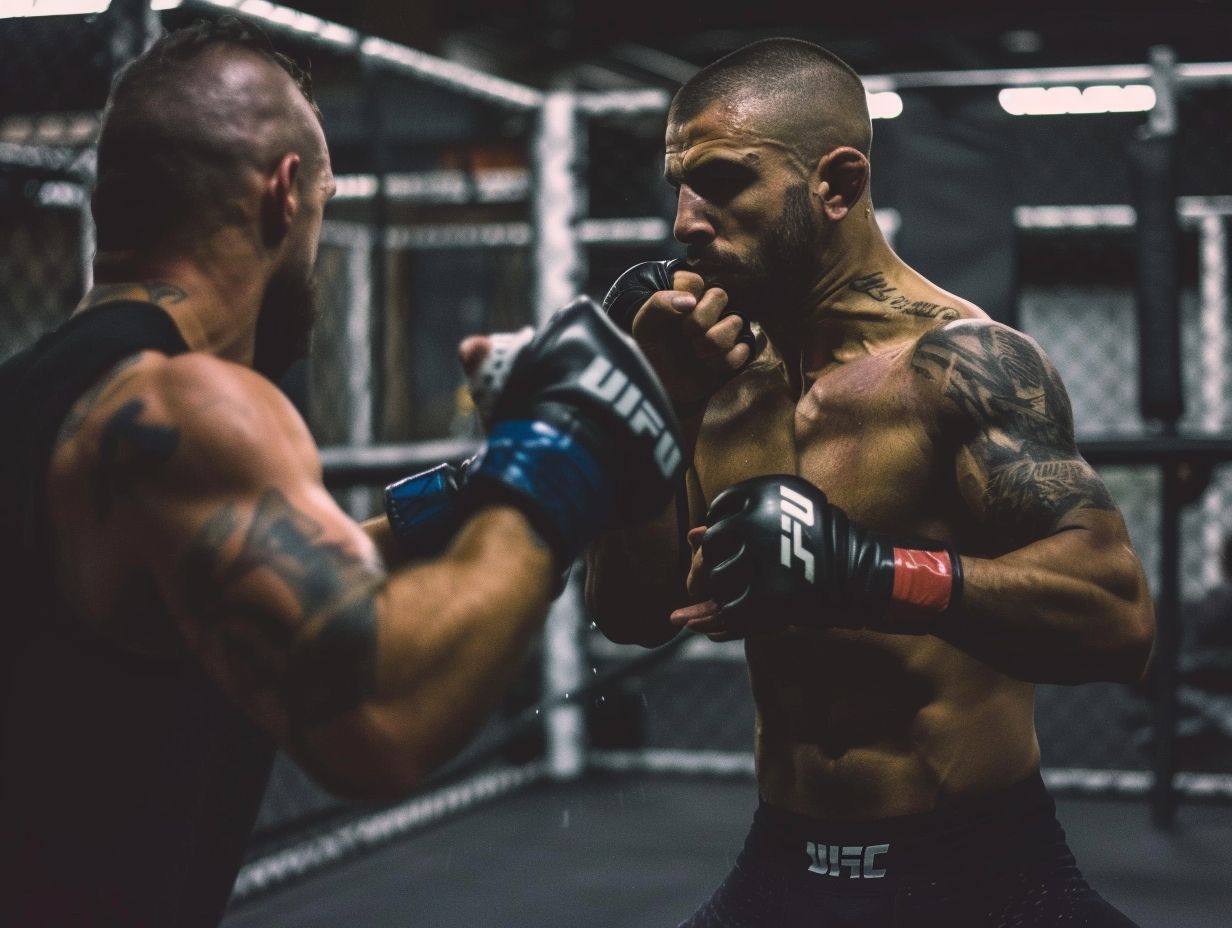
3. Weight Cutting and Management

To meet specific weight class requirements and perform at your best while minimizing health risks, you need effective weight cutting and management strategies.

In the world of mixed martial arts, it’s a constant struggle to find the balance between dropping pounds for weigh-ins and staying strong for the actual fight. Many fighters resort to extreme tactics like intense calorie restriction and excessive dehydration to make weight, but these methods can really take a toll on your body and performance.

By focusing on proper nutrition, hydration, and recovery techniques, you can reach your weight goals more safely and sustainably. When you adopt healthy weight management practices, you not only boost your physical performance but also reduce the chances of harming your health and facing long-term negative effects on your body.

After all this preparation is it really worth it?

Post-Fight Recovery and Training

For any MMA fighter, the period after a fight is just as important as the battle itself. Recovery and structured training are what allow you to come back stronger, sharper, and ready for the next challenge. This stage isn’t just about healing—it’s about reflecting, rebuilding, and refining your strategy for future success.


1. Rest and Recovery

Your body has been through a war, and now it needs time to repair. Rest is the foundation of recovery. Adequate sleep gives your muscles the chance to heal, recharge, and grow. Deep sleep cycles are where much of the repair magic happens, so prioritize quality rest as much as training.

Hydration is another non-negotiable. After an intense fight, your body loses fluids and electrolytes that must be replaced to speed up recovery and keep energy levels stable. Pair that with nutrient-rich meals that replenish glycogen stores, repair muscle tissue, and reduce inflammation, and you’ll bounce back faster.

Recovery doesn’t mean lying still for days on end. Gentle movement, stretching, and light activity help maintain mobility and circulation. For serious bumps and bruises, consulting a sports therapist or physical specialist ensures minor injuries don’t become long-term setbacks.


2. Rehabilitation for Injuries

Injuries are part of the fight game, but how you deal with them determines how quickly and effectively you return. A structured rehabilitation plan helps you address damage, restore mobility, and reduce the risk of recurring problems.

Understanding injury timelines is key—you can’t rush healing. Work with professionals to ease back into training gradually, starting with mobility drills, proprioception work, and targeted exercises to rebuild strength.

At the same time, maintaining a base level of conditioning through low-impact strength and endurance training reinforces your musculoskeletal system, making you more resilient for future fights. Smart rehab isn’t just about recovery—it’s an investment in long-term performance.


3. Reflection and Improvement

The fight may be over, but the learning never stops. Taking time to reflect on your performance is crucial for growth. Break down the fight honestly: what worked well, and where do you need improvement?

Work with coaches and training partners to analyze tape, spot patterns, and adjust strategies. Use feedback to sharpen your technical skills, strengthen weaknesses, and evolve your game plan. Reflection keeps your mindset sharp and ensures every fight becomes a stepping stone to the next level.


Final Thought

Post-fight recovery isn’t just about healing—it’s about building. With proper rest, injury management, and self-reflection, you create a foundation that lets you step back into the cage better prepared, both physically and mentally. In MMA, the fight doesn’t end when the bell rings; it continues in how you recover, adapt, and rise again.


How To Become A Professional Runner

Ever thought about what it takes to become a professional runner? From the physical requirements you need to the mental toughness you must have, we’re going to dive into all aspects of professional running.

Let’s chat about the ideal body type for runners, the average running speed of pros, and why endurance, speed, and strength training are crucial. We’ll also explore professional running schedules, the importance of rest and recovery, how to catch the eye of teams, and all the perks that come with being a pro runner.

So, grab your sneakers and come along with us on this journey into the world of professional running!

What is Professional Running?

What is Professional Running?

In the world of professional running, you’re stepping into a competitive arena that requires top-notch athleticism, dedication, and discipline. To shine in races and competitions, you’ve got to bring your A-game.

You’ll find yourself pushing your physical limits, hitting intense training sessions to boost your speed, endurance, and mental fortitude. The drive to win will push you to go all out, embracing the excitement of the race as you chase that top spot on the podium.

With every step you take and every breath you draw, you’re showing the world your unwavering determination and focus. It’s this dedication that propels you forward in the challenging realm of professional running.

What are the Physical Requirements to Become a Professional Runner?

If you want to become a professional runner, you need to have exceptional endurance, speed, and flawless running technique. You’ll need to focus on physical training, including strength workouts to strengthen your muscles, and pay attention to your running form if you’re aiming to go pro.

Endurance is key for a runner because it lets you keep going for longer periods without getting tired. Speed is crucial too, especially if you want to shine in races and competitions. And don’t forget about running technique – it not only makes you more efficient but also lowers the risk of injuries.

By adding strength training to your routine, you’ll build muscle power and boost your overall performance. And always keep an eye on your running form, from your posture to your foot strike and arm movement, to make sure you’re using your energy smartly and avoiding unnecessary strain on your body.

What is the Ideal Body Type for Professional Running?

In terms of professional running, you’ll find that the ideal body type varies depending on the specific discipline within the sport. If you’re into sprinting, you need explosive power and lean muscle mass to propel you down the track with maximum efficiency. Sprinters rely on having a higher percentage of fast-twitch muscle fibers to generate quick bursts of speed. It’s all about being strong yet flexible to excel in those short sprints.

On the flip side, if you’re more of a marathon enthusiast, you’ll benefit from a lean physique that enhances your endurance and long-distance performance. Endurance runners aim for lower body fat percentages to shed any excess weight that could slow them down. Their ideal body composition allows them to maintain a steady pace over extended periods, utilizing slow-twitch muscle fibers for sustained efficiency. It’s all about finding the right balance for your specific running goals.

What is the Average Running Speed for Professional Runners?

If you want to up your running game, it’s all about the training grind. You’ve got to focus on boosting your average speed by working on that race pace, hitting up some killer interval sessions, and fine-tuning your physiological game with things like hill repeats and other targeted workouts.

In terms of keeping that speed up over different distances, nailing your race pace strategy is key. Whether you’re aiming for a steady rhythm in a longer race or throwing in some quick bursts in shorter events, it’s all about pacing yourself right.

And don’t forget about those interval workouts – they’re like your secret weapon. Mixing up intense bursts with rest periods will do wonders for your speed, endurance, and overall efficiency.

Oh, and let’s not overlook your VO2 max. That’s the big daddy of aerobic capacity, so you’ll want to focus on training programs that’ll help you ramp up that oxygen utilization during those tough workouts. It’s all about fine-tuning those physiological factors to become the speed demon you know you can be.

What are the Mental Requirements to Become a Professional Runner?

To become a successful professional runner, you need more than just physical strength. It takes exceptional mental toughness, the ability to set goals, unyielding perseverance, and a deep motivation to push through challenges and setbacks.

If you want to excel as a professional runner, you have to be able to stay focused and overcome obstacles both on and off the track. The mental strength required for elite running is evident in the stories of athletes who faced tough times but never gave up. Take, for example, a well-known marathoner who dealt with injuries but stayed dedicated to rehabilitation and training. This shows the resilience and determination needed to endure the demanding nature of competitive racing. These individuals harness their inner drive and determination, using setbacks as motivation to propel them towards their goals.

What is the Importance of Mental Toughness in Professional Running?

In terms of professional running, mental toughness is key for your success. It’s what helps you not only tackle the physical demands of the sport but also break through those mental walls holding you back.

To build up that mental resilience, you need to connect with the supportive running community and use sports psychology techniques.

By jumping into a running community that’s got your back, you’ll be surrounded by folks who get the highs and lows of the sport. That sense of belonging and encouragement from your peers is gold when it comes to toughening up mentally.

And don’t underestimate the power of sports psychology tricks like visualization, positive self-talk, and setting goals. These techniques can fine-tune your mindset, amp up your confidence, and keep you focused during those races.

With a mix of community support and psychological strategies, you’ll not only crush it in your performance but also face obstacles head-on with a killer resilient mindset.

How Can One Develop Mental Toughness for Running?

How Can One Develop Mental Toughness for Running?

When developing mental toughness for running, you need to set clear goals, maintain a positive mindset, practice good sportsmanship, and prioritize injury prevention strategies to keep both your body and mind in top shape. Building mental resilience is an ongoing journey that requires your commitment and a mindset focused on growth.

As you set your running goals, make sure they are specific, measurable, achievable, relevant, and time-bound (SMART). This approach will help you stay on track and motivated, breaking down your big dreams into smaller, manageable steps.

View setbacks as chances to learn and grow, rather than failures. Use challenges to improve your performance, and don’t forget to celebrate every success, no matter how big or small. Recognizing your achievements along the way will give you a sense of accomplishment and boost your confidence.

Don’t forget to mix in some cross-training exercises and make time for proper rest in your routine. This will help prevent injuries and support your overall well-being, allowing you to keep up your peak performance levels.

How to Train for Professional Running?

When you’re training for professional running, you need to take a holistic approach. This means you should include exercises that build endurance, drills to boost speed, strength training sessions, and make sure you give yourself enough time to recover. This approach will help you perform at your best and reduce the risk of injuries.

Endurance is a big deal in professional running. To boost your endurance, you should do long-distance runs, tempo runs, and interval workouts. These activities will help increase your aerobic capacity, improve your heart health, and build mental toughness.

Don’t forget about speed! To get faster, focus on interval training, sprints, and hill repeats. These exercises will activate your fast-twitch muscle fibers and improve your overall speed.

Strength training is crucial too. Incorporate weight lifting, plyometrics, and core exercises into your routine to prevent injuries and generate power.

And last but not least, make sure you prioritize recovery. Rest days, quality sleep, proper nutrition, and taking care of your body are essential for muscle repair, adaptation, and optimizing your overall performance.

What is the Importance of Endurance Training for Professional Running?

Endurance training is key for your running game, especially if you’re eyeing those long-distance races like marathons. It’s all about ramping up that cardiovascular endurance with consistent long runs and nailing down your hydration game to keep your performance strong throughout those lengthy distances.

On top of your long runs, don’t forget about interval training – that’s your ticket to boosting speed and stamina for race day. Mix it up with high-intensity sprints and recovery jogs to level up your aerobic capacity and overall race performance.

And hey, don’t skimp on proper hydration strategies! Keeping that electrolyte balance in check before, during, and after your training sessions is a must to steer clear of dehydration during those grueling long-distance races.

Blend all these training techniques together and focus on your overall cardiovascular fitness. That combo is the winning recipe for marathon success.

What is the Role of Speed Training in Professional Running?

When you’re looking to ramp up your sprinting game, speed training is your best bet. It’s the secret weapon that professional runners use to shave off those crucial seconds, boost their performance, and up their game.

To really nail your speed training, you’ve gotta mix in some track workouts and cooldown routines – they’re the bread and butter of any good speed training plan.

If you want to hit that next level, you’ve gotta get specific with your training. Think interval runs, fartlek sessions, and hill sprints – these are the moves that’ll build your explosive power, crank up your stride frequency, and dial in your muscular endurance. Plus, they target those fast-twitch muscle fibers that you need to kick it into high gear during races.

To make the most out of your speed training, you’ve gotta keep it structured. That means mixing up your distances, intensities, and intervals during your track workouts. And don’t forget about those cooldown sessions – they’re key for keeping muscle soreness at bay, dodging injuries, and making sure you bounce back quickly for your next training sesh.

How to Incorporate Strength Training for Professional Running?

When you’re a pro runner, it’s crucial to incorporate strength training into your routine to boost your muscle power, endurance, and prevent injuries. Make sure you focus on interval training, throw in some stretching exercises, and pick the right footwear – these are all key components of a solid strength training plan for runners.

Strength training is your best buddy when it comes to upping your running game. It helps you build muscle strength and boost your overall endurance. Squats, lunges, deadlifts – these exercises target those key muscle groups like your quads, hamstrings, and glutes, which are all super important for running efficiently and with power.

You’ve gotta love interval training – it mixes things up with high-intensity running bursts and rest periods, giving your cardiovascular fitness and endurance a serious boost. Don’t forget to stretch before and after your runs – it’ll keep you flexible, reduce muscle soreness, and lower the risk of injuries. And, of course, investing in the right footwear is a must to get that support and cushioning you need, reducing the chances of getting hurt during your training or races.

What is a Professional Running Schedule?

In your professional running schedule, you’ll find a mix of structured training sessions, rest days for recovery and rejuvenation, and specific track and field workouts that are all about boosting your performance and tackling your strengths and weaknesses head-on.

All these pieces come together like a well-oiled machine to create a balanced training routine that not only amps up your speed and endurance but also helps keep injuries at bay. With a mix of track and field workouts like intervals, hill repeats, and technique drills, you can target different aspects of your running game and make noticeable improvements.

Don’t forget those rest and recovery days that are strategically placed in your schedule. They give your body the chance to heal up and adapt to all the physical demands of training, setting you up for some seriously awesome performances on race days.

How Many Days a Week Do Professional Runners Train?

How Many Days a Week Do Professional Runners Train?

You should aim to train like a pro by dedicating six to seven days a week to your fitness routine. Mix things up with running sessions, cross-training activities, and don’t forget those important warm-up and cooldown exercises to keep your fitness levels in top shape and prevent any pesky injuries.

It’s crucial to keep up with your workouts to improve your performance and reduce the risk of overuse injuries. Try adding some cross-training activities like swimming or cycling to give certain muscle groups a break while still staying active. Make sure to include dynamic warm-up exercises and thorough cooldown stretches in your routine to help prevent injuries, prepare your body for exercise, and promote muscle recovery after your workout. Your body will thank you later!

What is the Importance of Rest and Recovery in Professional Running?

Rest and recovery are crucial for you as a professional runner. They give your body the chance to repair, adapt, and steer clear of injuries. Prioritizing proper recovery time can even boost your performance naturally, without turning to banned substances like performance-enhancing drugs.

When you take a break, your body gets to work rebuilding those muscle fibers that took a beating during your intense training sessions. Giving yourself time to recover helps reduce inflammation, which in turn helps prevent overuse injuries that could knock even the most committed runners out of the game. By including smart recovery techniques in your routine, like staying hydrated, getting enough sleep, and adding activities such as stretching and foam rolling, you can up your game while keeping your health and well-being in tip-top shape.

How to Get Noticed by Professional Running Teams?

To get noticed by professional running teams, you need to be actively participating in competitions, following sports ethics and fair play, and showing off skills that make recruiting teams do a double-take.

When you’re looking to catch the eye of professional running teams, it’s all about embodying sportsmanship, both on and off the track. Your behavior not only shows who you are but also makes you stand out as a reliable and respected athlete. By focusing on fair play and acting with integrity, you not only increase your chances of getting scouted but also add to the positive competitive sports vibe. Keep in mind, achieving impressive feats while sticking to sports ethics can be a game-changer for team recruiters and your running career.

What are the Top Professional Running Teams to Join?

When you join the top professional running teams, you get the chance to compete at elite levels, take part in prestigious events like the Olympic Games, and be a part of supportive running clubs that boost camaraderie and skill development.

Belonging to a renowned running team isn’t just about showing off your talent globally – it’s also your ticket to competitions filled with top-tier athletes. The experience of competing at such high levels can really level up your skills and performance. Representing your country at events like the Olympics is a dream for many runners and a huge achievement. The running clubs’ sense of community creates a supportive space where members cheer each other on, swap training tips, and celebrate successes together.

What are the Qualifications and Requirements for Joining a Professional Running Team?

If you want to qualify for a professional running team, you’ve got to meet specific performance standards, lock down sponsorships to cover training and competition costs, and make sure you’re on top of your game with sports nutrition and injury recovery.

To join a pro running team, you need to have outstanding race times that meet the coaches’ or industry’s benchmarks. But it’s not just about performance – you also need to secure sponsorships to pay for travel, gear, and other financial needs.

It’s not just about how fast you can run – you’ve also got to focus on your overall well-being. Proper sports nutrition planning and injury prevention strategies are key. That’s why you need to show that you not only have speed and endurance but also the ability to attract financial support and take care of your athletic development as a whole.

What are the Benefits of Becoming a Professional Runner?

Becoming a professional runner offers you a ton of perks, like chasing down those personal best records, getting your hands on top-notch running gear, and getting a peek into the world of sports science to boost your performance and recovery.

When you break your own records, it’s not just a pat on the back – it’s solid proof of your progress and dedication. So, why not kick things up a notch by rocking those advanced running shoes with responsive cushioning and killer traction? They’ll amp up your performance and help prevent those pesky injuries on any kind of terrain.

And hey, keep yourself in the loop with the latest biomechanics and nutrition research. It’s like having insider knowledge to fine-tune your training and recovery game for maximum efficiency and killer endurance. So, lace up those shoes and hit the ground running!

What is the Average Salary of a Professional Runner?

What is the Average Salary of a Professional Runner?

Your salary as a professional runner can fluctuate quite a bit, depending on factors like sponsorships, endorsement deals, and how well you stick to ethical standards, such as steering clear of doping and maintaining good running manners.

In the world of professional running, scoring those sweet sponsorships from big brands and locking in those high-paying endorsement contracts are key to your financial success. These partnerships don’t just bring in cash; they also boost your visibility through branding and marketing collaborations.

It’s crucial to always uphold ethical behavior because any connection to dodgy practices can damage your reputation and put your future earnings at risk. By staying honest and ethical, you can earn trust and respect in the running community, opening up doors to better opportunities and financial rewards.

What are the Opportunities for Sponsorship and Endorsements for Professional Runners?

As a professional runner, you have the chance to tap into some pretty sweet sponsorship and endorsement deals that can really help you out with your training, keep your finances in check, and give you that extra boost of motivation. But to attract the good sponsors, you gotta make sure your reputation is squeaky clean and you’re putting in the hard work.

These partnerships aren’t just about the money – they’re like having your own personal cheerleading squad, urging you on to reach new heights. In the world of pro running, it’s all about integrity. Staying true to ethical standards and steering clear of any performance-enhancing stuff isn’t just about you; it’s about keeping the sport legit.

Your drive as a runner, fueled by your goals and personal growth, is a big player in your success, both on and off the track. It’s what keeps you moving forward and smashing those milestones.

Frequently Asked Questions

What are the benefits of becoming a professional runner?

Becoming a professional runner can lead to improved physical health, opportunities for travel and competition, and potential financial rewards through sponsorships and prize money.

Do I need to have natural talent to become a professional runner?

While natural talent can certainly be helpful, dedication, discipline, and hard work are often more important factors in becoming a successful professional runner.

How can I improve my running speed and endurance?

Consistent training, incorporating intervals and hill work, and following a proper nutrition and hydration plan can all help improve your running speed and endurance.

What are some common injuries among professional runners?

Some common injuries among professional runners include shin splints, IT band syndrome, and stress fractures. It’s important to listen to your body and seek proper treatment if you experience any pain or discomfort.

How can I find opportunities to compete as a professional runner?

You can find opportunities to compete as a professional runner by participating in local races, joining a running club or team, and researching and applying for elite or professional races and events.

Is it possible to balance a full-time job and professional running career?

Yes, it is possible to balance a full-time job and professional running career. Many professional runners have part-time or full-time jobs that allow them to train and compete at a high level. Time management and prioritization are key in balancing both responsibilities.

How Long Does It Take To Get a Black Belt in BJJ

how long to earn a black belt in BJJ

Are you curious about the journey to earning a black belt in Brazilian Jiu-Jitsu (BJJ)? Let’s explore the history and origins of the black belt, uncover its meaning and significance, and discuss the factors that can impact how long it takes to reach this prestigious rank.

We’ll even dive into the average time it takes to earn a black belt in BJJ based on statistics and data. And of course, we’ll share some tips to help you speed up your progress towards achieving this ultimate goal. Ready to get started?

History and Origins

You should know that Brazilian Jiu-Jitsu (BJJ) traces its origins back to Judo, which made its way to Brazil in the early 20th century. Over time, it morphed into its own unique martial art thanks to the Gracie family’s work in tweaking Judo techniques to work on the ground.

Back in the 1920s, Carlos Gracie and his younger brother Helio Gracie took this evolution further by focusing on leverage and technique rather than brute strength. This fresh perspective paved the way for Brazilian Jiu-Jitsu to become a martial art centered on submissions and controlling positions.

A significant moment in BJJ’s history was the introduction of the Gracie Challenge. This was when members of the Gracie family threw down the gauntlet and invited fighters from other disciplines to face off against them in real combat scenarios to see how effective BJJ really was.

What is a Black Belt in BJJ?

Achieving a Black Belt in Brazilian Jiu-Jitsu (BJJ) means mastering the art and having a deep understanding of the techniques. It’s the highest rank in the belt system, showing your dedication, skill, and experience in BJJ.

To earn a Black Belt in BJJ, you’ll need years of practice, perseverance, and commitment to the discipline. It’s not just about being technically proficient but also reaching a profound level of mental and emotional growth. Black Belts are highly respected in the BJJ community for their knowledge and ability to mentor others.

The journey to Black Belt is often called transformative because you’ll learn resilience, patience, and humility along the way. It’s the result of hard work and reflects the values of respect, discipline, and always striving for improvement.

Meaning and Significance

In Brazilian Jiu-Jitsu, the belt system holds a lot of meaning for you. Each rank isn’t just about skills—it’s about how dedicated, committed, and persistent you are. Moving up the ranks isn’t just about getting better at techniques, it’s also about growing as a person and embodying the principles of BJJ.

As you climb up the ranks in BJJ, you really start living out values like discipline, humility, and respect. Every belt color tells a story of a martial artist’s journey, starting as a wide-eyed white belt eager to learn and then progressing through different colors that show improvement. The belt system is like a map that guides you through tough times, setbacks, and victories, helping you feel accomplished and strong. It’s not just about the belt’s color—it’s about the kind of person you become and the mindset you develop along the way.

Factors that Affect Time to Earn a Black Belt

In terms of earning a Black Belt in Brazilian Jiu-Jitsu, the time it takes can depend on a few things. Factors like how often you train, how fast you improve, the quality of instruction you receive, and how committed you are all play a big role in your journey to that coveted Black Belt.

Sticking to a regular training schedule is super important because practicing consistently helps you develop your skills and build muscle memory. Everyone progresses at their own pace, and things like natural talent and previous experience in martial arts can influence how quickly you advance.

Having good instructors to guide and mentor you is crucial. Experienced coaches can give you valuable feedback and tips to help you grow. And, of course, how dedicated and committed you are makes a big difference. Your level of passion and perseverance directly impacts how far you’ll go in Brazilian Jiu-Jitsu. It’s all about putting in the work and showing that you’re in it to win it.

Training Frequency and Consistency

Training Frequency and Consistency

In Brazilian Jiu-Jitsu, you’ve got to put in that regular grind to see progress. Spending those hours on the mat and showing up to classes consistently is key for honing your skills and moving forward. The more you commit to those training routines, the better your muscle memory gets, and the stronger your techniques become.

When you keep practicing those moves and rolling with your training buddies, you’re reinforcing your motions and reactions. This all leads to quicker reflexes and smarter decision-making when you’re in the heat of live rolls. It’s all about that growth that comes from being a regular at class, soaking up knowledge from your instructors, and drilling with your peers. The discipline you build through consistent training not only sharpens your physical game but also toughens up your mind, helping you face challenges both on and off the mat.

Individual Skill and Progress

Your individual skill development and progress in Brazilian Jiu-Jitsu are influenced by various factors such as mastering techniques, engaging in sparring sessions, and consistent rolling on the mat. Each training session offers you an opportunity to refine your abilities and advance in BJJ.

When you master techniques, you gain a deeper understanding of the fundamental movements, submissions, and transitions crucial in BJJ. Sparring sessions allow you to test these techniques in dynamic, live scenarios, enhancing your timing and adaptability. Rolling practices, where you engage in full-resistance grappling, further solidify your skills and reactions under pressure.

These iterative processes of learning and application are essential in honing your craft in Brazilian Jiu-Jitsu, guiding you toward continuous growth and proficiency on the mats.

Instructor’s Teaching Style

Your journey to a Black Belt in BJJ is shaped by your instructor’s teaching style, the curriculum at your academy, and the techniques highlighted during promotions. A supportive and knowledgeable instructor can make a big difference in your learning and progression in Brazilian Jiu-Jitsu.

A skilled instructor does more than just teach you moves; they also help you build discipline, perseverance, and a deep appreciation for the art. The curriculum guideposts your journey, giving you a clear path to follow and ensuring you master the basics and advanced techniques over time.

The promotion criteria at your academy act as checkpoints, pushing you to set goals and strive for higher ranks. Building a positive relationship with your instructor fosters trust, communication, and ongoing improvement. This creates an environment that nurtures personal growth and skill development in BJJ.

The Average Time to Earn a Black Belt in BJJ

The average time it takes to earn a Black Belt in Brazilian Jiu-Jitsu can differ depending on your own experience, dedication, and how often you train. While there are general estimates out there, your personal commitment and skill growth will really determine how long it takes you to reach that Black Belt.

People often say it can take anywhere from 8 to 12 years of consistent training to earn a Black Belt in BJJ. But remember, this timeline isn’t set in stone and can vary a lot from person to person. How frequently you train, the quality of teaching you receive, your natural talent, and how dedicated you are all play a big part in speeding up or lengthening your journey toward that prestigious Black Belt level.

Tips for Accelerating Progress to a Black Belt

Tips for Accelerating Progress to a Black Belt

If you want to fast-track your journey to a Black Belt in Brazilian Jiu-Jitsu, you need to set some goals, stay consistent with your training, and work on developing your skills strategically. Set clear objectives, stick to your training routine, and approach learning new techniques strategically to reach that coveted Black Belt sooner.

You’ve got to have a well-structured training plan to sharpen your BJJ skills. Allocate specific days for different aspects like takedowns, guard passing, submissions, and positional control. This focused approach to training will help you become a master at each element. Don’t hesitate to seek advice from experienced practitioners or instructors to refine your techniques and get valuable feedback for improvement.

Just remember, making progress in BJJ is a gradual process, so keep your eyes on the prize and challenge yourself during every training session to push beyond your comfort zone.

Effective Training Strategies

In terms of mastering Brazilian Jiu-Jitsu, you’ve got to start by assessing your own skill level. Take a good look at what you’re good at and where you need work. Then, it’s all about putting in the hard work and staying consistent in your practice. By understanding what you need to improve on and dedicating yourself to getting better, you’ll see real progress in your BJJ game.

To really level up your training, set specific goals for each session. Focus on those areas where you know you need to improve and tailor your drills to target those weaknesses head-on. And don’t forget about sparring! Regularly mix it up with partners of different skill levels to challenge yourself and keep growing. Remember, consistency is key in skill development, so make sure you’re training regularly and pushing yourself out of your comfort zone. That’s how you’ll really see those big leaps forward in your BJJ journey.

Mindset and Attitude

In terms of success in Brazilian Jiu-Jitsu, you’ve got to have the right mindset and attitude. It’s all about staying dedicated, pushing through challenges, and focusing on those self-defense moves. If you want to earn that Black Belt in BJJ, you need to cultivate a positive mindset and be ready to tackle whatever comes your way.

In BJJ, it’s not just about the physical stuff – your mental game is key. Keeping a positive attitude not only makes your training more enjoyable but also helps you bounce back from setbacks. Whether you’re new to the sport or a pro, showing perseverance when things get tough can take your performance to the next level and deepen your understanding of the art. And hey, mastering those self-defense techniques isn’t just about technique – it also gives you the confidence to handle yourself in real-life situations.

Frequently Asked Questions

How long does it take to get a black belt in BJJ?

How long does it take to get a black belt in BJJ?

The average time it takes to earn a black belt in BJJ is about 10 years, but this can vary depending on individual dedication, training frequency, and natural talent.

What factors contribute to the length of time to earn a black belt in BJJ?

Several factors can affect the time it takes to get a black belt in BJJ, including training consistency, competition experience, rank promotions, and instructor assessment.

Can I earn a black belt in BJJ faster if I train more frequently?

While training consistently is important, it is not the only factor in earning a black belt in BJJ. Quality of training, understanding of techniques, and mastery of fundamentals are also crucial in progressing through the ranks.

Is it possible to earn a black belt in BJJ in less than 10 years?

Yes, some individuals may be able to earn a black belt in BJJ in less than 10 years with exceptional dedication, training frequency, and natural talent. However, this is not the norm and should not be expected.

Do I need to compete in tournaments to earn a black belt in BJJ?

No, competing in tournaments is not a requirement to earn a black belt in BJJ. However, competition experience can help in understanding techniques, improving skills, and gaining recognition from instructors.

What if I take a break from training? Will it affect my progress towards a black belt in BJJ?

Taking a break from training can slow down progress towards a black belt in BJJ, but it ultimately depends on the length of the break and the individual’s level of dedication upon returning. Consistency is key in progressing through the ranks.