Category: How To

Power Moves: Finding an Electrician for Your Dojo in Temecula

Creating the optimal environment for your requires an emphasis on safe and reliable electrical work, including proper lighting—a matter of paramount importance that warrants discussion. Whether one is installing specialized lighting to enhance training sessions or ensuring full compliance with safety regulations, the presence of a licensed electrician with electrical expertise is critical.

This guide aims to illuminate what to consider when selecting an electrician, including electrician qualifications and references, how to research options effectively, and how to foster a strong working relationship, all while keeping costs transparent and manageable. Prepare to delve into the intricacies of enabling your dojo with the right electrical expertise—because even the most skilled martial artists need a well-lit environment to see their moves, thanks to the right electrical installations!

Why You Need a Qualified Electrician for Your Temecula Dojo

In the vibrant city of Temecula, where power moves are as vital as a perfectly brewed cup of coffee, securing the services of a qualified electrician transcends mere choice; it’s a categorical imperative.

Whether one is establishing a dojo or overhauling an entire electrical system, the stakes are undeniably high. Engaging a **licensed electrician** guarantees adherence to local **electrical codes** and standards, all while prioritizing **electrical safety** above all else.

To neglect this crucial step may result in dire repercussions, ranging from inconvenient power outages to the more ominous threat of electrical fires, underlining the importance of expert **electrical troubleshooting** and **wiring**. By procuring the right electrical services, one is not only investing in safety and reliability but also in a cherished peace of mind that extends far beyond the dojo.

Electrician Industry Stats – Temecula
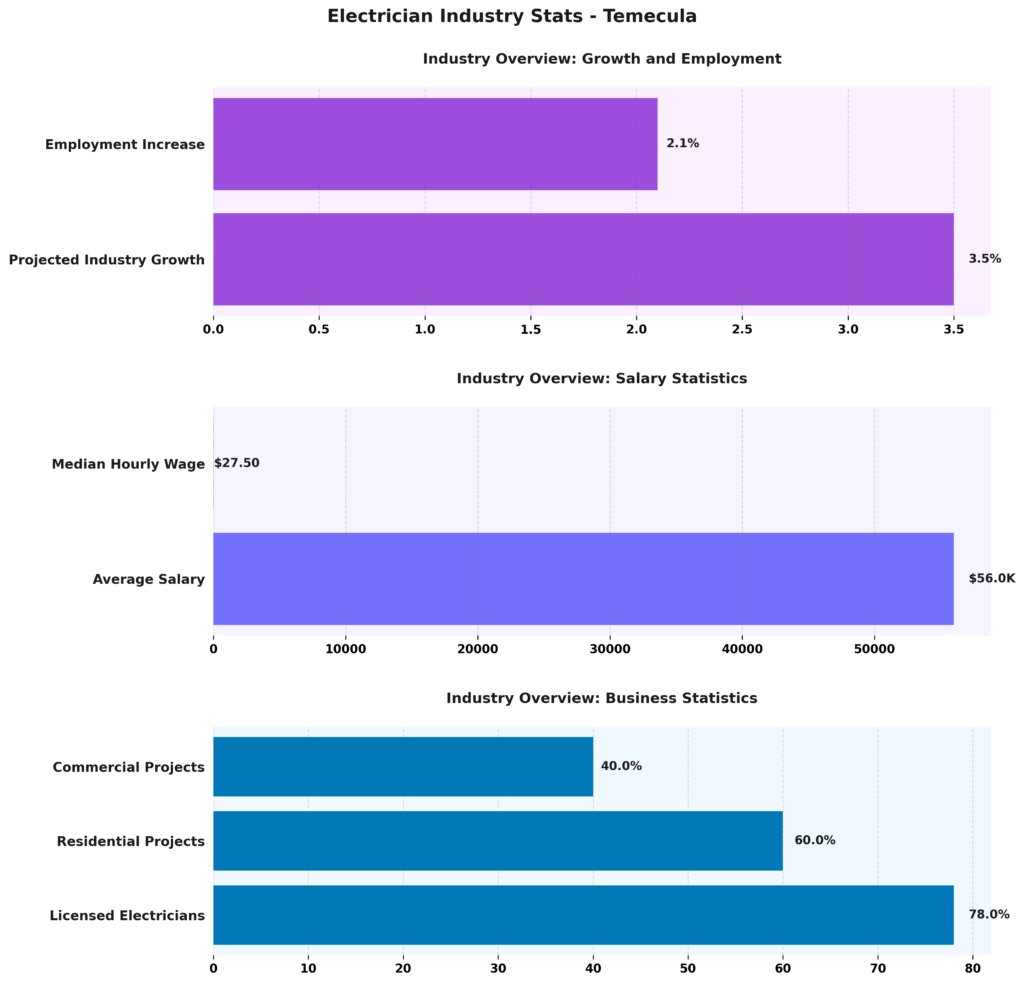
The Electrician Industry Stats for Temecula provide a snapshot of growth, employment, salary, and business dynamics within this crucial sector, highlighting opportunities for **hiring electricians** and investing in **electrical technology**. The data highlights key trends, offering insights for stakeholders, including electricians, employers, and industry analysts evaluating local market conditions.

Industry Overview denotes a 3.5% projected growth, reflecting an upward trend driven by increased demand for electrical services, technology integration, and urban development. This growth supports a 2.1% employment increase, suggesting job opportunities for **qualified tradespeople** as new infrastructure projects and upgrades to existing **electrical systems** require skilled labor.

  • Salary Statistics: The average salary for electricians in Temecula stands at $56,000, indicating competitive wages that attract talent to the area and ensure **competitive pricing** for **electrical services**. The median hourly wage of $27.5 further emphasizes the financial viability of pursuing a career in this trade.
  • Business Statistics: 78% of electricians are licensed, ensuring quality standards, safety compliance, and professionalism in services offered. Residential projects comprise 60% of business activities, highlighting the ongoing demand for home electrical installations and repairs. Commercial projects account for 40%, underscoring the importance of electricians in supporting business infrastructure, including new buildings and maintenance.

This overview of the electrician industry in Temecula reveals a healthy sector characterized by growth, competitive salaries, and a diverse project portfolio. It suggests promising career opportunities as well as a stable business environment, where both residential and commercial needs drive demand for skilled electricians. The emphasis on licensed professionals ensures high service quality and trust, fostering continued industry expansion.

The Importance of Safety and Compliance

In the realm of electrical work, particularly within the hallowed walls of a dojo—where dedicated practitioners come to hone their skills—safety and compliance reign supreme. A **licensed electrician** is not merely a tradesperson; they are the vigilant guardians of local **electrical codes**, ensuring that every **electrical installation** and repair is executed with the precision of a master swordsman.

This professional is pivotal in upholding specific safety standards, including the venerable National Electrical Code (NEC), which delineates the essential protocols for secure electrical installations. Inspections conducted by these experts are akin to a keen-eyed sensei assessing the readiness of their students; they help identify potential hazards, ensuring that **wiring**, circuits, and equipment not only function optimally but do so without a hint of peril, adhering to **safety standards**.

By keeping abreast of compliance measures, these electricians create a haven where practitioners can immerse themselves in their training, free from the specter of electrical mishaps, thanks to regular **electrical inspections** and **safety audits**. Furthermore, regular electrical inspections do more than enhance safety; they extend the lifespan of electrical systems, ensuring that the dojo remains a bastion of operational efficiency.

After all, a dojo should be a place for practice, not a stage for shocking surprises.

Qualities to Look for in an Electrician

In the quest for the ideal electrician for your esteemed Temecula dojo, one must seek not merely any technician, but rather a qualified professional capable of delivering exceptional electrical services.

It is imperative to assess their qualifications, peruse customer reviews, and consider recommendations from previous clients. After all, one wouldn’t want just anyone wielding a wire; a robust skill set and the necessary licensing are essential to ensure that your dojo remains a sanctuary of both tranquility and safety.

Experience and Credentials

Experience and credentials are the distinguishing factors that elevate an electrician from the ranks of mediocrity to the esteemed status of a licensed professional. A seasoned electrician will undoubtedly boast a portfolio that showcases their prowess in electrical repairs, installations, and upgrades—whether in the cozy confines of a residential setting or the bustling environment of a commercial space.

Before making a hiring decision, it is imperative to conduct a thorough vetting of the electrician’s qualifications, including their **electrician certifications**, training, and hands-on experience. A discerning eye for their proficiency in essential skills such as wiring, circuit design, and safety protocols can ensure that you are selecting a truly capable expert.

Moreover, it is wise to request references or examples of previous projects, giving you insight into their versatility in tackling various tasks. Be it a routine home upgrade or a more intricate commercial installation, a reliable electrician will demonstrate a commendable track record, assuring you that your electrical needs will be met safely and efficiently—like a light bulb that never flickers.

Communication and Availability

Effective communication and availability are paramount traits to seek when engaging an electrician for your dojo, especially when dealing with **emergency electrician** services. One desires an individual who not only comprehends their needs but is also responsive and available for **electrical service** calls—be it for urgent repairs, routine **electrical maintenance**, or even **electrical consultations**.

The success of a robust contractor-client relationship relies heavily on the ability to articulate ideas and expectations with clarity. A local handyman’s prompt responses and eagerness to discuss project particulars are instrumental in cultivating trust and reliability.

When local contractors prioritize open lines of communication, clients can breathe a sigh of relief knowing their specific requirements are being taken into account. This accessibility not only lays the groundwork for a dependable working relationship but also ensures that any concerns can be promptly addressed, leading to swift resolutions and ultimately enhancing overall **customer satisfaction**.

In the grand tapestry of home improvement endeavors, it is the delightful combination of effective communication and responsiveness that weaves the sturdy foundation for a successful collaboration.

Researching and Choosing an Electrician

Conducting thorough research and selecting an electrician may appear to be a formidable challenge, yet with the right strategy, it can be as seamless as a well-wired circuit.

Begin your quest by perusing online reviews and soliciting referrals from your community, thereby crafting a shortlist of local electricians who possess the requisite certifications and qualifications.

After all, a little diligence now can save you from shocking surprises later on, ensuring **reliability** in your **electrical projects**!

Online Reviews and Referrals

Online reviews serve as the Yelp for electricians—offering priceless insights into the caliber of service provided by local contractors. By diligently sifting through **electrician reviews**, one can assess not only the qualifications of the electricians but also their reliability and professionalism, much like a detective on the case of the elusive trustworthy tradesperson.

These reviews often showcase the experiences of previous clients, shedding light on both strengths and weaknesses that may not be immediately apparent, much like **customer testimonials**. By soliciting feedback from others, prospective customers can discern patterns in service quality and customer satisfaction, turning the search for an electrician into a data-driven endeavor.

It might be prudent to compile a list of electricians with consistently glowing recommendations while also keeping an eye out for any red flags that may pop up in the comments section. Additionally, personal **recommendations** from friends or family can enhance one’s decision-making process, providing firsthand accounts that emphasize trust and credibility—an absolute necessity when selecting someone to tackle electrical work in one’s abode.

Interviewing and Comparing Candidates

Interviewing and comparing candidates for your electrical needs can be likened to assembling an elite team of superheroes; naturally, you want nothing less than the crème de la crème. It’s wise to prepare a list of questions that dives into cost estimates, service warranties, and their licensing status, ensuring you engage a qualified electrician who is both capable and trustworthy.

Commence the interview by probing into the candidate’s experience and skill level in the field and the specific types of projects they have successfully completed. This inquiry will provide valuable insight into their electrical expertise, helping you determine whether they are the perfect fit for your unique electrical requirements.

Next, delve into their cost estimation process: do they offer itemized breakdowns, or do they prefer to keep you guessing like a magician? Additionally, discussing how they handle unexpected expenses is crucial. It’s also imperative to address warranties on both labor and materials; a reputable licensed electrician should stand behind their work with a reliable guarantee — after all, a solid warranty is like a safety net for your peace of mind.

Finally, don’t hesitate to request references who can affirm their professionalism and reliability; after all, a glowing recommendation, bolstered by customer testimonials and electrician reviews, is worth its weight in gold and will only serve to bolster your decision.

Costs and Contracts with Local Electricians

Navigating the costs and contracts associated with hiring electricians can often resemble untangling a particularly stubborn knot of wiring. It is imperative to grasp cost estimates from the outset, as well as the nuances of service warranties, before signing any contracts for electrical repairs or installations conducted by local electricians.

After all, no one wants to get zapped by unexpected charges or find themselves in the dark regarding their rights and obligations, especially when dealing with electrical permits and local regulations!

Understanding Pricing and Payment Plans

In terms of deciphering the pricing and payment plans for electrical services, clarity is of utmost importance—after all, the last thing anyone wants is a shocking surprise. A licensed electrician should provide detailed cost estimates upfront and present competitive pricing with flexible payment options that cater to your budgetary constraints.

Understanding the pricing structures that electricians employ is essential for homeowners. Many professional electricians opt to charge by the hour, allowing clients to pay based on the actual time spent on a project—quite beneficial for those smaller jobs or electrical consultations that don’t require a full-scale operation.

On the other hand, fixed pricing can offer a delightful dose of predictability for larger projects, ensuring that the cost is set in stone before the work begins, regardless of how long the task takes.

Moreover, some electricians may extend payment plans, making it easier to handle the costs of extensive installations or renovations over time. Such options are invaluable, allowing for better financial planning without sacrificing the quality of service. After all, one should never have to choose between affordability and excellence.

Contract Considerations

Contract considerations are far more than mere legal jargon; they serve as your trusty safety net when enlisting the services of an electrician. One must pay careful attention to service warranties, the scope of work, the electrician’s qualifications, and their experience level to ensure a seamless electrical service experience.

A well-crafted contract is the cornerstone of clear communication, setting the stage for expectations that both parties can appreciate. Detailed project descriptions should outline specific tasks to be performed, effectively reducing the likelihood of misunderstandings or disputes that might rear their heads later on.

Establishing clear timelines is akin to setting the clock for a well-orchestrated performance, aiding in work scheduling and progress assessments, and ensuring that the electrician sticks to the agreed-upon deadlines. By incorporating comprehensive warranties, homeowners shield themselves from the perils of defective workmanship or materials, underscoring the necessity of quality assurance.

By emphasizing these key components in your contract, including adhering to safety standards and ensuring electrician certifications, you not only protect your investment but also lay the groundwork for a successful and hassle-free electrical service journey—because who doesn’t want a little spark without the drama?

Maintaining a Good Relationship with Your Local Electricians

Establishing and nurturing a solid rapport with your electrician is akin to ensuring the lights remain illuminated in your dojo—absolutely vital for sustained success.

Engaging in regular communication, conducting timely follow-ups, and possessing a clear grasp of your electrical requirements can significantly streamline service calls and enhance electrical maintenance efforts.

In essence, a little attention to this relationship can go a long way in keeping everything running smoothly—quite literally!

Communication and Follow-up

Effective communication and diligent follow-up are the bedrock of a fruitful partnership with your electrician—think of it as the voltage that keeps the circuit of collaboration alive. Keeping those lines open is crucial, whether you’re discussing routine maintenance or urgently needing a spark of service, ensuring that your electrical needs are addressed with the urgency they deserve.

When clients and electricians exchange clear and concise information, misunderstandings are minimized—like removing the static from a radio—and this leads to quicker resolutions and, dare I say, a more satisfying experience overall. Regular check-ins with your electrician can provide valuable insights into the health of your electrical system, potentially saving you from costly repairs and the dread of unexpected outages down the line.

Cultivating this level of communication often translates to superior customer service; after all, electricians can prioritize their workloads more effectively when they’re in the loop. Establishing a routine for feedback and updates not only builds trust but also paves the way for a smoother working relationship, ensuring that both parties feel valued and informed throughout the entire process.

Because in the end, no one wants to feel like they’re left in the dark—figuratively or literally.

Scheduling Regular Inspections and Maintenance

black usb cable plugged in white electric socket

Scheduling regular electrical inspections and maintenance is not merely a prudent choice; it is essential for ensuring the longevity of your electrical components. Engaging a licensed electrician to identify potential issues before they escalate is akin to having a seasoned sensei in your dojo—keeping your space safe and operational.

These proactive measures can significantly enhance the performance and efficiency of your electrical systems. Regular evaluations facilitate timely updates and repairs, effectively minimizing the risk of electrical hazards. Plus, they can work wonders in boosting energy efficiency and incorporating eco-friendly installations, which translates to lower utility bills.

By adhering to a maintenance schedule, you not only safeguard your equipment but also contribute to a safer environment for everyone involved. Prioritizing these inspections grants you peace of mind, knowing that the electrical infrastructure supporting your activities is reliable and up to code—after all, a well-oiled machine, or in this case, a well-wired dojo, is a happy dojo.

Frequently Asked Questions

What electrician qualifications should I look for in an electrician for my Temecula dojo?

When searching for a qualified electrician, it is important to look for someone who is licensed and insured. They should also have experience working with commercial properties, as well as knowledge of the specific electrical needs of a dojo.

How can I ensure that the electrician I hire is reliable and trustworthy?

You can ask for recommendations from other dojo owners in the Temecula area, or check online reviews and ratings. It is also important to verify their license and insurance, and ask for references from previous clients.

What kind of electrical services can I expect from a qualified electrician for my dojo?

A qualified electrician should be able to handle all types of electrical work, from installation services and electrical maintenance to repairs and upgrades. They should also be knowledgeable about energy-efficient solutions, including green energy solutions, and able to provide advice on optimizing your dojo’s electrical system.

How long will it take for a qualified electrician to complete the electrical work for my dojo?

The timeline for completing the electrical work will depend on the size and complexity of the project. It is best to discuss project timelines with the electrician before hiring them, so you have a clear understanding of when the work will be completed.

Do I need to be present during the electrical installations and repairs for my Temecula dojo?

It is not necessary for you to be present during the electrical work, but it is recommended to have someone available on-site to answer any questions or address any concerns the electrician may have. This will also help ensure that the work is completed correctly and to your satisfaction.

What should I do if I experience electrical issues after the work is completed?

If you experience any issues with the electrical work after it has been completed, reach out to the electrician immediately. A qualified electrician should provide a warranty for their work and be willing to address any issues that arise, ensuring customer satisfaction and reliability.


How To Become A Professional Runner

Ever thought about what it takes to become a professional runner? From the physical requirements you need to the mental toughness you must have, we’re going to dive into all aspects of professional running.

Let’s chat about the ideal body type for runners, the average running speed of pros, and why endurance, speed, and strength training are crucial. We’ll also explore professional running schedules, the importance of rest and recovery, how to catch the eye of teams, and all the perks that come with being a pro runner.

So, grab your sneakers and come along with us on this journey into the world of professional running!

What is Professional Running?

What is Professional Running?

In the world of professional running, you’re stepping into a competitive arena that requires top-notch athleticism, dedication, and discipline. To shine in races and competitions, you’ve got to bring your A-game.

You’ll find yourself pushing your physical limits, hitting intense training sessions to boost your speed, endurance, and mental fortitude. The drive to win will push you to go all out, embracing the excitement of the race as you chase that top spot on the podium.

With every step you take and every breath you draw, you’re showing the world your unwavering determination and focus. It’s this dedication that propels you forward in the challenging realm of professional running.

What are the Physical Requirements to Become a Professional Runner?

If you want to become a professional runner, you need to have exceptional endurance, speed, and flawless running technique. You’ll need to focus on physical training, including strength workouts to strengthen your muscles, and pay attention to your running form if you’re aiming to go pro.

Endurance is key for a runner because it lets you keep going for longer periods without getting tired. Speed is crucial too, especially if you want to shine in races and competitions. And don’t forget about running technique – it not only makes you more efficient but also lowers the risk of injuries.

By adding strength training to your routine, you’ll build muscle power and boost your overall performance. And always keep an eye on your running form, from your posture to your foot strike and arm movement, to make sure you’re using your energy smartly and avoiding unnecessary strain on your body.

What is the Ideal Body Type for Professional Running?

In terms of professional running, you’ll find that the ideal body type varies depending on the specific discipline within the sport. If you’re into sprinting, you need explosive power and lean muscle mass to propel you down the track with maximum efficiency. Sprinters rely on having a higher percentage of fast-twitch muscle fibers to generate quick bursts of speed. It’s all about being strong yet flexible to excel in those short sprints.

On the flip side, if you’re more of a marathon enthusiast, you’ll benefit from a lean physique that enhances your endurance and long-distance performance. Endurance runners aim for lower body fat percentages to shed any excess weight that could slow them down. Their ideal body composition allows them to maintain a steady pace over extended periods, utilizing slow-twitch muscle fibers for sustained efficiency. It’s all about finding the right balance for your specific running goals.

What is the Average Running Speed for Professional Runners?

If you want to up your running game, it’s all about the training grind. You’ve got to focus on boosting your average speed by working on that race pace, hitting up some killer interval sessions, and fine-tuning your physiological game with things like hill repeats and other targeted workouts.

In terms of keeping that speed up over different distances, nailing your race pace strategy is key. Whether you’re aiming for a steady rhythm in a longer race or throwing in some quick bursts in shorter events, it’s all about pacing yourself right.

And don’t forget about those interval workouts – they’re like your secret weapon. Mixing up intense bursts with rest periods will do wonders for your speed, endurance, and overall efficiency.

Oh, and let’s not overlook your VO2 max. That’s the big daddy of aerobic capacity, so you’ll want to focus on training programs that’ll help you ramp up that oxygen utilization during those tough workouts. It’s all about fine-tuning those physiological factors to become the speed demon you know you can be.

What are the Mental Requirements to Become a Professional Runner?

To become a successful professional runner, you need more than just physical strength. It takes exceptional mental toughness, the ability to set goals, unyielding perseverance, and a deep motivation to push through challenges and setbacks.

If you want to excel as a professional runner, you have to be able to stay focused and overcome obstacles both on and off the track. The mental strength required for elite running is evident in the stories of athletes who faced tough times but never gave up. Take, for example, a well-known marathoner who dealt with injuries but stayed dedicated to rehabilitation and training. This shows the resilience and determination needed to endure the demanding nature of competitive racing. These individuals harness their inner drive and determination, using setbacks as motivation to propel them towards their goals.

What is the Importance of Mental Toughness in Professional Running?

In terms of professional running, mental toughness is key for your success. It’s what helps you not only tackle the physical demands of the sport but also break through those mental walls holding you back.

To build up that mental resilience, you need to connect with the supportive running community and use sports psychology techniques.

By jumping into a running community that’s got your back, you’ll be surrounded by folks who get the highs and lows of the sport. That sense of belonging and encouragement from your peers is gold when it comes to toughening up mentally.

And don’t underestimate the power of sports psychology tricks like visualization, positive self-talk, and setting goals. These techniques can fine-tune your mindset, amp up your confidence, and keep you focused during those races.

With a mix of community support and psychological strategies, you’ll not only crush it in your performance but also face obstacles head-on with a killer resilient mindset.

How Can One Develop Mental Toughness for Running?

How Can One Develop Mental Toughness for Running?

When developing mental toughness for running, you need to set clear goals, maintain a positive mindset, practice good sportsmanship, and prioritize injury prevention strategies to keep both your body and mind in top shape. Building mental resilience is an ongoing journey that requires your commitment and a mindset focused on growth.

As you set your running goals, make sure they are specific, measurable, achievable, relevant, and time-bound (SMART). This approach will help you stay on track and motivated, breaking down your big dreams into smaller, manageable steps.

View setbacks as chances to learn and grow, rather than failures. Use challenges to improve your performance, and don’t forget to celebrate every success, no matter how big or small. Recognizing your achievements along the way will give you a sense of accomplishment and boost your confidence.

Don’t forget to mix in some cross-training exercises and make time for proper rest in your routine. This will help prevent injuries and support your overall well-being, allowing you to keep up your peak performance levels.

How to Train for Professional Running?

When you’re training for professional running, you need to take a holistic approach. This means you should include exercises that build endurance, drills to boost speed, strength training sessions, and make sure you give yourself enough time to recover. This approach will help you perform at your best and reduce the risk of injuries.

Endurance is a big deal in professional running. To boost your endurance, you should do long-distance runs, tempo runs, and interval workouts. These activities will help increase your aerobic capacity, improve your heart health, and build mental toughness.

Don’t forget about speed! To get faster, focus on interval training, sprints, and hill repeats. These exercises will activate your fast-twitch muscle fibers and improve your overall speed.

Strength training is crucial too. Incorporate weight lifting, plyometrics, and core exercises into your routine to prevent injuries and generate power.

And last but not least, make sure you prioritize recovery. Rest days, quality sleep, proper nutrition, and taking care of your body are essential for muscle repair, adaptation, and optimizing your overall performance.

What is the Importance of Endurance Training for Professional Running?

Endurance training is key for your running game, especially if you’re eyeing those long-distance races like marathons. It’s all about ramping up that cardiovascular endurance with consistent long runs and nailing down your hydration game to keep your performance strong throughout those lengthy distances.

On top of your long runs, don’t forget about interval training – that’s your ticket to boosting speed and stamina for race day. Mix it up with high-intensity sprints and recovery jogs to level up your aerobic capacity and overall race performance.

And hey, don’t skimp on proper hydration strategies! Keeping that electrolyte balance in check before, during, and after your training sessions is a must to steer clear of dehydration during those grueling long-distance races.

Blend all these training techniques together and focus on your overall cardiovascular fitness. That combo is the winning recipe for marathon success.

What is the Role of Speed Training in Professional Running?

When you’re looking to ramp up your sprinting game, speed training is your best bet. It’s the secret weapon that professional runners use to shave off those crucial seconds, boost their performance, and up their game.

To really nail your speed training, you’ve gotta mix in some track workouts and cooldown routines – they’re the bread and butter of any good speed training plan.

If you want to hit that next level, you’ve gotta get specific with your training. Think interval runs, fartlek sessions, and hill sprints – these are the moves that’ll build your explosive power, crank up your stride frequency, and dial in your muscular endurance. Plus, they target those fast-twitch muscle fibers that you need to kick it into high gear during races.

To make the most out of your speed training, you’ve gotta keep it structured. That means mixing up your distances, intensities, and intervals during your track workouts. And don’t forget about those cooldown sessions – they’re key for keeping muscle soreness at bay, dodging injuries, and making sure you bounce back quickly for your next training sesh.

How to Incorporate Strength Training for Professional Running?

When you’re a pro runner, it’s crucial to incorporate strength training into your routine to boost your muscle power, endurance, and prevent injuries. Make sure you focus on interval training, throw in some stretching exercises, and pick the right footwear – these are all key components of a solid strength training plan for runners.

Strength training is your best buddy when it comes to upping your running game. It helps you build muscle strength and boost your overall endurance. Squats, lunges, deadlifts – these exercises target those key muscle groups like your quads, hamstrings, and glutes, which are all super important for running efficiently and with power.

You’ve gotta love interval training – it mixes things up with high-intensity running bursts and rest periods, giving your cardiovascular fitness and endurance a serious boost. Don’t forget to stretch before and after your runs – it’ll keep you flexible, reduce muscle soreness, and lower the risk of injuries. And, of course, investing in the right footwear is a must to get that support and cushioning you need, reducing the chances of getting hurt during your training or races.

What is a Professional Running Schedule?

In your professional running schedule, you’ll find a mix of structured training sessions, rest days for recovery and rejuvenation, and specific track and field workouts that are all about boosting your performance and tackling your strengths and weaknesses head-on.

All these pieces come together like a well-oiled machine to create a balanced training routine that not only amps up your speed and endurance but also helps keep injuries at bay. With a mix of track and field workouts like intervals, hill repeats, and technique drills, you can target different aspects of your running game and make noticeable improvements.

Don’t forget those rest and recovery days that are strategically placed in your schedule. They give your body the chance to heal up and adapt to all the physical demands of training, setting you up for some seriously awesome performances on race days.

How Many Days a Week Do Professional Runners Train?

How Many Days a Week Do Professional Runners Train?

You should aim to train like a pro by dedicating six to seven days a week to your fitness routine. Mix things up with running sessions, cross-training activities, and don’t forget those important warm-up and cooldown exercises to keep your fitness levels in top shape and prevent any pesky injuries.

It’s crucial to keep up with your workouts to improve your performance and reduce the risk of overuse injuries. Try adding some cross-training activities like swimming or cycling to give certain muscle groups a break while still staying active. Make sure to include dynamic warm-up exercises and thorough cooldown stretches in your routine to help prevent injuries, prepare your body for exercise, and promote muscle recovery after your workout. Your body will thank you later!

What is the Importance of Rest and Recovery in Professional Running?

Rest and recovery are crucial for you as a professional runner. They give your body the chance to repair, adapt, and steer clear of injuries. Prioritizing proper recovery time can even boost your performance naturally, without turning to banned substances like performance-enhancing drugs.

When you take a break, your body gets to work rebuilding those muscle fibers that took a beating during your intense training sessions. Giving yourself time to recover helps reduce inflammation, which in turn helps prevent overuse injuries that could knock even the most committed runners out of the game. By including smart recovery techniques in your routine, like staying hydrated, getting enough sleep, and adding activities such as stretching and foam rolling, you can up your game while keeping your health and well-being in tip-top shape.

How to Get Noticed by Professional Running Teams?

To get noticed by professional running teams, you need to be actively participating in competitions, following sports ethics and fair play, and showing off skills that make recruiting teams do a double-take.

When you’re looking to catch the eye of professional running teams, it’s all about embodying sportsmanship, both on and off the track. Your behavior not only shows who you are but also makes you stand out as a reliable and respected athlete. By focusing on fair play and acting with integrity, you not only increase your chances of getting scouted but also add to the positive competitive sports vibe. Keep in mind, achieving impressive feats while sticking to sports ethics can be a game-changer for team recruiters and your running career.

What are the Top Professional Running Teams to Join?

When you join the top professional running teams, you get the chance to compete at elite levels, take part in prestigious events like the Olympic Games, and be a part of supportive running clubs that boost camaraderie and skill development.

Belonging to a renowned running team isn’t just about showing off your talent globally – it’s also your ticket to competitions filled with top-tier athletes. The experience of competing at such high levels can really level up your skills and performance. Representing your country at events like the Olympics is a dream for many runners and a huge achievement. The running clubs’ sense of community creates a supportive space where members cheer each other on, swap training tips, and celebrate successes together.

What are the Qualifications and Requirements for Joining a Professional Running Team?

If you want to qualify for a professional running team, you’ve got to meet specific performance standards, lock down sponsorships to cover training and competition costs, and make sure you’re on top of your game with sports nutrition and injury recovery.

To join a pro running team, you need to have outstanding race times that meet the coaches’ or industry’s benchmarks. But it’s not just about performance – you also need to secure sponsorships to pay for travel, gear, and other financial needs.

It’s not just about how fast you can run – you’ve also got to focus on your overall well-being. Proper sports nutrition planning and injury prevention strategies are key. That’s why you need to show that you not only have speed and endurance but also the ability to attract financial support and take care of your athletic development as a whole.

What are the Benefits of Becoming a Professional Runner?

Becoming a professional runner offers you a ton of perks, like chasing down those personal best records, getting your hands on top-notch running gear, and getting a peek into the world of sports science to boost your performance and recovery.

When you break your own records, it’s not just a pat on the back – it’s solid proof of your progress and dedication. So, why not kick things up a notch by rocking those advanced running shoes with responsive cushioning and killer traction? They’ll amp up your performance and help prevent those pesky injuries on any kind of terrain.

And hey, keep yourself in the loop with the latest biomechanics and nutrition research. It’s like having insider knowledge to fine-tune your training and recovery game for maximum efficiency and killer endurance. So, lace up those shoes and hit the ground running!

What is the Average Salary of a Professional Runner?

What is the Average Salary of a Professional Runner?

Your salary as a professional runner can fluctuate quite a bit, depending on factors like sponsorships, endorsement deals, and how well you stick to ethical standards, such as steering clear of doping and maintaining good running manners.

In the world of professional running, scoring those sweet sponsorships from big brands and locking in those high-paying endorsement contracts are key to your financial success. These partnerships don’t just bring in cash; they also boost your visibility through branding and marketing collaborations.

It’s crucial to always uphold ethical behavior because any connection to dodgy practices can damage your reputation and put your future earnings at risk. By staying honest and ethical, you can earn trust and respect in the running community, opening up doors to better opportunities and financial rewards.

What are the Opportunities for Sponsorship and Endorsements for Professional Runners?

As a professional runner, you have the chance to tap into some pretty sweet sponsorship and endorsement deals that can really help you out with your training, keep your finances in check, and give you that extra boost of motivation. But to attract the good sponsors, you gotta make sure your reputation is squeaky clean and you’re putting in the hard work.

These partnerships aren’t just about the money – they’re like having your own personal cheerleading squad, urging you on to reach new heights. In the world of pro running, it’s all about integrity. Staying true to ethical standards and steering clear of any performance-enhancing stuff isn’t just about you; it’s about keeping the sport legit.

Your drive as a runner, fueled by your goals and personal growth, is a big player in your success, both on and off the track. It’s what keeps you moving forward and smashing those milestones.

Frequently Asked Questions

What are the benefits of becoming a professional runner?

Becoming a professional runner can lead to improved physical health, opportunities for travel and competition, and potential financial rewards through sponsorships and prize money.

Do I need to have natural talent to become a professional runner?

While natural talent can certainly be helpful, dedication, discipline, and hard work are often more important factors in becoming a successful professional runner.

How can I improve my running speed and endurance?

Consistent training, incorporating intervals and hill work, and following a proper nutrition and hydration plan can all help improve your running speed and endurance.

What are some common injuries among professional runners?

Some common injuries among professional runners include shin splints, IT band syndrome, and stress fractures. It’s important to listen to your body and seek proper treatment if you experience any pain or discomfort.

How can I find opportunities to compete as a professional runner?

You can find opportunities to compete as a professional runner by participating in local races, joining a running club or team, and researching and applying for elite or professional races and events.

Is it possible to balance a full-time job and professional running career?

Yes, it is possible to balance a full-time job and professional running career. Many professional runners have part-time or full-time jobs that allow them to train and compete at a high level. Time management and prioritization are key in balancing both responsibilities.

How To Become A Bounty Hunter In Florida

Curious about becoming a bounty hunter in Florida? We’ll explore everything you need to know to pursue a career in this exciting field. From the minimum age requirement to the necessary training and licensing process, we’ll cover all the ins and outs of becoming a bounty hunter in the Sunshine State.

You’ll learn about the responsibilities, salary, and job outlook for bounty hunters in Florida. Let’s dive in!

What is a Bounty Hunter?

You know those bounty hunters, right? They go by other names like bail enforcement agents. They’re the ones you call in to hunt down fugitives who decided to skip bail or ghost on their court appearance after making bail.

These folks operate under the bail bonds system, getting those fugitives back into the legal groove.

Their gig is pretty important in the whole legal scene. They help nab individuals who broke the rules of their release. By teaming up with law enforcement and bail bond peeps, bounty hunters put their detecting and surveillance skills to work to find those fugitives and bring them back to the slammer.

This whole fugitive-catching process is key to keeping the bail system in check and making sure those facing criminal charges face up to their responsibilities.

What are the Requirements to Become a Bounty Hunter in Florida?

If you’re looking to become a bounty hunter in Florida, you’ve got to play by the rules laid out in state statutes and regulations. That means getting yourself a valid license, going through the necessary training, and meeting all the qualifications set by the state.

Before you can start hunting down fugitives in Florida, you’ll need to pass a background check to prove you’ve got a squeaky-clean record with no felonies or major offenses. The state won’t take any chances when it comes to bounty hunters—they have to stick to the law and follow strict guidelines for apprehensions and interactions with fugitives. Knowing the legal ins and outs is key, especially in Florida, where there are specific rules governing the bail enforcement process to protect everyone’s rights, from the accused to the bail bondsmen.

What is the Minimum Age Requirement?

If you’re in Florida and thinking about becoming a licensed bounty hunter, you’ll need to be at least 18 years old.

If you meet this age requirement, you can start your journey into the world of bounty hunting by following the specific licensing rules set by the state. The Florida Department of Financial Services is in charge of the licensing process, which involves completing necessary training, passing background checks, and meeting other eligibility criteria. As a budding bounty hunter, you’ll need to show that you can handle responsibilities and operate within the law to keep both yourself and your targets safe. By sticking to these guidelines, you can kickstart your career as a bounty hunter while staying compliant with Florida’s legal standards.

Do You Need a High School Diploma or GED?

If you’re thinking about becoming a bounty hunter in Florida, you’ll need to have a high school diploma or GED to meet the educational requirements for getting licensed.

Having a high school diploma or GED is like the entry ticket for aspiring bounty hunters. It ensures that you’ve got the basics down before diving into the field. This educational standard not only shows that you’re serious about learning but also equips you with important skills like reading, critical thinking, and problem-solving. By getting that diploma or its equivalent, you’re proving that you’re up for the challenge and meeting Florida’s licensing qualifications for this exciting and fast-paced profession.

Do You Need Law Enforcement or Military Experience?

If you’re looking to become a bounty hunter in Florida, having previous law enforcement or military experience can really give you an edge. It’s not always a must-have, but it can bring some valuable skills and insights to the table.

Folks with a background in law enforcement or military training tend to have rock-solid situational awareness, tactical prowess, and experience handling high-pressure situations. These qualities are like gold in the fast-paced and sometimes risky world of bounty hunting. With that kind of background, you might already be a pro at surveillance, investigations, and handling firearms – all key skills for success in this line of work. The discipline, physical fitness, and teamwork drilled into you during your time in law enforcement or the military can seriously level up your game as a bounty hunter.

Do You Need a Background Check?

If you’re looking to become a bounty hunter in Florida, you’ll need to go through a comprehensive background check during the licensing process. This step is essential to make sure you meet all the required qualifications and legal standards.

The background check is a big deal because it confirms your criminal history, ensuring you don’t have any offenses that could put public safety at risk. It also verifies that you’ve completed all the necessary training and certifications as mandated by the state. By thoroughly reviewing your background, authorities can uphold the integrity of the bounty hunting field and ensure everyone follows Florida’s licensing rules.

What Training is Required to Become a Bounty Hunter in Florida?

What Training is Required to Become a Bounty Hunter in Florida?

When you’re training to become a bounty hunter in Florida, you’ll dive into instruction on firearm handling, defensive tactics, physical agility, and other essential skills needed for safe and successful fugitive recovery missions. These training requirements are key to getting you ready to tackle the challenges you’ll encounter out in the field.

Knowing how to handle firearms safely and effectively is crucial since there can be some serious risks involved in capturing fugitives. Learning defensive tactics will arm you with the skills to keep yourself and others safe in high-pressure situations. And don’t forget about the physical fitness training – it’s all about making sure you’ve got the stamina and strength to track down and nab those fugitives like a pro.

Are There Specific Courses or Certifications Needed?

You might need to complete certain courses and certifications if you’re thinking about becoming a bounty hunter in Florida. These programs can really level up your skills in stuff like apprehension techniques, skip tracing, and legal procedures.

These training programs aren’t just about gaining expertise in chasing down fugitives and dealing with legal stuff. They can also help you fine-tune your communication and negotiation skills, which are super important in this line of work.

If you’re aiming to be a bounty hunter, courses focusing on handling weapons and self-defense are key. They’ll give you the training you need to stay safe and follow the rules in potentially risky situations.

Plus, diving into courses about criminal psychology and conflict resolution can be a game-changer. Understanding how fugitives think and learning how to professionally calm down tense situations can really set you apart in the field.

Are There Any Physical Fitness Requirements?

You need to be in top physical shape if you’re a bounty hunter in Florida because the job is no joke. You’ll be doing a lot of running, climbing, and tackling physically challenging tasks.

To track down and capture fugitives effectively, you’ve got to be super agile and have great endurance. The training to become a bounty hunter focuses on building up your strength, speed, and overall fitness. Being able to perform under pressure in all kinds of environments and scenarios is a big part of being successful in this line of work. Meeting specific physical fitness requirements isn’t just about keeping yourself safe but also about nailing those missions where you need to act fast and decisively.

How to Get a Bounty Hunter License in Florida?

To get your hands on a bounty hunter license in Florida, you’ll need to dive into the state’s specific procedures, get all the required documents ready, and make sure you meet the criteria set by the folks in charge.

First off, you need to be at least 18 years old and have a high school diploma or something equivalent. You’ll also have to roll up your sleeves and tackle a state-approved training course covering everything from the laws of the trade to nabbing fugitives and handling firearms safely. And don’t forget the background check – it’s like the bouncer at the door making sure you’re all clear.

After jumping through all those hoops, you’ve gotta take a written exam to show you’ve got what it takes to be a responsible and ethical bounty hunter in the Sunshine State.

What is the Process for Obtaining a License?

When you’re looking to get your bounty hunter license in Florida, the first step usually involves filling out an application, going through some background checks, and meeting specific requirements to show you’re good to go.

Once you’ve sent in your application, you’ll have to wait for the results of your background checks. They want to make sure you don’t have any sketchy criminal history that could disqualify you. It’s super important to give them all the right info and any necessary documents during the application process to speed things up.

If your background check comes back clean, you might still need to meet other state criteria like finishing certain training programs or showing off your skills. Following these rules is key to keep moving forward in the licensing process and snag the approval you need to kickstart your bounty hunter career in Florida.

What Documents are Required?

If you’re looking to get a bounty hunter license in Florida, you’ll need to gather up some specific paperwork. That means rounding up things like your ID, training certificates, and the results of your background check – all to meet the state’s licensing requirements.

These documents are pretty crucial in the application process. They’re there to make sure you measure up to the tough standards set by the state. On top of your ID, you’ll usually have to show proof that you’ve finished a state-approved training program. That’s key to show you’ve got the skills and knowledge needed for the job.

And don’t forget about the background check – it’s a must-have to check if you’re fit for a license. They’ll dig through your past to see if you’ve got any skeletons in your closet, all to make sure only the right folks get the green light to work as bounty hunters in Florida.

What is the Cost of Obtaining a License?

What is the Cost of Obtaining a License?

When you’re looking to snag a bounty hunter license in Florida, keep in mind that the cost can vary based on a few factors like application fees, training costs, and other expenses required by the state.

You’ve got to be mindful of the financial side of things when going after that bounty hunter license in Florida. The application fees can be anywhere from $100 to $500, depending on where you’re applying. And don’t forget about the training – that can set you back anywhere from $500 to $2,000. Plus, you’ll need to cover costs for background checks, insurance, and weapon permits, which might add up to a few hundred bucks. Make sure you plan your budget carefully to handle these expenses smoothly and get through the licensing process without a hitch.

What are the Responsibilities of a Bounty Hunter in Florida?

As a bounty hunter in Florida, your duties include working alongside law enforcement agencies, carrying out fugitive recovery operations, and making sure you follow legal procedures and safety measures to catch fugitives effectively.

When you team up with law enforcement in Florida, they provide you with essential info on fugitives, helping you plan successful missions. By sticking to strict legal guidelines, you ensure that all your actions are lawful, protecting the rights of both the fugitive and the public. Safety is key, so proper training, protective gear, and risk assessment are crucial in keeping dangers at bay during apprehensions. This dedication to justice showcases the professionalism and commitment of bounty hunters in Florida.

What is the Role of a Bounty Hunter in the Criminal Justice System?

As someone in Florida, you know how bounty hunters play a crucial role in the criminal justice system. They help nab fugitives, execute warrants, and make sure everything is done by the book when capturing individuals who’ve violated bail conditions.

Their authority comes from the legal system that guides their actions, giving them the go-ahead to track down and capture those who’ve skipped bail or missed their court dates. Bounty hunters are pros when it comes to criminal procedures, and they team up with law enforcement to track down fugitives and bring them to justice.

By sticking to strict rules and regulations, bounty hunters are key players in upholding the legal system’s integrity and ensuring the safety of everyone involved in the pursuit.

What are the Legal Limitations and Regulations for Bounty Hunters in Florida?

When you’re out there hunting bounties in Florida, it’s crucial to play by the rules set by the state laws and regulations. You’ve got to navigate the legal landscape and ethical standards that govern the fugitive recovery processes to ensure you’re on the right side of the law.

In Florida, bounty hunting is no walk in the park – it’s full of high-stakes situations that require you to use your professional judgment wisely. You’ve got to be well-versed in the regulations that control your actions, like knowing when to use force and how to make apprehensions properly.

Keeping things ethical is key. You’ve got to show respect for people’s rights and maintain the integrity of the legal system at all times. By staying up-to-date on the legal dos and don’ts, you can protect not only your own rights but also the rights of those you’re chasing after.

What is the Salary and Job Outlook for Bounty Hunters in Florida?

Your salary and job prospects as a bounty hunter in Florida depend on your experience, connections, and how much people need fugitive recovery services. If you build a solid professional network and stick to ethical standards, you’ll open up more job opportunities and potential for higher earnings.

Seasoned bounty hunters who have a track record of successful captures can charge more for their services, giving them a chance to earn a pretty penny. Keeping up with the latest trends and techniques in fugitive recovery can boost your reputation, making you more attractive to high-paying job offers.

With the demand for skilled bounty hunters on the rise in Florida, those who prove themselves as dependable and effective pros can expect better job security and financial benefits.

What is the Average Salary for Bounty Hunters in Florida?

In Florida, your earnings as a bounty hunter can vary widely, from starting out with entry-level pay to bringing in bigger bucks as you gain experience and expertise. Your salary depends on things like how in-demand your skills are, your personal know-how, and how successful you are at nabbing fugitives.

Market trends really shape how much you can make as a bounty hunter. When demand for bounty hunters is high, salaries go up. If you’re new to the game, you’ll probably start on the lower end of the pay scale, but as you gain experience and build a name for yourself, your earnings will likely go up.

Your skills also come into play. If you’ve got specialized training in things like tactical operations or negotiation, you can expect to rake in more cash for your work. And as you climb the career ladder and build up a solid track record of successful captures, you’ll find yourself earning those top-tier salaries that seasoned bounty hunters command.

What is the Job Outlook for Bounty Hunters in Florida?

What is the Job Outlook for Bounty Hunters in Florida?

Your outlook as a bounty hunter in Florida depends on various factors like industry demand, professional associations, and the need for fugitive recovery services. You’ll find a range of job opportunities working alongside bail bondsmen, law enforcement agencies, and private investigation firms.

As a bounty hunter, your success hinges on forming strong partnerships to track down and capture individuals who have skipped bail. It’s crucial to be part of professional groups like the Florida Bail Agents Association or the National Association of Fugitive Recovery Agents to boost your credibility and expand your network in the field.

To boost your chances in Florida, make sure you keep up with industry trends and actively connect with key players in the industry. This way, you can maximize your employment prospects and build a successful career as a bounty hunter.

Frequently Asked Questions

What are the requirements to become a bounty hunter in Florida?

To become a bounty hunter in Florida, you must be at least 18 years old, have a high school diploma or GED, pass a background check, and complete a state-approved training program.

Do I need a license to become a bounty hunter in Florida?

Yes, you are required to obtain a Class “CC” license from the Florida Department of Agriculture and Consumer Services before you can legally work as a bounty hunter in Florida.

What is the process to obtain a Class “CC” license for bounty hunting in Florida?

The process includes completing a state-approved training program, submitting an application and fingerprints to the Florida Department of Agriculture and Consumer Services, passing a written exam, and paying a fee.

What type of training is required to become a bounty hunter in Florida?

Florida requires a minimum of 40 hours of training, which includes topics such as state laws and regulations, defensive tactics, and firearms training.

Are there any restrictions on bounty hunting in Florida?

Yes, Florida has certain restrictions on bounty hunting, including not being allowed to carry a weapon while making an arrest, not being able to enter a residence without permission, and not being able to use excessive force.

Is there a specific bond required to become a bounty hunter in Florida?

Yes, Florida requires that bounty hunters have a $5,000 surety bond in place to cover any potential damages or losses during their work. This bond must be renewed every two years.

How To Get Sponsored Bodybuilding

If you’re a bodybuilder looking to kick things up a notch, getting sponsored could be a game-changer for you. It can hook you up with financial backing, exposure in the fitness world, and access to all sorts of resources and supplements.

So, how do you go about getting sponsored in the bodybuilding world? Well, it’s all about beefing up your online presence, competing in events, and rubbing shoulders with the right people in the industry. Companies dig athletes with killer physiques, a solid social media following, and a stellar reputation.

To land that sponsorship deal, you’ve got to do your homework, target the right companies, put together a pro proposal, and keep following up like your gains depend on it. Once you’re sponsored, make sure you deliver on your end, keep it pro, and always strive to level up to keep that partnership going strong.

Ready for more insider tips on how to crush it in the world of sponsored bodybuilding? Stay tuned!

Why Do People Want To Get Sponsored For Bodybuilding?

Why Do People Want To Get Sponsored For Bodybuilding?

If you’re into bodybuilding, you probably dream of snagging a sponsorship deal. Why? Well, besides the cash, these sponsorships offer exposure and perks that can really amp up your game in the cutthroat fitness world.

Athletes like you are constantly on the lookout for sponsorship opportunities to take their training, nutrition, and competition game to the next level, teaming up with brands to show off their gains, strength training, and fitness journey.

When you land a sponsorship, it’s not just about the money. You also get support for gym memberships, supplements, and expert trainers. Plus, you get to expand your reach through social media, events, and promotional stuff.

Sponsored athletes often get access to top-notch training facilities, elite coaching, and the latest gear, all of which can supercharge their performance and drive them to greater heights.

By teaming up with respected brands in the bodybuilding scene, athletes like you can score partnerships that don’t just fuel your physical growth but also boost your rep and credibility in the competitive fitness world.

1. Financial Support

In the world of bodybuilding, financial support is key. When you’re sponsored, you get that financial boost from fitness brands and companies. This helps you chase your fitness dreams without worrying about money.

Having that support lets you really focus on your training and getting ready for competitions. Plus, it gives you the chance to get in on high-level events and competitions that might’ve been out of reach financially. Sponsors hook you up with top-notch facilities, specialized training programs, nutrition plans, and all the gear you need to succeed in the competitive fitness world.

Being part of sponsorship programs also gets you noticed, respected, and trusted in the bodybuilding community. And that exposure could lead to cool collaborations and career opportunities down the line.

2. Exposure and Recognition

When you’re part of the bodybuilding community, exposure and recognition are what drive you to seek sponsorships. Being sponsored means you get to boost your visibility through social media, endorsements, and teaming up with fitness influencers, all of which help you stand out in the fitness world.

Having that visibility is crucial for you as an athlete. It’s what helps you build your personal brand and connect with a bigger audience. And the more eyeballs on you, the more chances you have to score sponsorships and partnerships with big-time fitness influencers. Thanks to social media, you can use platforms to your advantage, showing off your journey, engaging with fans, and catching the attention of potential sponsors. Plus, getting endorsements from top fitness influencers isn’t just a pat on the back—it’s a stamp of approval that boosts your credibility and puts you in front of new audiences who trust the word of these influential figures.

3. Access to Resources and Supplements

When you’re a sponsored bodybuilder, you’ve got the VIP pass to a whole arsenal of tools and supplements crucial for your training and nutrition. Picture this – you’ve got access to top-notch workout gear that hones in on specific muscle groups, giving you the edge in your progress and performance.

And let’s not forget those premium supplements custom-made to supercharge your recovery, muscle growth, and energy levels. With personalized nutrition plans at your fingertips, you can be sure you’re feeding your body the right stuff at the right times, fueling your training goals and hitting those peak results. It’s like having your own dream team behind you, guiding you to crush it in competitions and take your physical game to the next level.

How To Prepare For Sponsored Bodybuilding?

Preparing for sponsored bodybuilding involves building a strong online presence, actively participating in competitions and events, and networking with other bodybuilders and companies to enhance sponsorship opportunities.

To build a solid online presence, engage consistently on social media platforms by sharing workout routines, progress updates, and nutritional tips to showcase your dedication and expertise in the fitness industry. Actively participating in various competitions not only allows you to gain valuable experience but also increases your visibility among potential sponsors. Networking with fellow bodybuilders can open doors to collaboration opportunities and helpful advice, while connecting with companies can lead to potential sponsorships and endorsements to support your bodybuilding journey.

1. Build a Strong Online Presence

Establishing a robust online presence is crucial for you as an aspiring sponsored bodybuilder. Use social media platforms to showcase your fitness modeling, share workout routines, and connect with fitness influencers to broaden your reach in the fitness community.

When you actively share your fitness journey on platforms like Instagram, YouTube, and TikTok, you’re not just motivating others but also catching the eye of potential sponsors who want to team up with influential fitness figures like yourself. Social media is your playground to establish credibility, grow a loyal following, and craft a brand that truly connects with your target audience.

Collaborating with fitness influencers can supercharge your online presence, boost your visibility, and introduce your brand to a bigger network of fitness enthusiasts. This interconnected online world of engagement is key for locking in sponsorships and partnerships in the competitive fitness scene.

2. Participate in Competitions and Events

2. Participate in Competitions and Events

Engaging in competitions and events is a key step in preparing for sponsored bodybuilding. You should compete in fitness competitions, seek out workout sponsorships, and aim for recognition in prestigious bodybuilding championships to elevate your profile in the industry.

When you participate in these events, you get to show off all your hard work and dedication. Plus, it opens doors to potential sponsors and opportunities for growth. By competing in fitness competitions, you can showcase your skills and commitment to a wider audience, which can catch the eye of sponsors looking for motivated individuals.

Looking for workout sponsorships not only gives you financial support but also shows industry recognition and backing for your journey. Ultimately, striving for success in well-known bodybuilding championships can strengthen your position as a competitive force and a sought-after athlete in the bodybuilding world.

3. Network with Other Bodybuilders and Companies

Networking with fellow bodybuilders and health companies is crucial for creating sponsorship opportunities. You need to build connections to explore potential sponsorship deals, forge fitness brand partnerships, and expand your presence in the bodybuilding industry.

By engaging with like-minded individuals and industry professionals, you can not only gain valuable insights and knowledge but also establish meaningful relationships that can lead to lucrative sponsorship agreements. Leveraging your network allows you to showcase your skills and dedication, making you a more attractive partner for fitness brands seeking to align themselves with successful and influential figures in the bodybuilding community. Networking opens doors to collaborations and endorsements that can elevate your personal brand and help you reach a wider audience of enthusiasts and supporters.

What Are Companies Looking For In Sponsored Bodybuilders?

When companies are on the lookout for sponsored bodybuilders, they have certain traits in mind. They want someone with an aesthetic physique, a strong influence on social media, and a good reputation paired with a solid work ethic.

These companies totally get how important visuals are in the fitness world. It’s all about a bodybuilder who can rock that ideal physique with muscle definition, symmetry, and an overall appealing look that draws in consumers.

Having a solid social media game is a must in today’s digital world. It lets companies connect with a wider audience and engage with fans on a more personal level. And you’ve gotta keep that professional reputation in check – sponsors want athletes who bring their A-game in competitions and in their everyday behavior.

1. Aesthetic Physique

To attract companies looking for sponsored bodybuilders, you need to focus on building an aesthetic physique that stands out. Show off your muscle growth, make use of bodybuilder supplements, and get involved in fitness modeling to demonstrate your physical strength in the fitness industry.

Regarding sculpting a striking physique, it’s not just about getting big muscles – it’s also about achieving balanced proportions and visual appeal that catch the attention of sponsors. Incorporating a mix of bodybuilder supplements like protein powders, creatine, and BCAAs into your routine can help boost muscle growth and recovery, resulting in a more defined physique. Plus, taking part in fitness modeling gigs not only highlights your commitment to fitness but also gives you exposure to potential sponsors on the lookout for athletes who embody the perfect combination of strength and aesthetics.

2. Social Media Influence

Regarding catching the eye of companies looking to sponsor bodybuilders, having a solid social media following is key. You need to make the most of your presence on social platforms, team up with other fitness influencers, and dive into influencer marketing to really boost your reach and influence.

Being active on platforms like Instagram, YouTube, and TikTok is your ticket to showing off your hard work and progress. This is how you can grab the attention of fitness fans and potential sponsors. Partnering up with well-known fitness influencers can help you spread your message to a broader audience that fits your target market. By jumping into influencer marketing efforts, you not only get more exposure but also build up your credibility and trust in the fitness community.

This respect and trust can open doors to more brand partnerships and opportunities, cementing your status as a respected player in the industry.

3. Good Reputation and Work Ethic

To become a sponsored bodybuilder, you need to focus on maintaining a good reputation and a strong work ethic. Make sure you’re always professional and honest throughout your fitness journey to build credibility in the industry.

Look for endorsements that align with your values and fitness objectives – this not only boosts your public image but also shows your authenticity to your audience. Your consistent dedication to your training and nutrition is key, as it demonstrates a solid work ethic and reinforces your commitment to the fitness lifestyle that companies seek in brand ambassadors.

Embodying these qualities will lay the groundwork for your long-term success and growth in the competitive world of sponsored bodybuilding.

How To Approach Companies For Sponsorship?

How To Approach Companies For Sponsorship?

When you’re looking to secure sponsorship from companies, you’ve got to have a game plan and bring your A-game. Do your homework to find the right companies, put together a killer sponsorship proposal, and get out there and show off your stuff at fitness events to prove you’re a top-notch brand ambassador.

Before you start pitching to potential sponsors, make sure you’ve done your homework. You need to know their business goals inside and out and understand who their target audience is. This way, you can tailor your pitch to hit all the right notes. Show off what makes you stand out as a brand ambassador, highlighting your passion for fitness and how well you connect with their ideal customers.

When you’re putting together your sponsorship proposal, keep it snappy, make it look good, and make sure it’s all about the perks of teaming up with you. And don’t just sit around waiting for sponsors to come to you – get out there and strut your stuff at fitness events! Not only will you showcase your skills, but you’ll also have the chance to mingle with potential sponsors and make some industry connections.

1. Research and Target Specific Companies

When you’re on the hunt for sponsorship opportunities, start by doing some deep-dive research to find companies that share your values and goals. Look into partnerships within the fitness industry and check out existing sponsorships to customize your approach.

Take a closer look at market trends and what your competitors are up to with sponsorships. This will give you an inside look at successful strategies and where there might be room for your unique offerings. Understanding what companies in the fitness industry are after can help you build partnerships that work for both parties.

Dig into the audience reach and demographics of companies already sponsoring fitness-related ventures. This will help you pick the right brands to collaborate with that match your target market and personal brand image.

2. Create a Professional Sponsorship Proposal

Crafting a professional sponsorship proposal is crucial if you want to impress companies and snag those sponsorships. So, outline your strengths, pitch some cool collaboration ideas for workout sponsorships, and show off your potential as a fitness brand ambassador in your proposal.

To really stand out from the crowd, make sure to highlight your unique selling points and achievements. Share your fitness journey, accomplishments, and how you totally vibe with the sponsor’s values.

Think about teaming up on special workout events, product promos, or killer social media campaigns to sweeten the deal. By coming across as a super knowledgeable and enthusiastic brand ambassador who can genuinely represent the company’s products, you’ll seriously up your chances of scoring that sponsorship.

3. Follow Up and Be Persistent

When seeking sponsorships in the fitness industry, it’s crucial for you to follow up and demonstrate persistence. Keep engaged with companies, show your dedication to your fitness journey, and go after those fitness sponsorships with determination and consistent follow-ups.

Don’t forget to continuously reach out to potential sponsors and keep them in the loop with your progress. This not only demonstrates your commitment but also helps you build a strong relationship with these companies. Remember, securing sponsorships is a journey that requires perseverance and a proactive mindset.

By regularly connecting with sponsors, sharing your wins and struggles, and showcasing your love for fitness, you’ll be more likely to attract sponsorship opportunities that match your goals. Stay focused, stay consistent, and always be sure to follow up on leads to boost your chances of success in the competitive fitness sponsorship world.

What Are Some Tips For Maintaining A Sponsorship?

To maintain a sponsorship, you need to fulfill your obligations, give a shoutout to the sponsoring company, and keep it pro throughout your partnership. And hey, don’t forget to keep leveling up as a bodybuilder to bring even more value to the table.

Consistency is your best bud when it comes to keeping a successful partnership alive in the bodybuilding world. Make sure you’re pulling your weight in the sponsorship deal by getting involved with the company’s products and services. Share your workout routines, drop some nutrition know-how, and keep your followers updated on your progress across social media.

Getting in on promotions like events, contests, or online campaigns can pump up your brand exposure and show that you’re all in on this partnership. Show off your reliability, enthusiasm, and dedication, and you’ll be on track to building a strong, long-term relationship with your workout sponsor.

1. Fulfill Obligations and Promote the Company

To successfully maintain a sponsorship, you need to fulfill your commitments and actively promote the sponsoring company. Make sure your fitness goals align with the company’s values and embody a fitness lifestyle that resonates with your audience.

Consistently meeting your obligations as a sponsored athlete not only shows professionalism but also demonstrates loyalty to the brand. When your fitness journey matches the values and image of the sponsoring company, it creates a compelling story that engages your followers.

Promoting the company through social media, events, and other channels not only increases brand visibility but also strengthens the partnership. This alignment of goals and values establishes a mutually beneficial relationship that fosters long-term collaboration and success.

2. Stay Professional and Positive

2. Stay Professional and Positive

To have a successful sponsorship journey in the bodybuilding industry, you need to maintain a professional and positive attitude. By actively upholding professionalism and showing a positive mindset, you are not only demonstrating your dedication to your sponsors but also setting a high standard for others in the industry.

Engaging with the sponsor’s program in a proactive way helps you build a strong relationship based on mutual respect and trust. Collaborating with fitness influencers can also boost your reach and credibility, creating a synergy that benefits both parties. Remember, a positive brand image isn’t just about looks; it reflects your values and integrity, making you an attractive partner for potential sponsors.

3. Continuously Improve and Grow as a Bodybuilder

For you to maintain a successful sponsorship as a bodybuilder, it’s crucial to focus on continuous self-improvement and growth. Make sure to grab those workout sponsor opportunities, chase after fitness sponsorships, and work on improving both your skills and physique to open up more doors for yourself.

When you consistently push yourself in the gym, mentally and physically, you not only boost your own performance but also increase your chances of landing those sweet sponsorships. The trick is to show how committed you are to your craft, jump on any workout sponsor opportunities that come your way, and sharpen your skills to shine in a competitive market.

As you move forward on your fitness journey, remember that growth isn’t just about gaining muscle; it’s also about creating a strong brand and professional image that will catch the eye of potential sponsors.

Frequently Asked Questions

1. How can I get sponsored for bodybuilding?

To get sponsored for bodybuilding, you need to first build a strong and impressive physique through consistent training and competition. You should also establish a strong online presence through social media and create a professional portfolio showcasing your achievements and credentials.

2. What are some potential sponsors for bodybuilding?

Potential sponsors for bodybuilding include supplement companies, fitness brands, sports apparel companies, and fitness equipment manufacturers. You can also reach out to local businesses and gyms for sponsorship opportunities.

3. What do sponsors look for in a bodybuilder?

Sponsors typically look for bodybuilders who have a large following, a strong online presence, and a successful track record in competitions. They also look for bodybuilders who align with their brand values and can effectively promote their products or services.

4. How can I approach potential sponsors for bodybuilding?

When approaching potential sponsors for bodybuilding, it’s important to have a professional and well-crafted pitch. You can start by researching the company and their target audience, then tailor your pitch to showcase how you can help promote their brand to their desired demographic.

5. What benefits can I expect from being sponsored for bodybuilding?

Being sponsored for bodybuilding can provide you with various benefits such as free products, financial support for competitions, exposure and recognition, and potential endorsement deals. It can also open up new opportunities for networking and collaboration within the fitness industry.

6. How can I maintain a good relationship with my bodybuilding sponsor?

To maintain a good relationship with your bodybuilding sponsor, it’s important to fulfill your obligations and commitments to them, such as promoting their products or services and representing their brand positively. You should also communicate regularly and provide updates on your progress and future plans.