
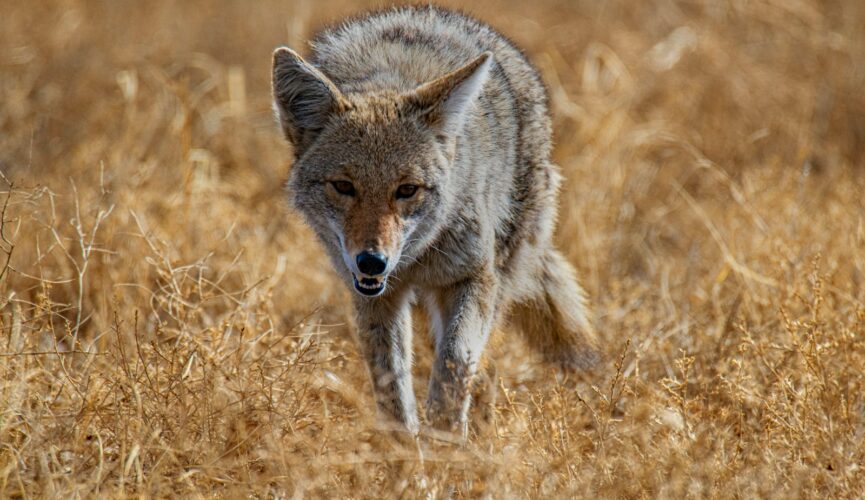
Coyote encounters have become more frequent as human populations expand. This trend can be partially attributed to forest habitat loss and coyotes becoming habituated to living near humans through direct interactions or people feeding the animals – both activities can lead to behavioral changes that put humans at greater risk of conflict with these predators.
Coyotes typically live in family groups known as packs, although they can occasionally be seen alone. They feed on various small creatures such as rodents but will also consume larger prey such as deer fawns (adult deer are generally avoided). Although rarely fatal to humans, coyotes have been known to bite in self-defense when feeling their territory is threatened.
Coyotes typically flee when they detect your approach; if it doesn’t, however, hazing by shouting loudly while standing tall and waving arms often works to convince it to leave. You can approach closer for maximum intensity of hazing until it disappears from sight.

Pepper spray can be moderately effective against coyotes, but its effectiveness is limited. Here are the key points:
- Pepper spray has a relatively short range of around 10-15 feet, so it requires the coyote to be fairly close for it to work. This increases the risk to the person using it.
- The effects of pepper spray on coyotes last around 50 minutes if sprayed correctly in the eyes/face area. However, coyotes may still be able to flee the area while temporarily incapacitated.
- Pepper spray is intended as a last resort deterrent when a coyote is acting aggressively and approaching too closely. It is not recommended for general hazing or deterring coyotes from a distance.
- More effective deterrents for keeping coyotes away include loud noises (air horns, banging pots), bright lights, throwing objects, using coyote shakers or whistles, and spraying with hoses or vinegar solutions. Hazing techniques work best when combined with removing attractants like pet food and securing trash.
- For close encounters, experts recommend carrying a walking stick, making yourself appear large by waving arms, and backing away slowly without turning your back. Pepper spray can be an additional deterrent at close range if the coyote does not retreat.
So in summary, while pepper spray may temporarily deter an aggressive coyote at very close range, other hazing methods are generally recommended first to avoid having to get that close.
Read more:
https://community.usconcealedcarry.com/t/coyotes-defense/43691
https://cpw.state.co.us/Documents/WildlifeSpecies/LivingWithWildlife/Coyote-Exclusions-Deterrents-Repellents.pdf
https://www.zoo.org/seattlecarnivores/faq
Other deterrents for coyotes include wind chimes, bells and noise-making devices like air horns or coyote shakers. Scent-based repellents like garlic and onion are also effective; you simply need to chop up your ingredients beforehand and soak them overnight in water to create a spray solution.